Buyer's guide · built 1964–1973
Buying a Porsche Early 911: common problems and what to check
The early Porsche 911, built from 1963 to 1973 (111,995 cars), is a body-first buy: rust and covered-up repairs cost the most to put right. Then check for oil leaks that turn into engine rebuilds, worn valve guides and timing chains, and the gearbox synchros.
By Jon Kennedy, Porsche Enthusiast
Last reviewed 25 October 2026. Every point links the specialist, club, magazine or Porsche page it comes from.
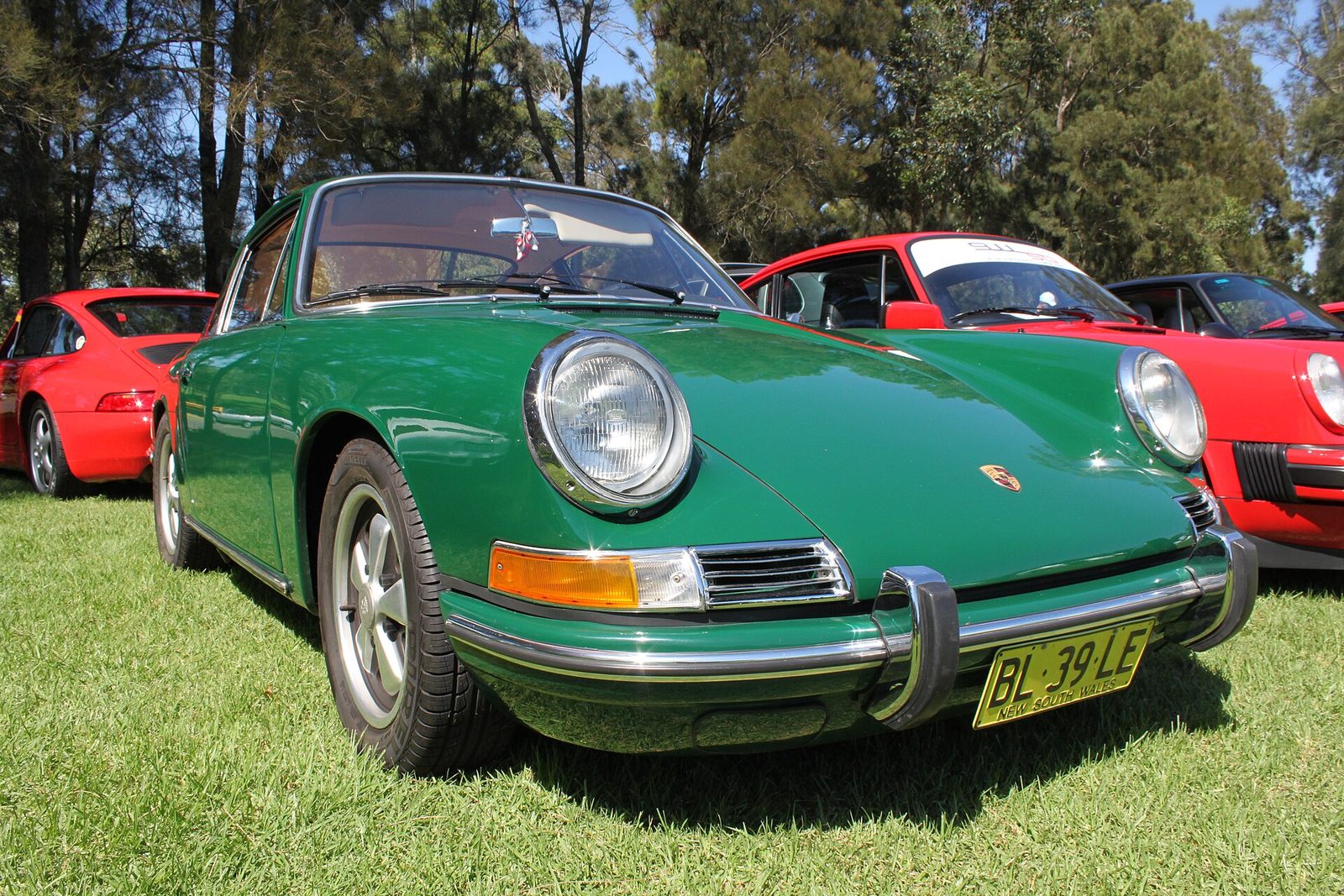
A 1967 Porsche 911, one of the early long-hood cars this guide covers.
Do this next
In short
- Built
- 1964–1973
- Made
- 111,995
- Models with a guide
- 9
The original 911, 1963–1973, all models.[1]
What goes wrong on a Porsche Early 911?
The 11 problems to check on any Early 911. Where a source publishes a repair cost, it's shown as published, with its date.
Telling a real ST from a 911 S built to look like one
An ST's papers say 911 S, because Porsche never gave it a model designation of its own. That makes the factory record the proof: Porsche identified the cars by equipment number, M471 for the road-legal Sport Standard Version, M491 for circuit racing and M494 for rallying.[2][3]
What to check: Ask for the factory record and look for those numbers, remembering that M471 was later used on the Carrera RS 2.7 too. Then check the details Porsche lists for the Sport Standard Version: no bumper overriders or door trims, rubber straps holding the bonnet and engine lid, no heater, glove box or sound deadening, a tachometer reading to 10,000 rpm, a smaller steering wheel and Scheel or Recaro bucket seats.
Applies to: 911 ST
Magnesium crankcase condition
Crankcases were aluminium until mid-1968 and magnesium from then on. Classic & Sports Car says the magnesium cases are easily weakened and many have been replaced; Porsche Club GB calls them famously fragile. Until 2023 a cracked case meant welding minor cracks or finding a used case; Porsche Classic now sells new magnesium cases for 1968-1976 911s with 2.0, 2.2, 2.4 and 2.7 litre engines, including the Carrera RS 2.7.[4][5][8][9]
What to check: Ask what the rebuild records say about the case (cracks, welding, replacement) and whether the case fitted is the original. A new Porsche Classic case fixes the engine but not originality, which now carries a premium.
Applies to: 911 (2.0L), 911 T (2.0L), 911 E (2.0L), 911 S (2.0L), 911 T/E (2.2L), 911 T/E/S (2.4L), 911 Carrera RS 2.7
Oil leaks that lead to a full rebuild
Almost all 911 flat-sixes leak oil, but a strip-down to cure leaks usually turns into a complete rebuild. Cars that have been stored without use are prone to leaks past hardened seals and to corrosion inside the engine.[4][5]
What to check: Check the history thoroughly, confirm it is the right engine with the right ancillaries, and on a test drive look for good oil pressure at speed and strong pulling without smoke. Low oil pressure at tickover is not necessarily serious and can often be cured with a smaller restrictor in the camshaft oil feed.
Published cost: Classic & Sports Car (May 2018): £15,000-25,000 for a strip-down that becomes a full rebuild.
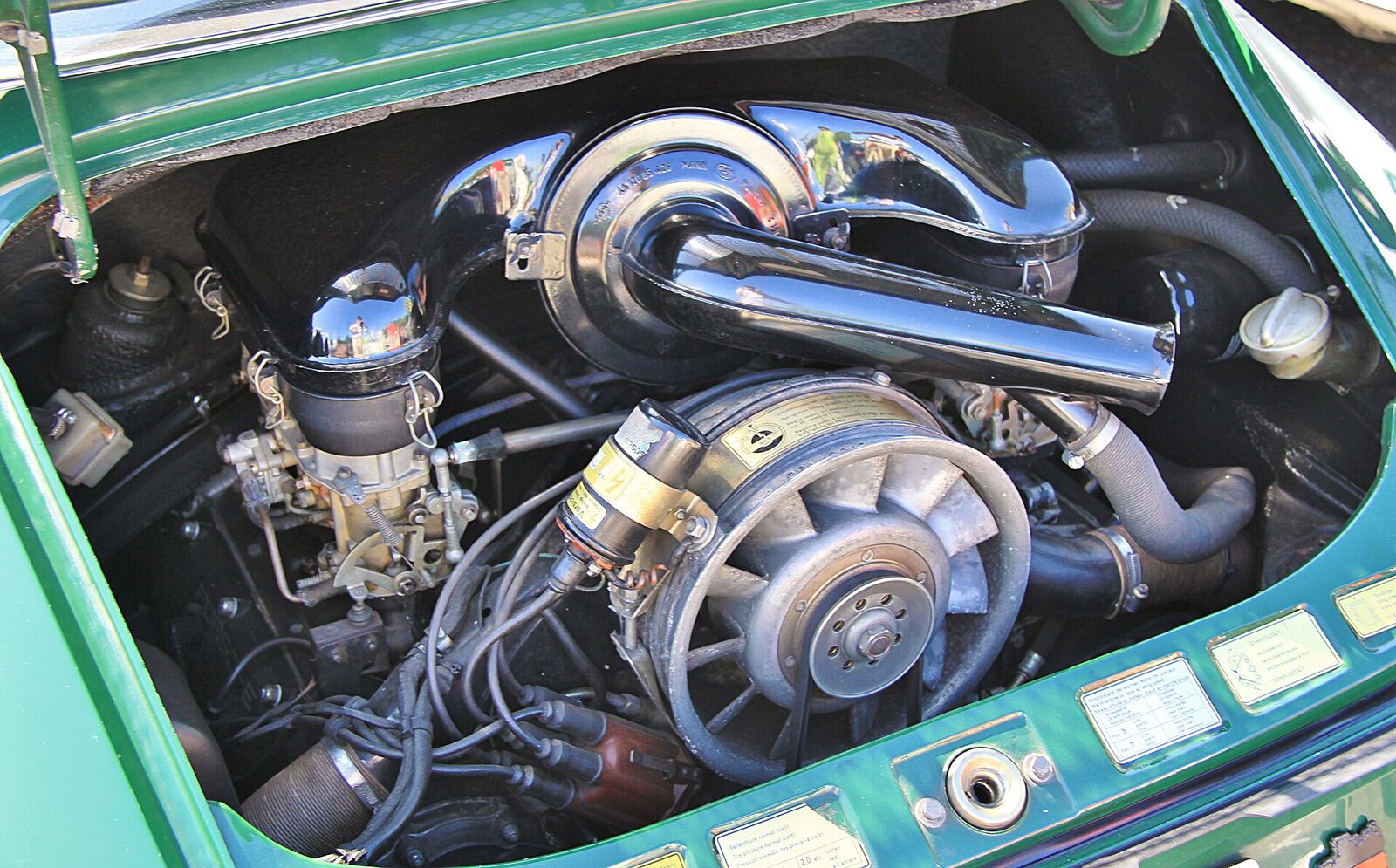
The 2.2-litre Type 901/03 flat-six of a 1971 Porsche 911T: check the engine and the ground under it for oil leaks before you buy.
Valve guide wear and rattly timing chains
Valve guides wear quite quickly and timing chains can become rattly. Porsche Club GB says valves and guides typically last about 125,000 miles, so an older car should show at least a top-end rebuild in its history.[4][5]
What to check: Watch for oil smoke on start-up and on the overrun, listen for chain rattle, and ask for evidence of a top-end rebuild.
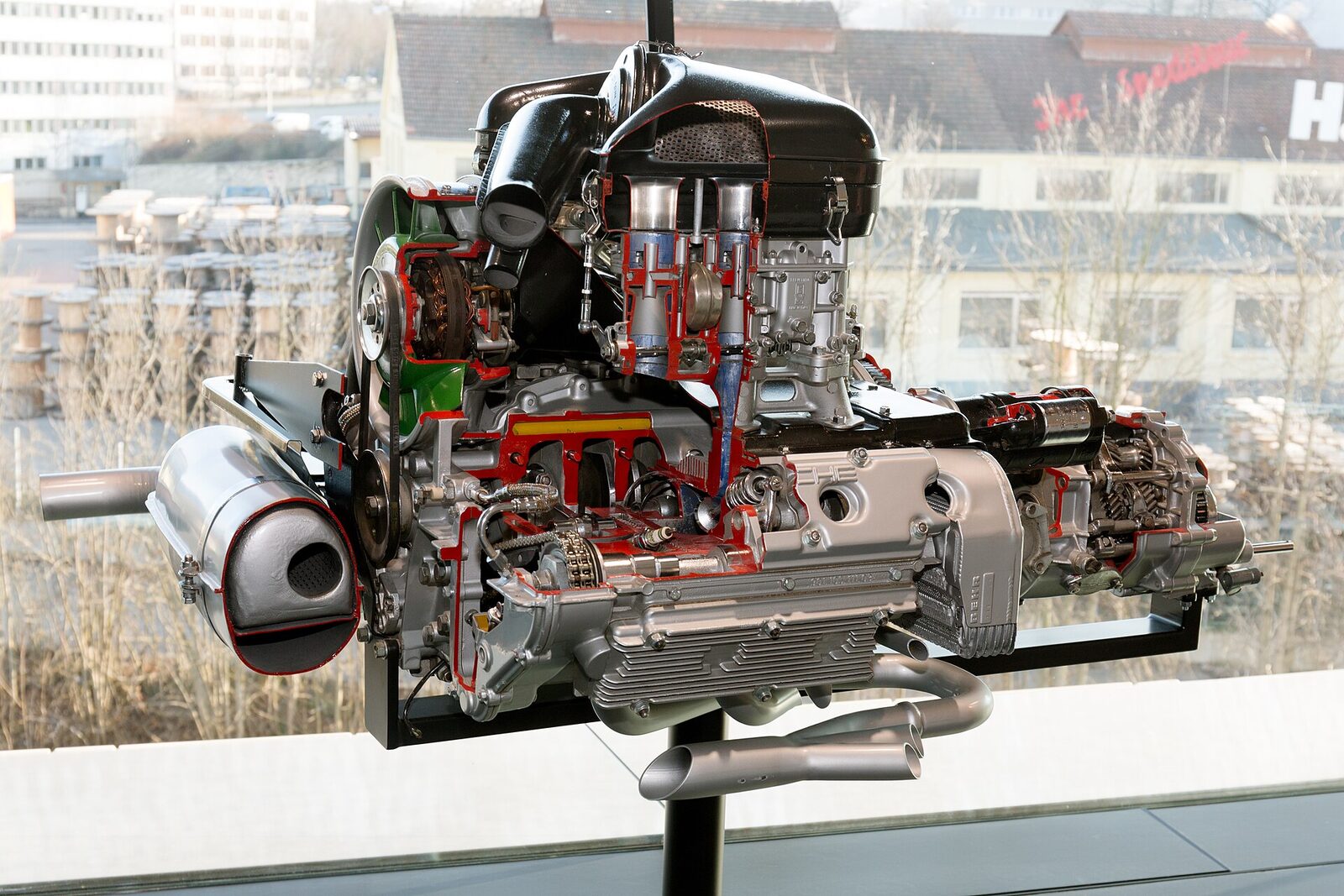
A cutaway of the 1963 Type 901/01 flat-six, showing the cylinder heads and valve gear where worn guides and rattly timing chains start.
Rust in the dry-sump oil tank after storage
Long periods of disuse can let rust build up inside the dry-sump oil tank. When that rust is pumped round the system it can cause disastrous engine failure.[4][5]
What to check: Ask how long the car has stood and whether the oil tank was cleaned or inspected before it was recommissioned.
Mechanical fuel injection set-up
Bosch mechanical injection arrived on the 1969 E and S and continued on the injected 2.2 and 2.4 cars and the Carrera RS. Classic & Sports Car says correct fuelling is key to both performance and engine life, and the system must be set up correctly and not fiddled with.[4][5]
What to check: Ask who last set up the injection and look for a specialist invoice. A car that runs poorly may simply be badly set up rather than worn.
Published cost: Classic & Sports Car (May 2018): an overhaul costs £500-2000.
Applies to: 911 E (2.0L), 911 S (2.0L), 911 T/E (2.2L), 911 T/E/S (2.4L), 911 Carrera RS 2.7
Early Solex carburettor flat spots
The first cars ran Solex carburettors with mid-rev flat spots. Triple-choke Webers replaced them in early 1966 (Classic & Sports Car gives February 1966, Porsche Club GB March 1966) and make the car easier to drive.[4][5]
What to check: Check which carburettors are fitted and whether they are correct for the car's build date if originality matters.
Applies to: 911 (2.0L)
Gearbox synchros, bearings and linkage
Listen for worn synchros and bearings; whining intermediate gears point to failing bearings. The 915 gearbox fitted from 1972 is stronger, but Porsche Club GB names its 2nd and 3rd gear synchros as a weak area. Rebushing a worn linkage cures many shift complaints. Sportomatic cars are rare because many were converted to manual in the 1980s and 1990s.[4][5]
What to check: Drive the car through every gear, listen for whine and check for baulking or crunching, and check the shift linkage for slack.
Published cost: Classic & Sports Car (May 2018): gearbox rebuild £2500-5000.
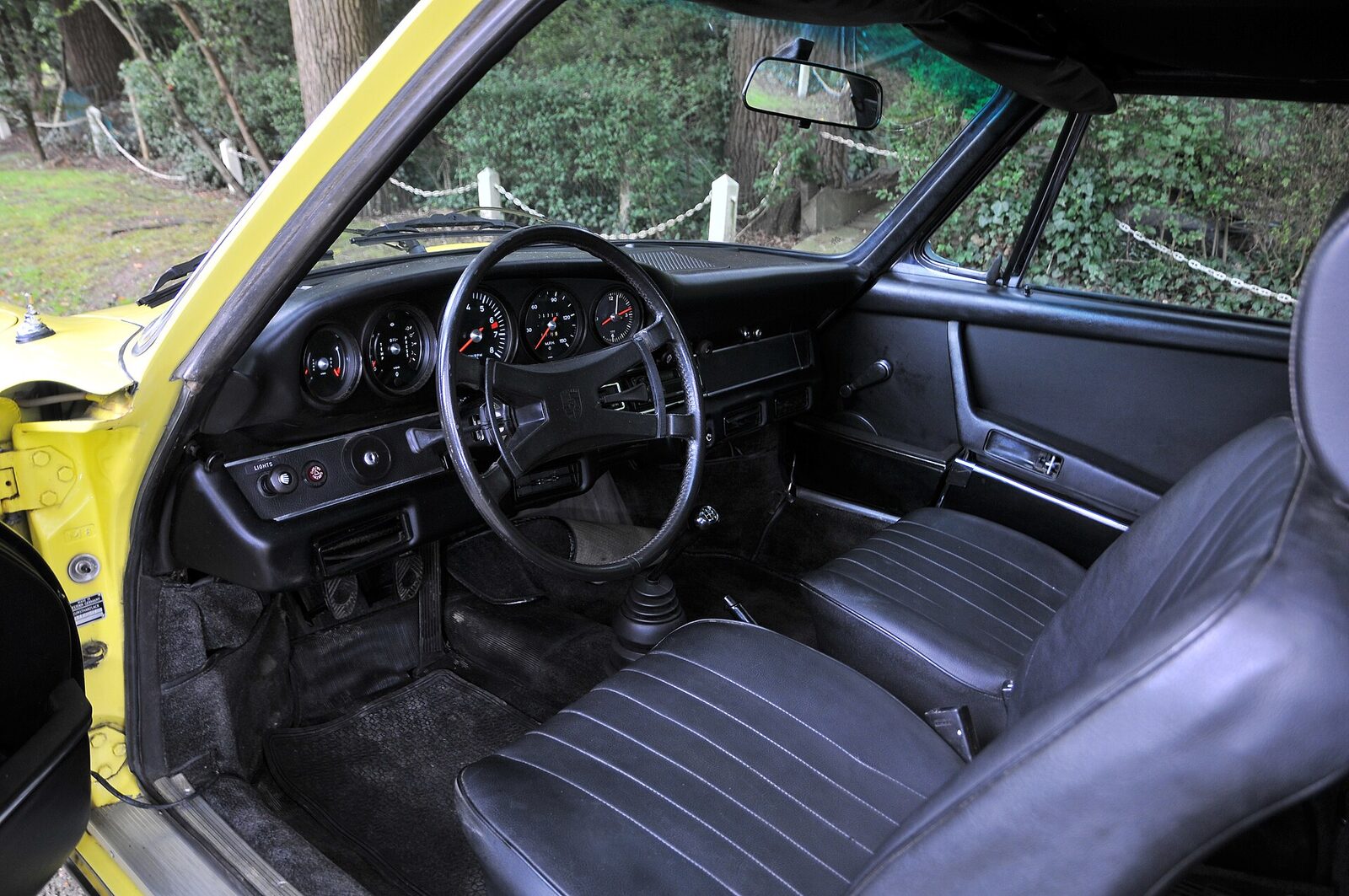
The cockpit of a 1972 Porsche 911T: shift through every gear on the test drive to feel for worn synchros and a loose linkage.
Suspension, steering, brakes and Fuchs wheels
Look for tired bushes and corroded tubular arms. Fuchs alloys are costly to refurbish and wider ones can crack. The brakes have no servo and seize if the car is little used. Conversions from left-hand to right-hand drive are rarely done well, and the suspension needs careful set-up by a specialist.[4][5]
What to check: Check tyre rating and age from the date code, look for replacement shock absorbers and brake lines in the history, and make sure the brakes pull straight. On a short-wheelbase car, poor set-up or corrosion can make the handling more wayward.
Published cost: Classic & Sports Car (May 2018): front control arm £883, brake master cylinder £218.
Interior trim, dash top and damp
Trim changed often over these years, so matching the original materials exactly is difficult, and many trim pieces are hard to find. Damp carpets and distorted door trims point to water getting in.[4][5]
What to check: Look for splits or distortion in the dash top and surrounds, check that every instrument and switch works and is correct for the model and spec, and check that the original trim is present.
Published cost: Classic & Sports Car (May 2018): a refresh is about £1500 and a full retrim £5-10k.
Our take: Buy the body first. Classic & Sports Car puts a bodyshell rebuild at £20,000 to £100,000, and its top figure is four times its top figure for an engine strip-down, so a sound, documented shell is worth more than a fresh engine.
How do you check a Porsche Early 911 is original?
Matching numbers, with care
Porsche Club GB says the market is obsessed with matching numbers, which may add about a 10% premium, but warns that crankcases were swapped freely in the 1970s and 1980s, so some engines are less original than their numbers suggest. Classic & Sports Car advises confirming it is the right engine with the corresponding ancillaries.[4][5]
Porsche Classic Technical Certificate
A Porsche Classic Partner can issue a Technical Certificate covering classic cars from the 356 onward. It lists the original delivery data (invoice date, place of delivery, exterior and interior colours, optional equipment, VIN and order type), compares the engine and transmission numbers and types fitted now with the factory records, and adds an inspection by Porsche Classic-trained technicians. The page lists the price as $500, noting that local prices may vary.[10]
History file and restoration bills
Go through the bills to see how a restoration was done and who did it; genuine Porsche parts, not pattern parts, should be the baseline. Classic & Sports Car says most cars have had a hard life, been modified and probably not restored properly, and advises looking for a full, disaster-free history and having the car extensively checked before purchase.[4][5]
Correct spec for the model and year
Specification varies widely, from 110bhp in the early 911T to 210bhp in the Carrera RS 2.7, and many cars were modernised or uprated and are now being put back to factory spec. Check that instruments, switchgear, carburettors or injection, and trim are correct for the model and year. Many Sportomatic cars were converted to manual gearboxes.[4][5]
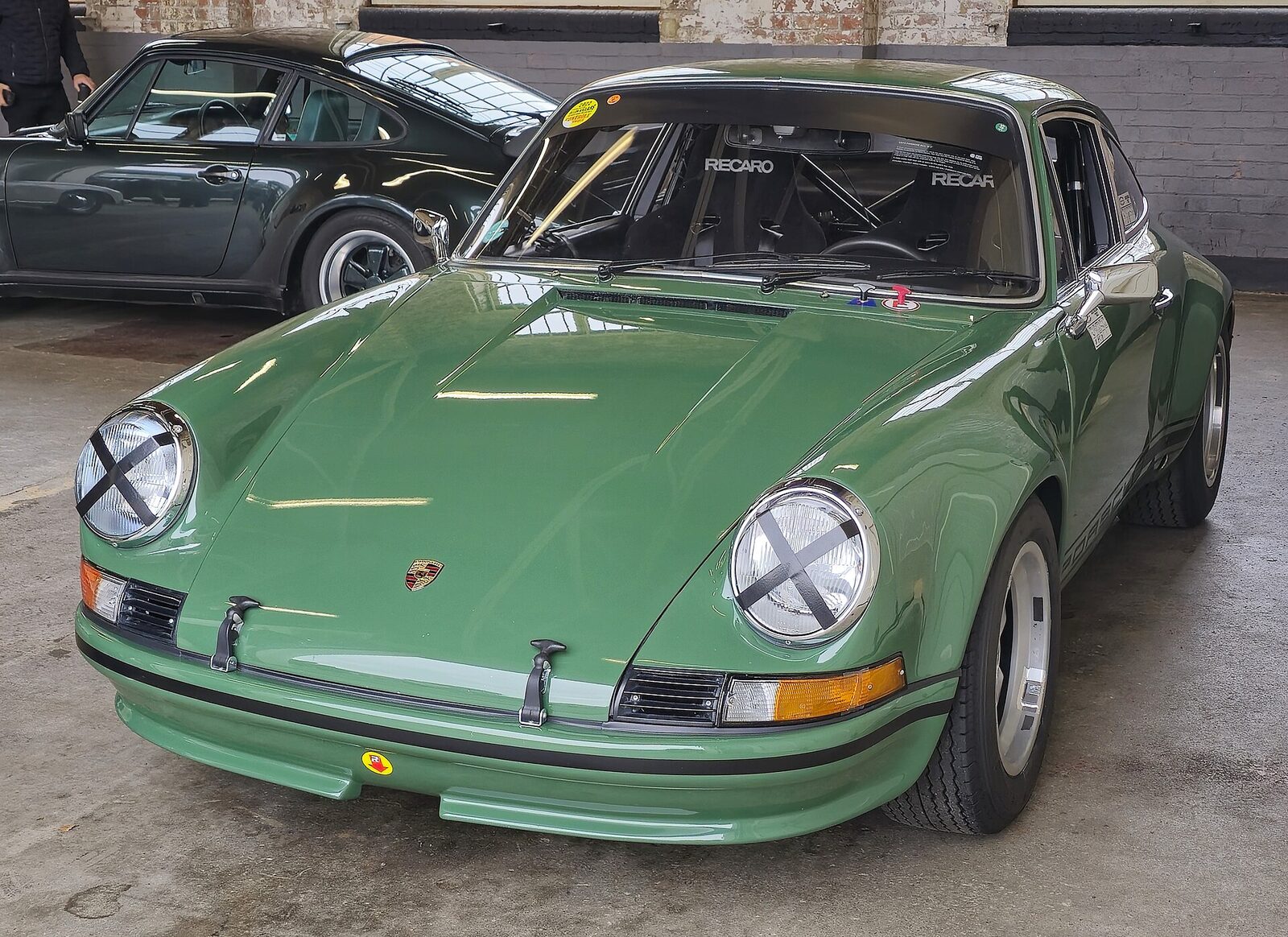
A 1972 Porsche 911 2.4 S converted to S/T specification. Check what a car left the factory as before paying for the specification it wears now.
Details that date a car
Cars up to the 1968 model year are short-wheelbase; the wheelbase grew by 57 mm to 2,268 mm from the 1969 model year. The one-year US 911L of 1968 has small separate side-marker lights. A 1972 car has an external oil-filler flap on the right rear wing, a feature unique to that year. Use details like these to check a car's claimed year against what is actually on it.[1][5][11]
Carrera RS 2.7 authenticity
Classic & Sports Car says identifying a genuine RS 2.7 without full verifiable history is a minefield even for Porsche experts. Porsche Club GB says an RS purchase requires expert guidance and that there may be more RSs around now than were produced.[4][5]
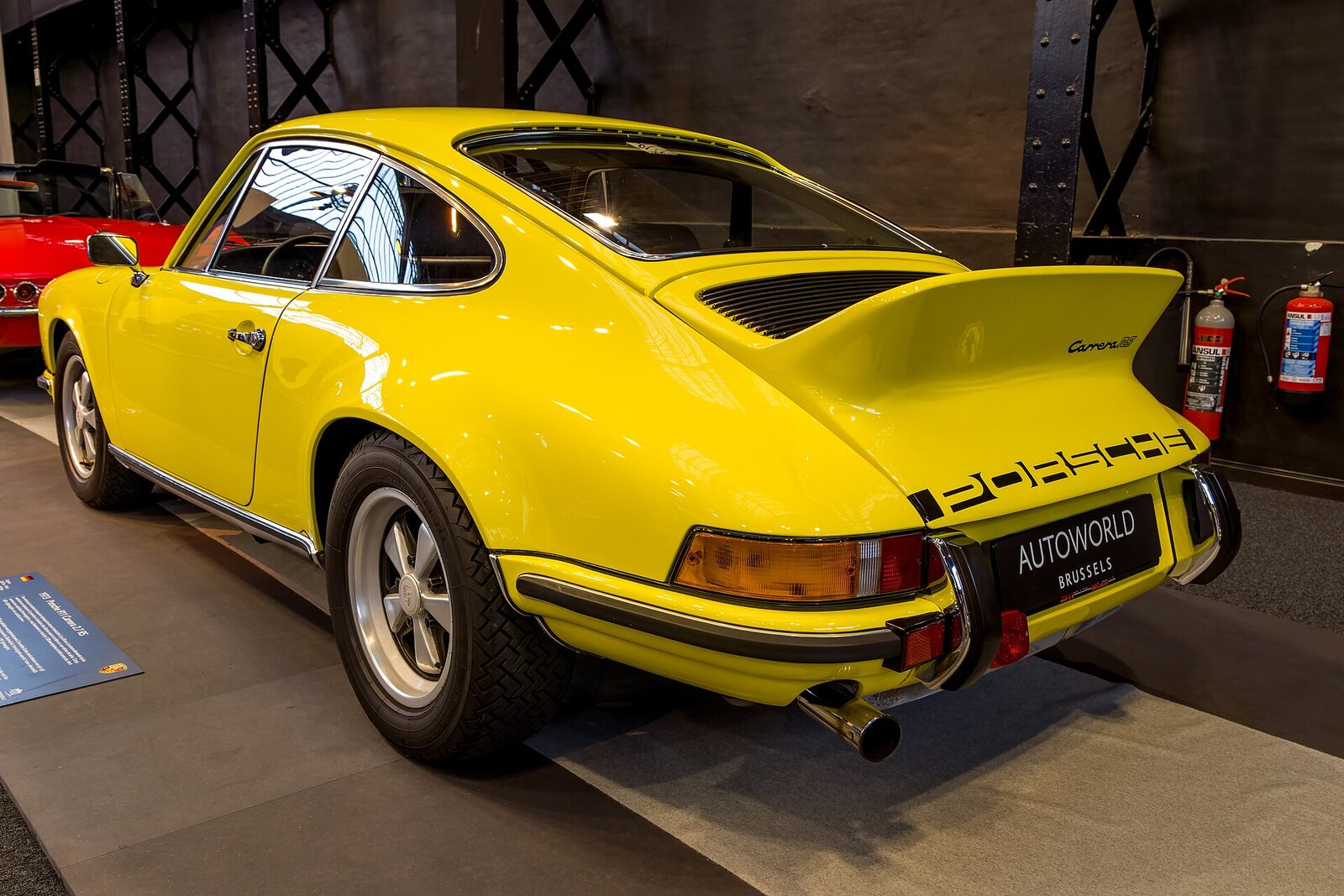
A Porsche Carrera RS 2.7 with its ducktail spoiler and Carrera side script, details that are easy to copy, so authenticity rests on the paperwork and numbers.
Which Porsche Early 911 should you buy?
Each model has its own guide to what sets it apart and what to check on it in particular.
Four cylinders or six? Porsche 912 vs 911.
| Model | Built | Power | Made |
|---|---|---|---|
| 911 (2.0L) | 1965–1967 | 130 PS | Not yet sourced |
| 911 T (2.0L) | 1968–1969 | 110 PS | Not yet sourced |
| 911 E (2.0L) | 1969 | 140 PS | Not yet sourced |
| 911 S (2.0L) | 1967–1969 | 160 PS | Not yet sourced |
| 911 T/E (2.2L) | 1970–1971 | Not yet sourced | Not yet sourced |
| 911 T/E/S (2.4L) | 1972–1973 | 130–190 PS | Not yet sourced |
| 911 ST | 1969–1972 | Up to 270 PS | Not yet sourced |
| 911 Carrera RS 2.7 | 1972–1973 | 210 PS | 1,525 |
| 911 R | 1967–1968 | 210 hp (154 kW) | 19 |
- Porsche 911 (2.0L)
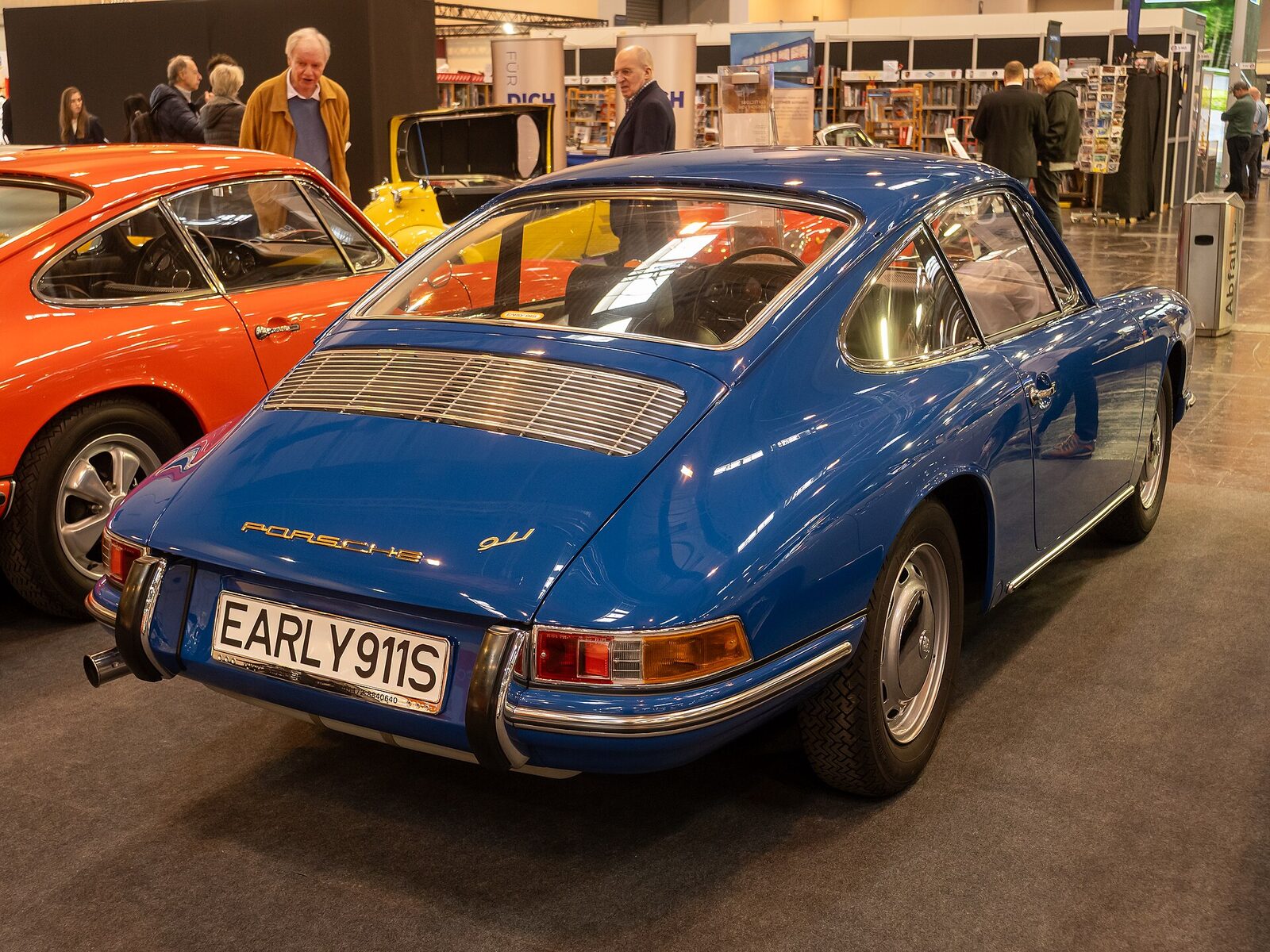
An early 1966 Porsche 911 2.0 coupe, displayed at the Techno-Classica show in Essen in 2025.
Photo: Matti Blume, CC BY-SA 4.0, via Wikimedia Commons. - Porsche 911 T (2.0L)
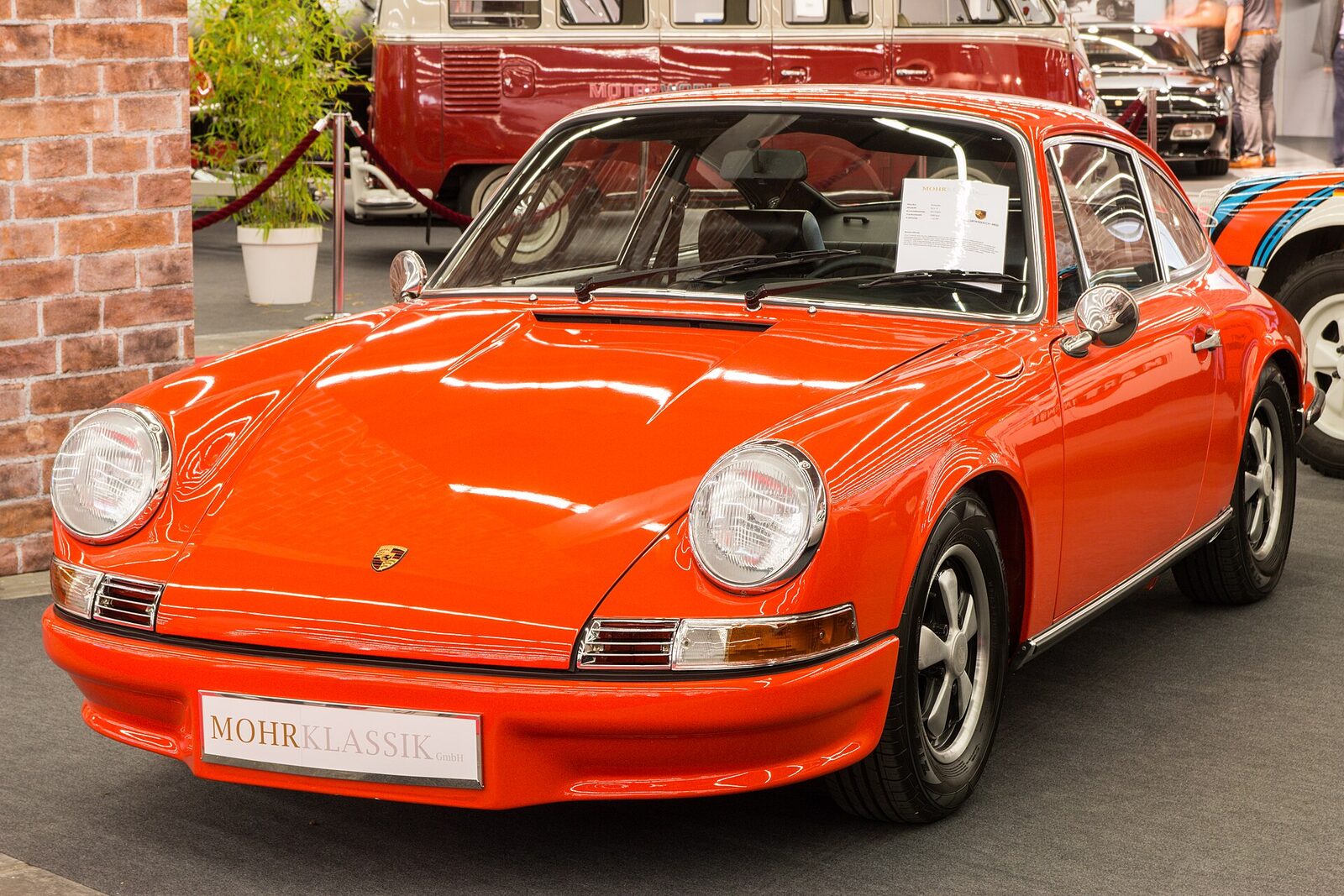
An orange 1969 Porsche 911 T 2.0 coupé from the C series, with the 1,991 cc engine, at the IAA in 2019.
Photo: Johannes Maximilian, CC BY-SA 4.0, via Wikimedia Commons. - Porsche 911 E (2.0L)
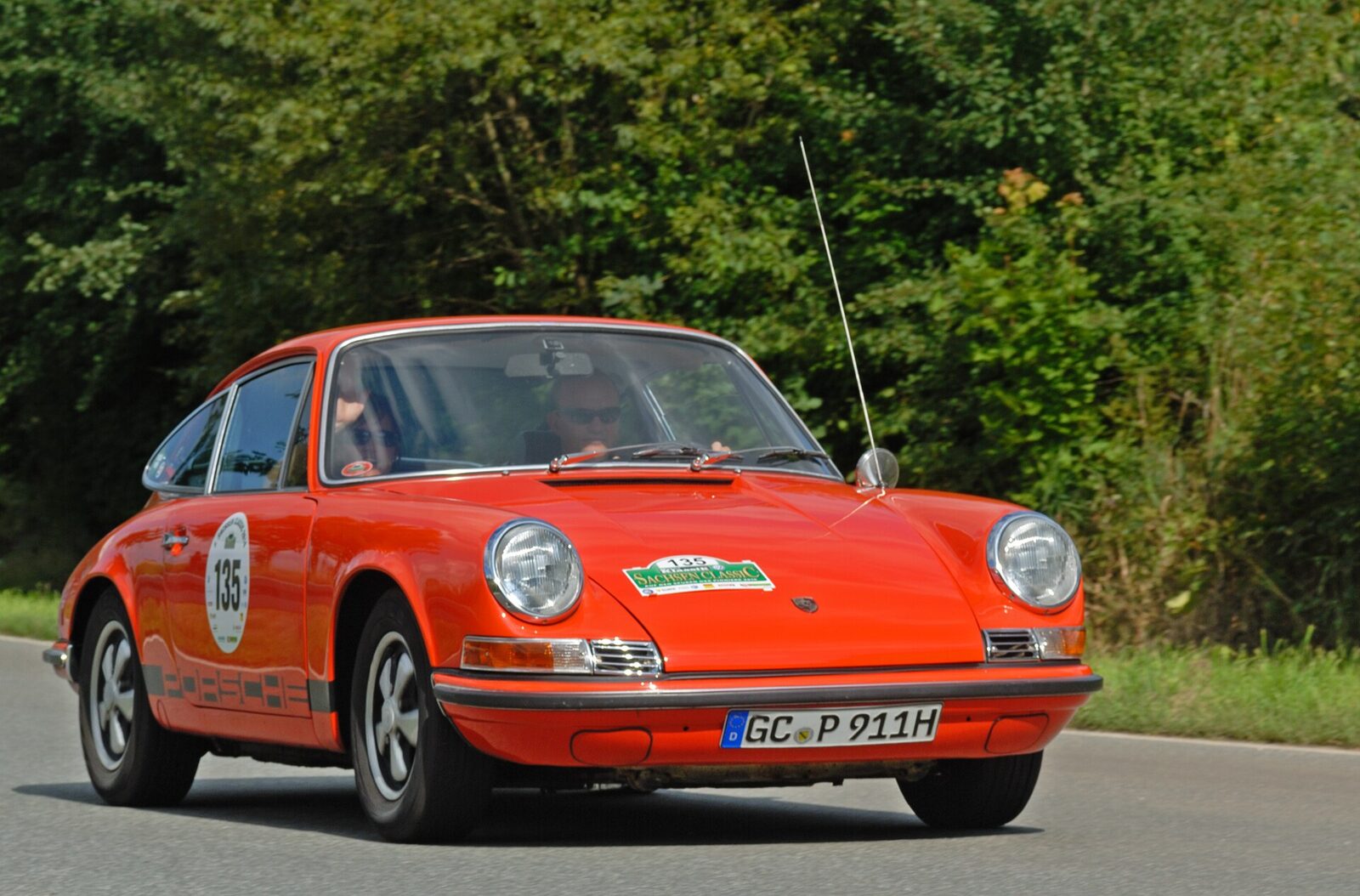
A 1969 Porsche 911 E coupe in orange, driven on the Saxony Classic Rallye in 2010.
Photo: André Karwath aka Aka, CC BY-SA 2.5, via Wikimedia Commons. - Porsche 911 S (2.0L)
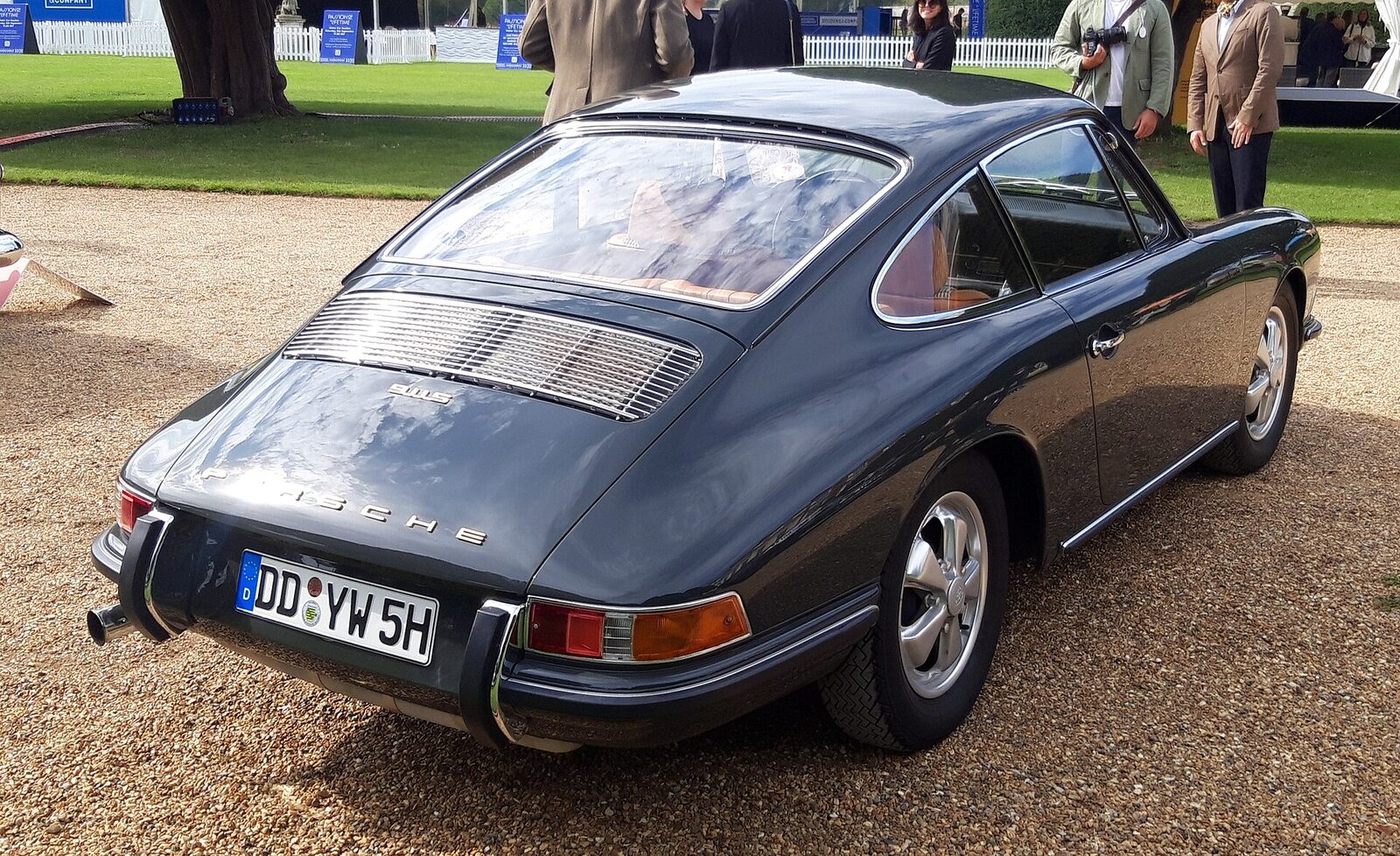
A 1966 Porsche 911 S 2.0 coupé at the Hampton Court Concours in 2020.
Photo: MrWalkr, CC BY-SA 4.0, via Wikimedia Commons. - Porsche 911 T/E (2.2L)
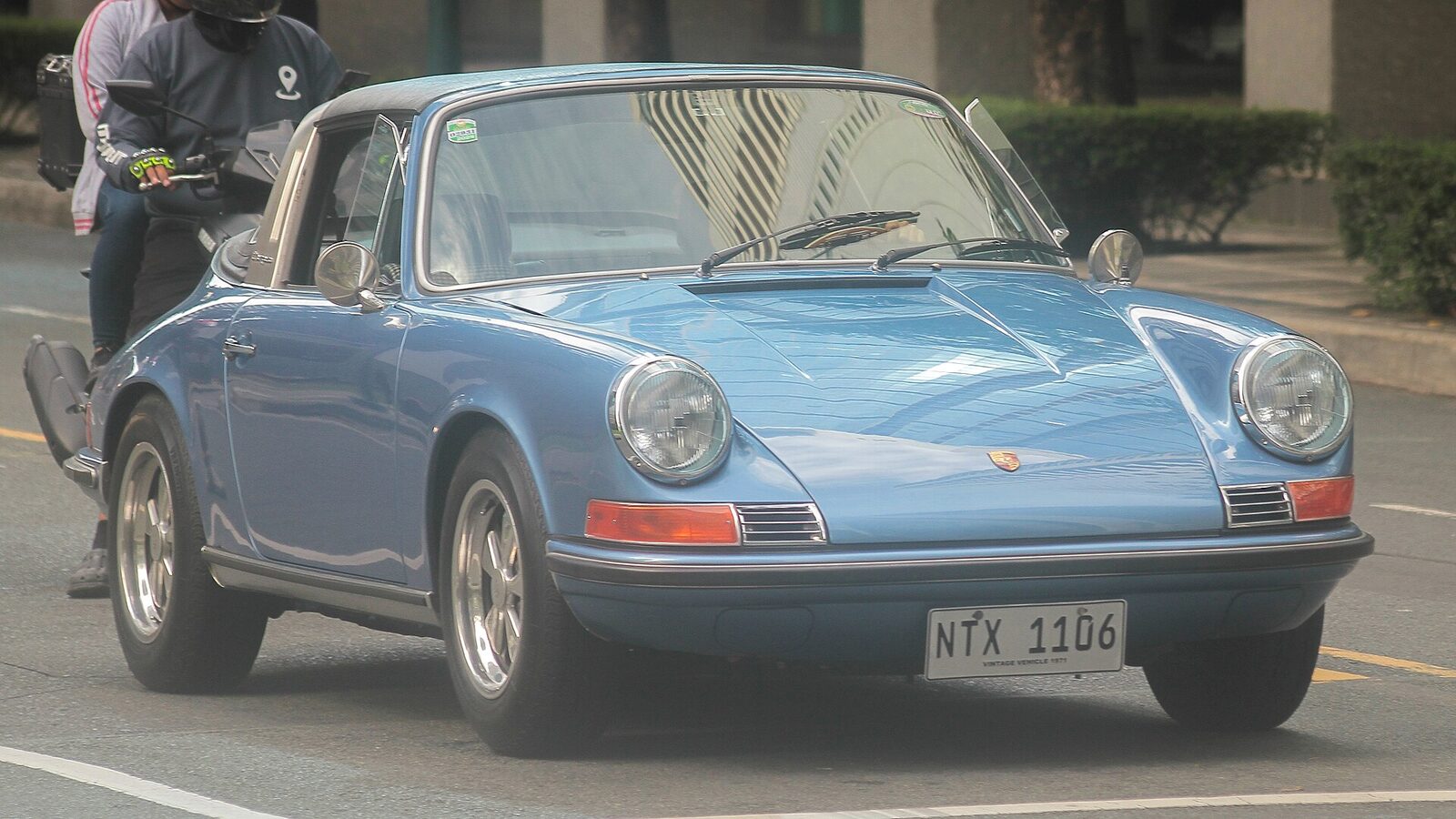
A blue 1971 Porsche 911 T 2.2 Targa, from the 2.2-litre generation of 1970 and 1971.
Photo: Ethan Llamas, CC BY-SA 4.0, via Wikimedia Commons. - Porsche 911 T/E/S (2.4L)
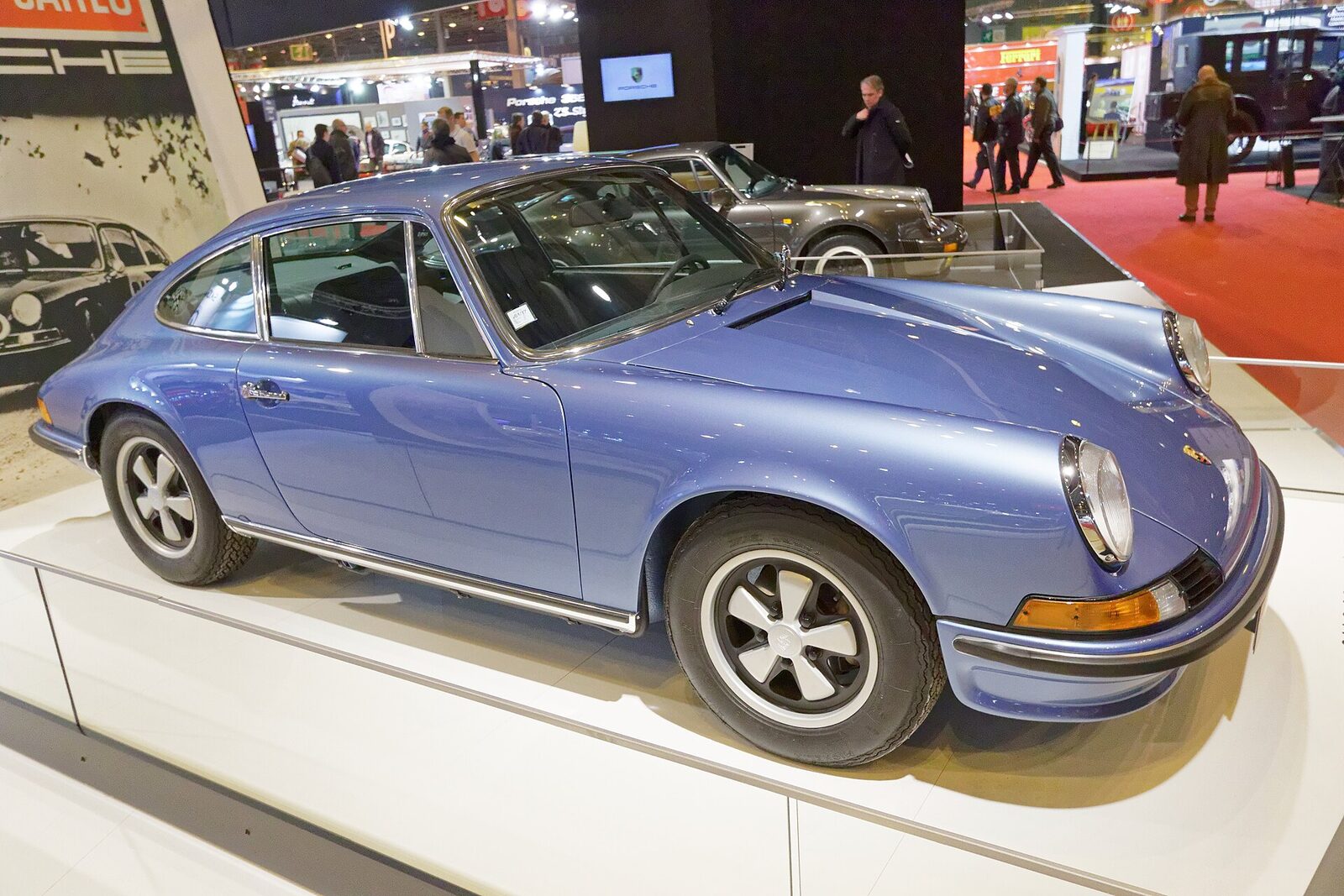
A 1973 Porsche 911 S 2.4 coupé at the Rétromobile show in Paris in 2015.
Photo: Thesupermat, CC BY-SA 4.0, via Wikimedia Commons. - Porsche 911 ST
Not a factory ST: a 1972 911 2.4 S converted to the S/T look. The flares and stripped cabin can be copied; the equipment numbers in the factory record can't.
Photo: MrWalkr, CC BY-SA 4.0, via Wikimedia Commons. - Porsche 911 Carrera RS 2.7
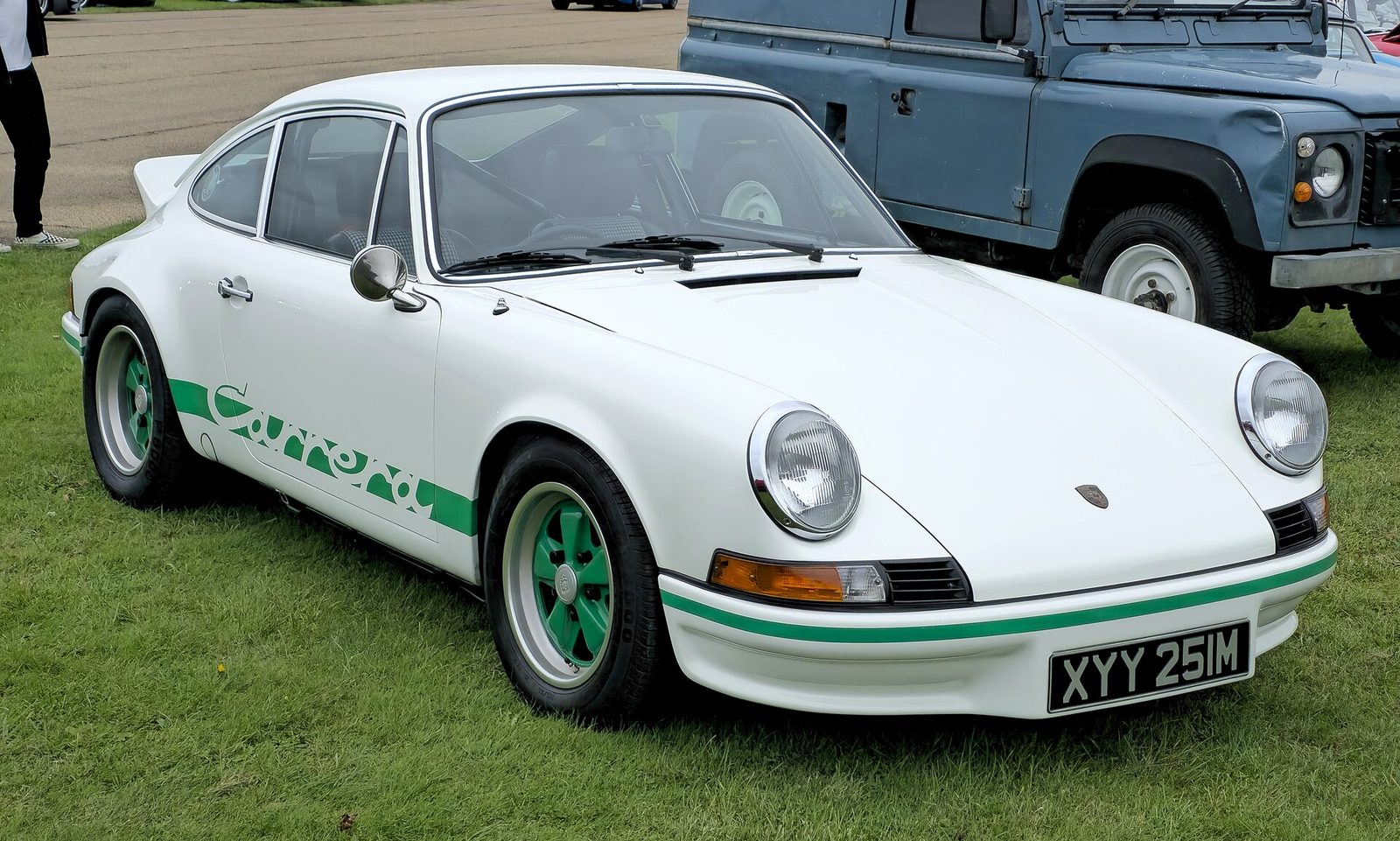
A Porsche 911 Carrera RS 2.7 with the Carrera script on its flanks.
Photo: MrWalkr, CC BY-SA 4.0, via Wikimedia Commons.
Inspection checklist: Porsche Early 911
- 1Telling a real ST from a 911 S built to look like one
- 2Body rust and covered-up repairs
- 3Magnesium crankcase condition
- 4Oil leaks that lead to a full rebuild
- 5Valve guide wear and rattly timing chains
- 6Rust in the dry-sump oil tank after storage
- 7Mechanical fuel injection set-up
- 8Early Solex carburettor flat spots
- 9Gearbox synchros, bearings and linkage
- 10Suspension, steering, brakes and Fuchs wheels
- 11Interior trim, dash top and damp
- 12Matching numbers, with care
- 13Porsche Classic Technical Certificate
- 14History file and restoration bills
- 15Correct spec for the model and year
- 16Details that date a car
- 17Carrera RS 2.7 authenticity
Questions
The ones to check first: telling a real ST from a 911 S built to look like one; body rust and covered-up repairs; magnesium crankcase condition; oil leaks that lead to a full rebuild. Each is explained on this page with what to look for and the sources it comes from.
Work through these checks: matching numbers, with care; Porsche Classic Technical Certificate; history file and restoration bills; correct spec for the model and year; details that date a car; Carrera RS 2.7 authenticity. Each is explained on this page with its sources.
111,995: The original 911, 1963–1973, all models, according to Porsche Newsroom, The original 911.
911 (2.0L) (1965–1967), 911 T (2.0L) (1968–1969), 911 E (2.0L) (1969), 911 S (2.0L) (1967–1969), 911 T/E (2.2L) (1970–1971), 911 T/E/S (2.4L) (1972–1973), 911 ST (1969–1972), 911 Carrera RS 2.7 (1972–1973), 911 R (1967–1968). Each has its own guide to what's different about it.
18 specialists in our directory list pre-purchase inspections and work on the Early 911. The directory shows where they are and how to contact them.
Sources
Every point above is numbered to the pages it comes from. Dates are the page's own, where it shows one.
- Porsche Newsroom, The original 911
- Porsche Newsroom: 911 S/T press kit (history chapter)
- Porsche Newsroom: Ready to race, the 911 S (ST) 1969 to 1972
- Porsche Club GB: Porsche Early 911 Buyers' Guide (1965-73), by Peter Morgan (undated)
- Classic & Sports Car: Buyer's guide: Porsche 911 (1964-'73), by Malcolm McKay (2018-05-18)
- Supercar Nostalgia: FAQ: Porsche 911 2.7 Carrera RS (2020-06-11)
- Porsche Newsroom: First generation - Innovations (60 Years Porsche 911 press kit) (undated)
- Porsche Newsroom: New magnesium crankcases for early 911 (2023-03-08)
- Hagerty Media: Porsche offers new magnesium crankcases for classic Carreras (2023-03-08)
- Porsche Classic: Technical Certificate (undated)
- Hagerty Media: Among 1967-68 Porsche 911s, coupes are king (2020-02-19)