964 · Buyer's guide
Porsche 964 Turbo buyer's guide
The Porsche 964 Turbo was built from 1991 to 1993, 5,097 of them (Turbo 3.3 (3,660) and Turbo 3.6 (1,437) coupés). What sets the Turbo apart comes first, then the 964 problems to check on any car.
Last reviewed 25 October 2026. Each point links the page it comes from.
By Jon Kennedy, Porsche Enthusiast
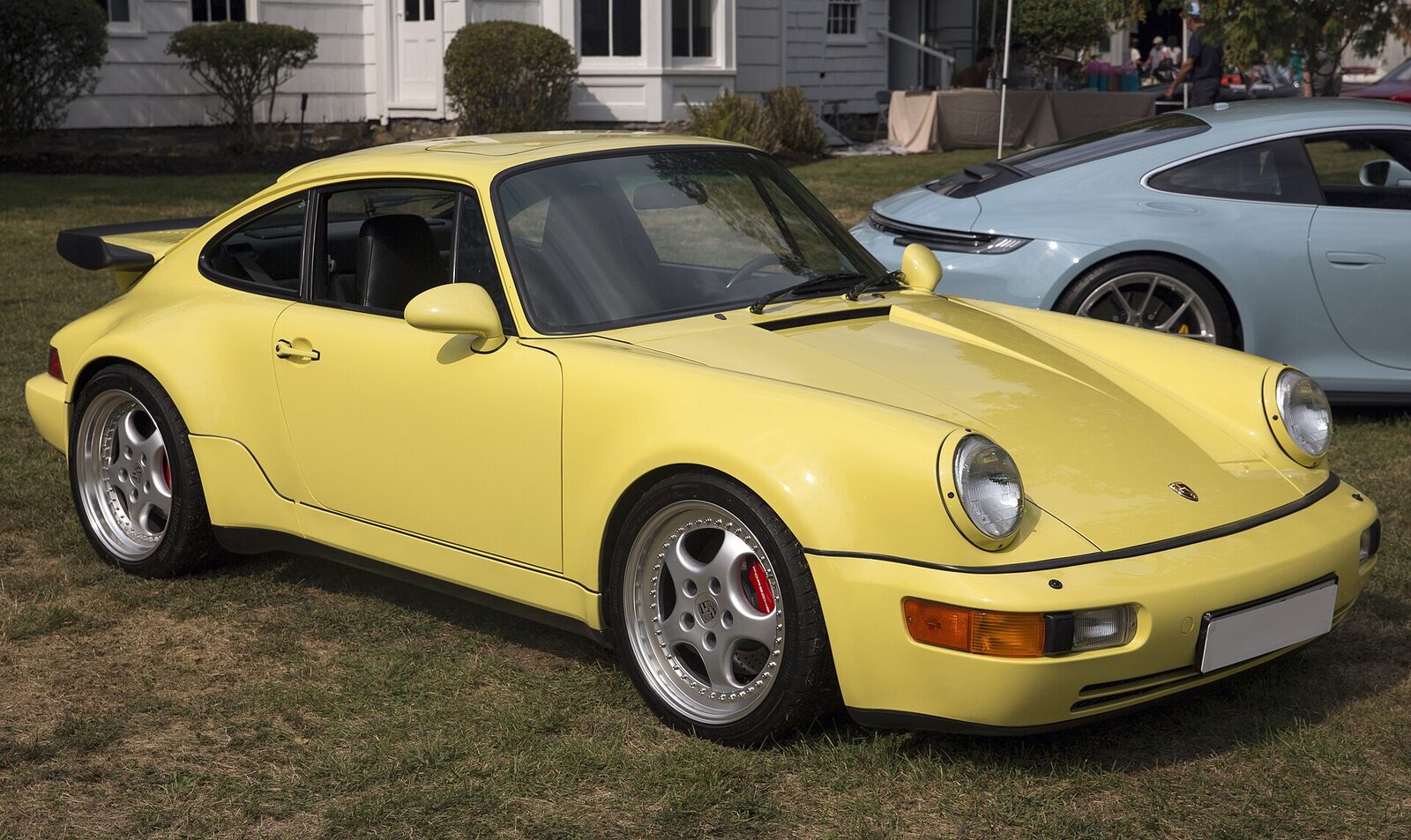
A 1991 Porsche 911 Turbo 3.3 of the 964 generation in paint-to-sample Summer Yellow, on 18-inch Speedline wheels.
Do this next
What's different about the Porsche 964 Turbo?
The 3.3 (1991-92, 320 hp, based on the older 930 engine) and the 3.6 (1993-94, 360 hp, just over 1,400 built) differ a lot. A 3.3 with factory option X33 has 355 hp; only 192 were ordered.[1][2]
Early 3.3s have the Freudenberg flywheel, known to fail at around 70,000 km; LUK dual-mass flywheels with metal springs were used from 1992. Check whether a very low-mileage early car has had it replaced.[1]
Oil lines in front of the rear wheels can leak or burst; exhaust flanges burn out, and an original exhaust with catalyst and heat exchanger costs almost five figures. The 3.6's alloy brake calipers tend to seize.[1]
Which problems apply to the Porsche 964 Turbo in particular?
Which 964 problems should you check on a Turbo?
The 964 guide covers the problems every car shares, each with what to look for and its sources:
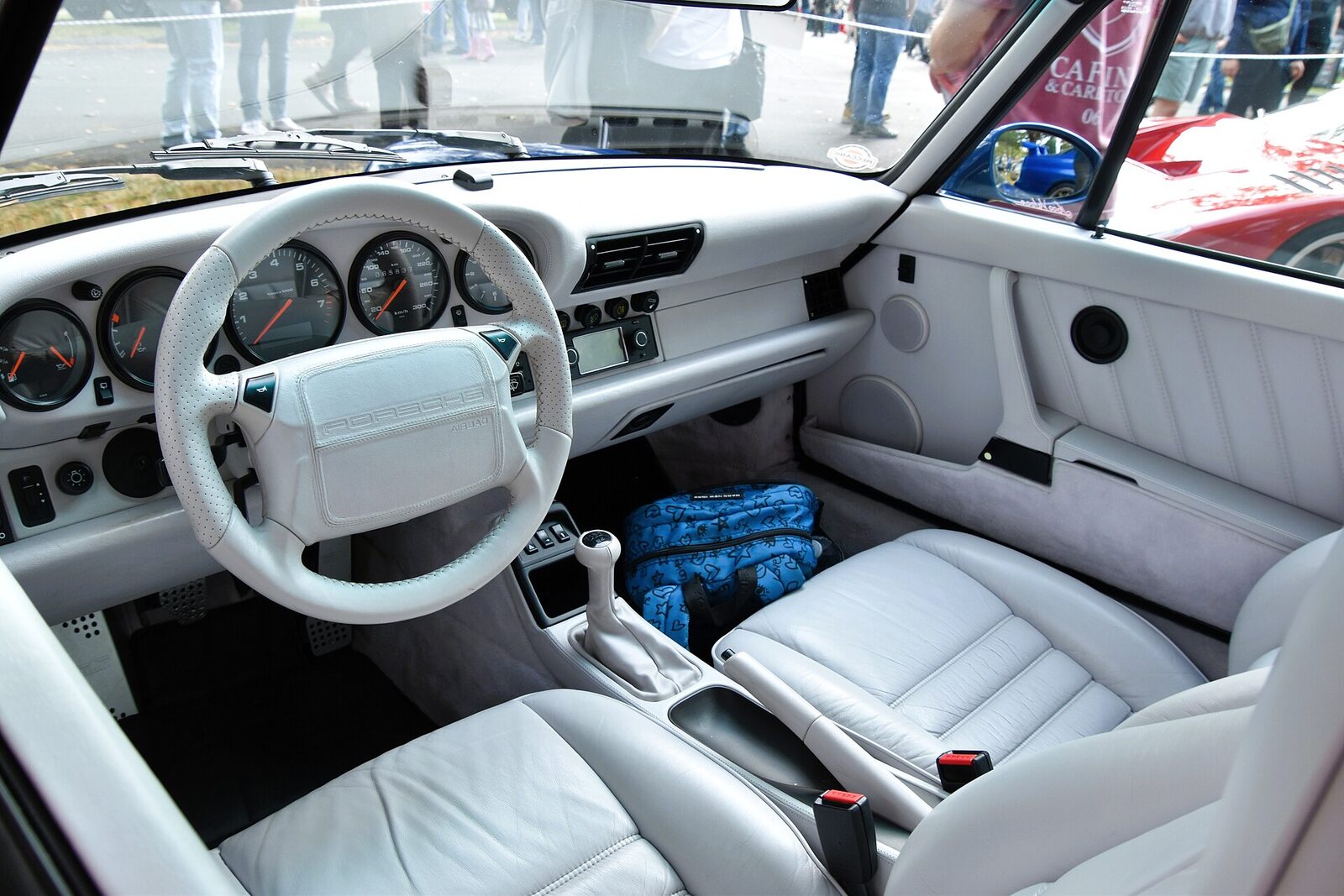
The cabin of a 1991 911 Turbo (964): check that the air conditioning blows cold from these controls before you buy.
Questions
The Porsche 964 Turbo was built from 1991 to 1993.
5,097: Turbo 3.3 (3,660) and Turbo 3.6 (1,437) coupés, according to Eberhard Kittler, Deutsche Autos seit 1990, vol. 6 (Motorbuch, 2001), as cited on Wikipedia.
The 3.3 (1991-92, 320 hp, based on the older 930 engine) and the 3.6 (1993-94, 360 hp, just over 1,400 built) differ a lot. A 3.3 with factory option X33 has 355 hp; only 192 were ordered.
On the Turbo in particular: early dual-mass flywheel failure (manual cars). Then take the printable 964 checklist with you when you see the Turbo: it lists the problems every 964 shares.
For a Turbo, start with the 18 964 specialists in our directory who offer pre-purchase inspections.
Sources
- Elferspot Magazine: Porsche 964 Turbo buyer's guide (2021-09-30 (updated 2026-09-25))
- Porsche Newsroom: 60 Years Porsche 911, 3rd Generation: Engines
- Porsche Club of America: Model Guide: Porsche 911 Turbo, 1976-2013
- Classic & Sports Car: Porsche 911 (964) buyer's guide: what to pay and what to look for (2019-07-12)
- Eberhard Kittler, Deutsche Autos seit 1990, vol. 6 (Motorbuch, 2001), as cited on Wikipedia
- Porsche Classic: 964 turbo (read 2026-10-29)