Buyer's guide · built 1988–1994
Buying a Porsche 964: common problems and what to check
The Porsche 964 was built from 1988 to 1994, 63,762 in all. Check the cylinder heads for leaks and broken studs, the dual-mass flywheel on manual cars, the twin-distributor drive belt and the bodyshell for rust, and on a Carrera 4 the all-wheel-drive hydraulics.
By Jon Kennedy, Porsche Enthusiast
Last reviewed 25 October 2026. Every point links the specialist, club, magazine or Porsche page it comes from.
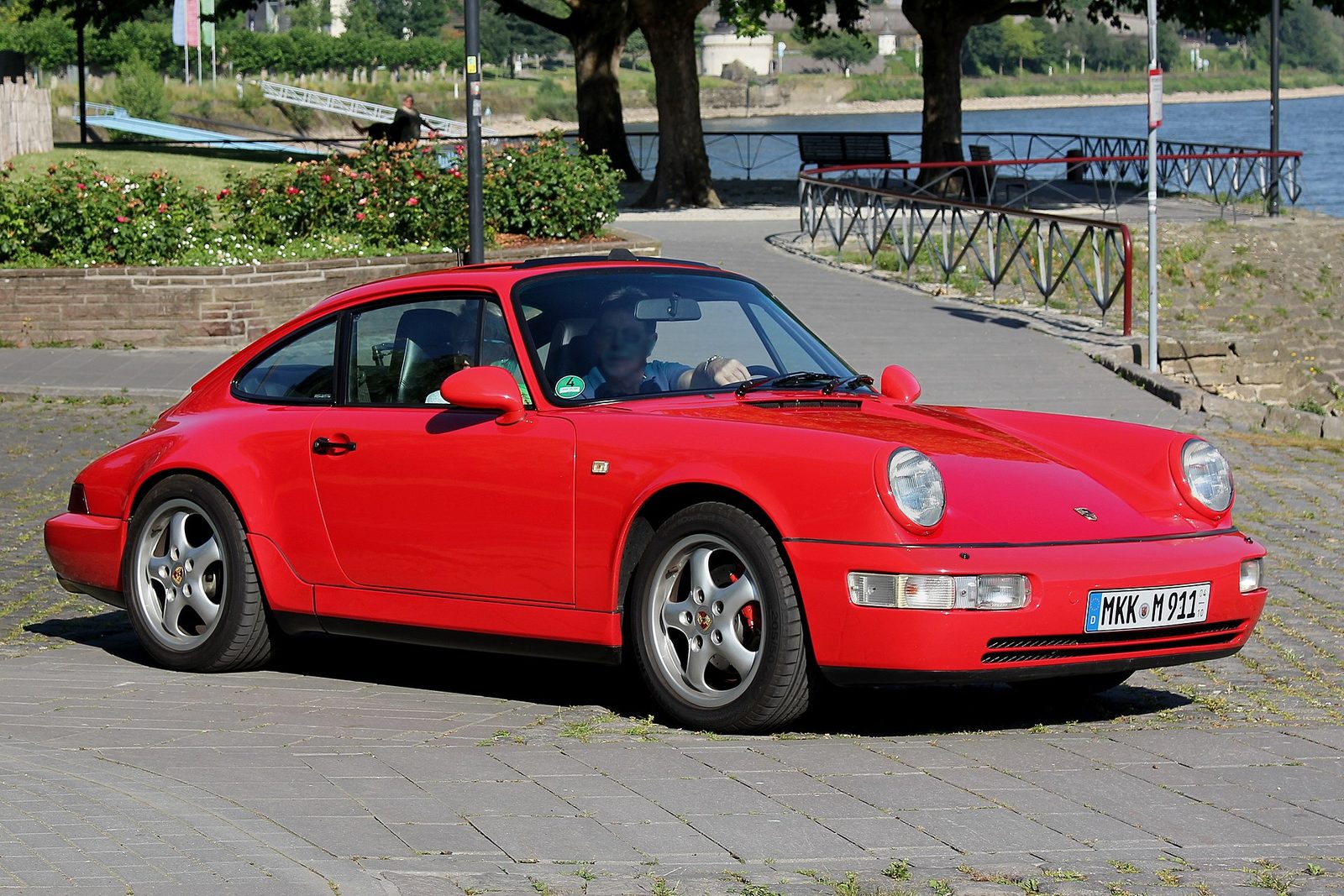
A Porsche 911 Carrera of the 964 generation, with its smooth integrated bumpers.
Do this next
In short
- Built
- 1988–1994
- Model years
- 1989–1994
- Made
- 63,762
- Models with a guide
- 8
All 964 models and bodies, 1988–1994.[1]
What goes wrong on a Porsche 964?
The 10 problems to check on any 964. Where a source publishes a repair cost, it's shown as published, with its date.
Cylinder head leaks and broken head studs
The M64 3.6 can break cylinder head studs, which shows up as oil leaks or a misfire at high speed. Cars built from 1989 to mid-1991 were made with no head gasket between cylinder and head and often leak there; Porsche added a head gasket from 1991. Specialists say a well-serviced 964 engine should run at least 120,000 miles before the heads need attention.[2][3][4][5]
What to check: Look for heavy oil residue, or an engine undertray that has been wiped suspiciously clean, and for grey residue between heads and cylinders. Ask for invoices for any top-end work. Check the VIN's 10th digit for model year (pre-1991 cars lack the head gasket).
Published cost: Hagerty UK (Aug 2022): full rebuild of both cylinder heads around GBP 7,000. Porsche Club GB: head rebuild around GBP 5,000-6,000 + VAT (date not shown). Classic & Sports Car (Jul 2019): be prepared for broken head studs and a GBP 5,000-plus bill if leaks are significant. PCA: parts alone to fit later head gaskets to an early engine cost nearly USD 6,000 from Porsche (date not shown).
Early dual-mass flywheel failure (manual cars)
Manual 964s from 1990 used a dual-mass flywheel. The early Freudenberg unit (1990-91, and on early 3.3 Turbos) is prone to failure; a stronger LUK unit with metal springs came in from 1992. A failing one rattles or vibrates at idle or clonks when accelerating, and the noise can be misdiagnosed as a connecting-rod knock.[2][3][4][5][6]
What to check: Listen at idle and when pulling away for rattles or clonks. Ask whether the flywheel has been replaced with the later LUK type, especially on very low-mileage early cars. Tiptronic cars do not have this flywheel.
Published cost: Classic & Sports Car (Jul 2019): a worn flywheel adds about GBP 1,000; clutch replacement GBP 1,000+. Porsche Club GB: flywheel replacement GBP 800-900 + VAT (date not shown).
Applies to: 964 Carrera 2 (C2), 964 Carrera 4 (C4), 964 Turbo, 964 RS America
Twin-distributor drive belt
The 964's twin-spark ignition has a second distributor driven by a small toothed belt inside the distributor. Early belts strip their teeth and fail without warning, disabling the car; Hagerty says a break can lead to terminal engine damage. Porsche issued a service bulletin and a vent kit that reduces corrosion of the belt teeth. Mostly a problem on pre-1991 cars according to Elferspot.[2][4][7]
What to check: Ask whether the distributor vent kit has been fitted (or the distributor replaced) and look for it on the engine. PCA advises replacing the whole distributor rather than just the belt after a failure.
Bodyshell rust, often after poor repairs
Despite galvanising, 964s (especially early ones) can rot, often because of neglect, poor accident repair or careless windscreen replacement. Known spots: headlamp surrounds, where the front wing meets the bumper, around both screens, the rear arches and inner arches at the suspension mounts, the battery box and jacking points. Some cars have rusted around the rear suspension attachment points.[2][3][5][7]
What to check: Check those areas closely, use a magnet for filler on the front wing above the bumper, lift the front compartment carpet and spare wheel for crash damage (bent cross members), and lift seals in the screen corners. Uneven panel gaps and badly refitted sill seals suggest a cheap restoration.
Published cost: Porsche Club GB: repairing rust at the rear suspension attachment points can cost 'high thousands'; a quality repaint GBP 5,000-6,000 + VAT (date not shown). Classic & Sports Car (Jul 2019): getting a poor example up to good condition can cost GBP 20,000-plus.
Oil leaks: cam covers, seals and case through-bolts
Oil seals harden on little-used cars and cam covers can still leak even after a top-end rebuild. PCA singles out leaking O-rings on the engine case through-bolts as the most costly item to check on a 964. Classic & Sports Car warns that a cheap oil-leak fix can turn into a GBP 7,500-10,000 engine rebuild.[3][4][5][7]
What to check: Inspect the engine underside and cam covers for fresh oil. Note that light oil films can come from spills when topping up. Get a specialist to identify the source before agreeing a price.
Published cost: Porsche Club GB: fixing cam cover leaks around GBP 500 + VAT (date not shown).
Carrera 4 all-wheel-drive and ABS hydraulics and control units
The Carrera 4's electronically controlled, hydraulically regulated all-wheel drive uses a pump assembly in the front luggage compartment that runs on brake fluid; a solenoid screwed into it can fail and is expensive. Elferspot says many ABS and all-wheel-drive faults come from failing control units. PCA also notes the ABS module on 964s is mounted upside down in the front luggage compartment, inviting water corrosion at the connector.[4][7][8]
What to check: Check for warning lights, listen for the pump running excessively, and ask for brake fluid change records (PCA warns that skipped fluid changes risk internal brake component failure). Have a specialist diagnose the system.
Published cost: Elferspot (2019): replacing control units can easily add up to EUR 1,000 or more.
Applies to: 964 Carrera 4 (C4)
Worn suspension bushes, dampers and leaking power steering
Dampers and bushes need replacing at around 70,000 miles and power-steering seals leak. Front lower control arm bushes wear at 70,000-100,000 miles; PCA says failed bushes cause steering-wheel vibration at 50 mph and above.[3][4][5]
What to check: Feel for vibration and clunks on the test drive, check the power-steering system for leaks, and look for uneven tyre wear.
Published cost: Classic & Sports Car (Jul 2019): keep GBP 2,000 in hand for an overhaul. Porsche Club GB: replacement front arms GBP 375 + VAT each; a set of dampers around GBP 1,000 + VAT (date not shown).
Air conditioning
964 air conditioning tends to fail through rotten condensers or compressors, and many systems need a full rebuild and conversion to modern refrigerant. Hagerty says it was never very effective even when new. PCA notes failing oil-cooler and condenser fan resistors can cause poor A/C and higher engine temperatures.[2][3][4][7]
What to check: Test that it blows cold and that the cooling fans run. Ask whether the system has been rebuilt.
Published cost: Porsche Club GB: approaching GBP 1,000 + VAT if not already done (date not shown).
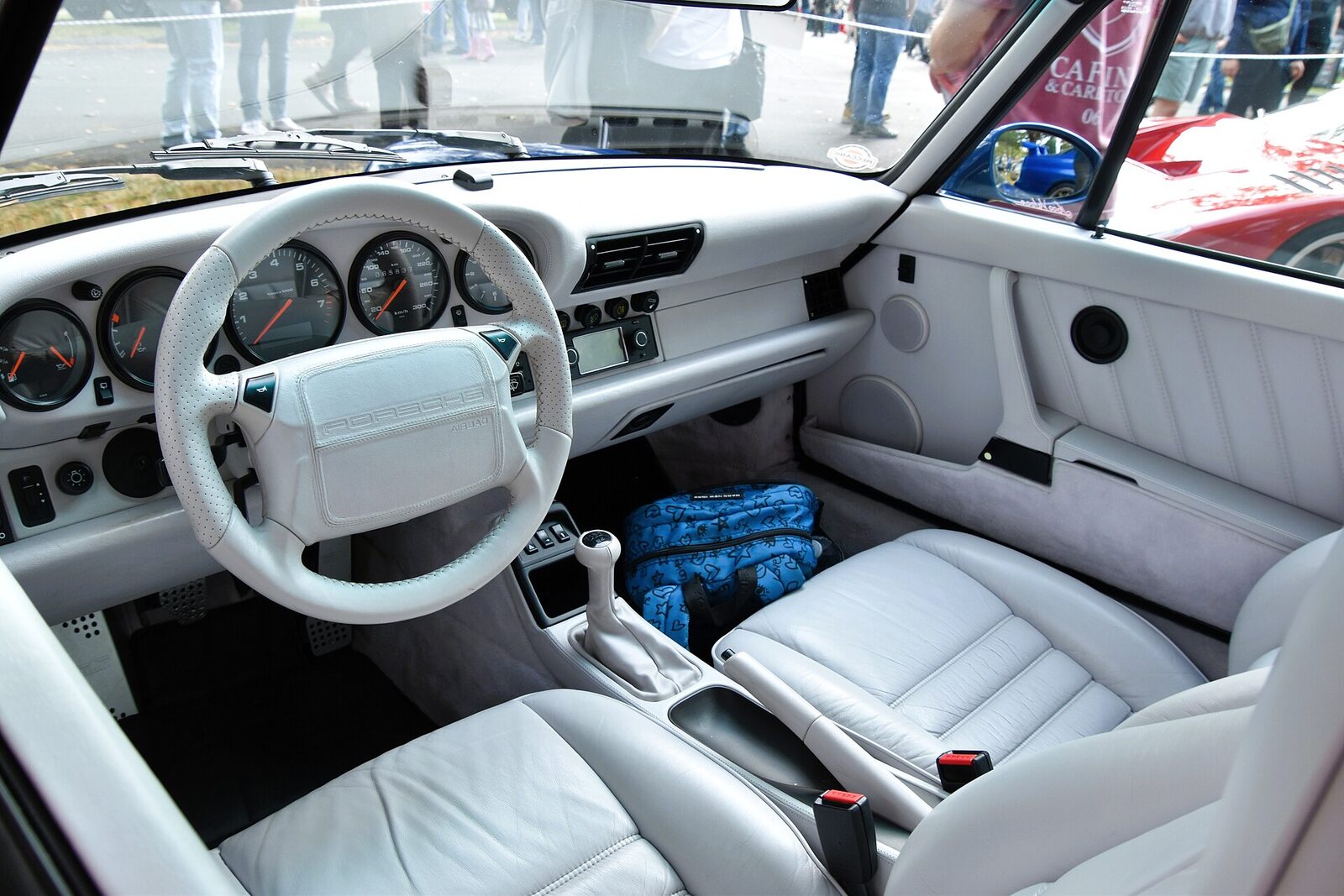
The cabin of a 1991 911 Turbo (964): check that the air conditioning blows cold from these controls before you buy.
Cabriolet and Targa roofs and water leaks
Seals go brittle with age, so Cabriolets and Targas can let water in. The Cabriolet hood, its plastic rear window and the small motors that clamp the hood to the windscreen rail are known wear items.[2][3][7]
What to check: Lift the carpets to look for damp or crusty carpet, operate the roof several times, and check the rear screen for fogging or splits.
Published cost: Hagerty UK (Aug 2022): Cabriolet roof around GBP 2,000 all in; plastic rear screen about GBP 180; clamp motors about GBP 150 to rebuild. Porsche Club GB: roof or windows around GBP 1,500 + VAT (date not shown).
Applies to: 964 Carrera 2 (C2), 964 Carrera 4 (C4), 964 Targa
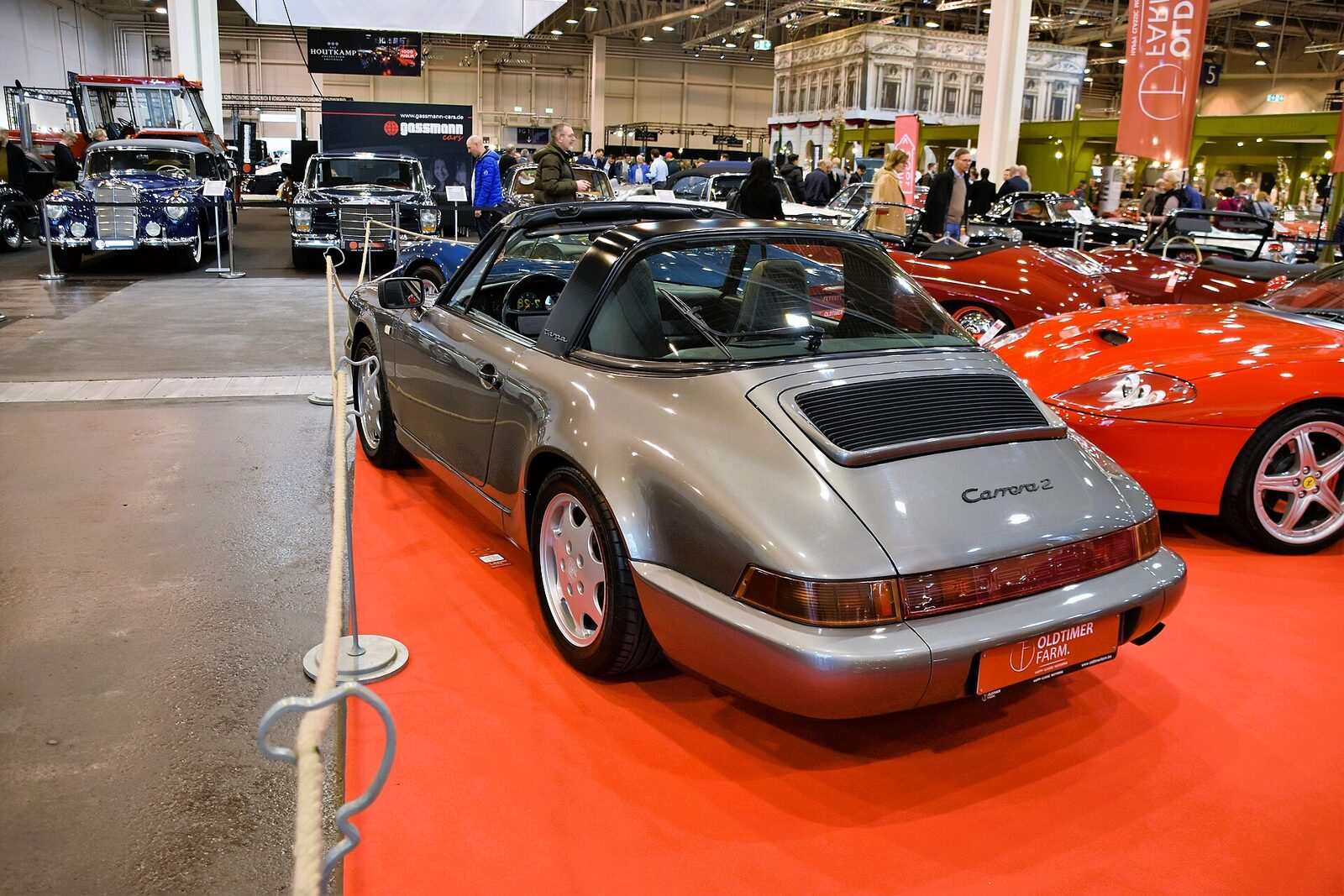
A 1990 Carrera 2 Targa (964): check the removable roof panel seals and the drains for water leaks.
Motorised rear spoiler and electrical gremlins
The motorised rear wing can fail when water runs down its drive cable and washes out the motor's lubrication, and its rubber 'accordion' can tear and make the engine run warmer. PCA also lists HVAC control modules causing battery drain (300-400 milliamps against a normal 25-50), engine cooling fan hub bearing failure and a leaking fuel pressure regulator.[4]
What to check: Raise and lower the spoiler, look at the accordion rubber, and ask about battery drain. Test every electrical function, since many 964s are used little.
Applies to: 964 Carrera 2 (C2), 964 Carrera 4 (C4)
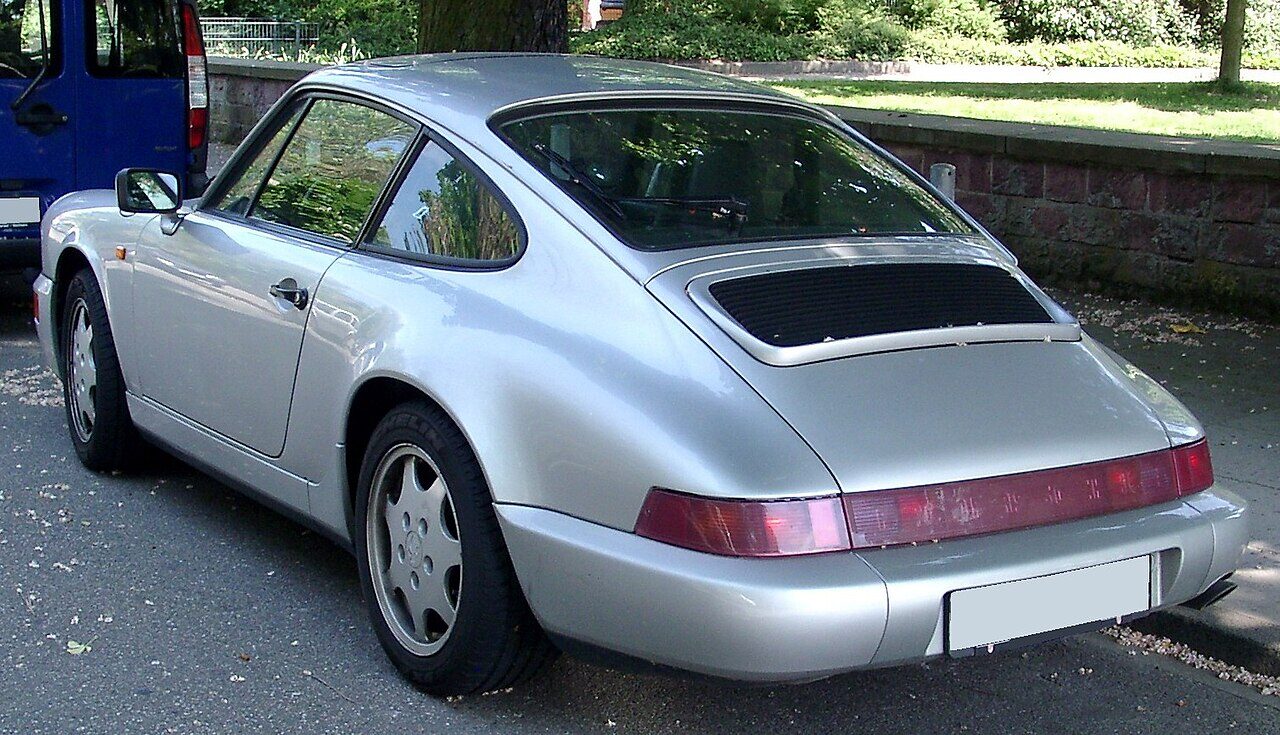
The rear of a 964 coupe with the spoiler down: it should rise at speed and lower again, so test the motorised spoiler with its switch.
Our take: Ask for invoices for the cylinder heads and the flywheel before anything else. Hagerty UK puts a rebuild of both heads at around £7,000, and Classic & Sports Car says a worn flywheel adds about £1,000 to a clutch job, so a car with both done is worth paying more for.
How do you check a Porsche 964 is original?
Confirm the model year from the VIN
The 10th digit of the VIN gives the model year: K = 1989, L = 1990, M = 1991, N = 1992, P = 1993 (R = 1994 on RS Americas). It matters because later cars got better head sealing (1991), a stronger flywheel (1992) and improved interiors (1993), and recession-era cars could sit unsold, so a car first registered in 1992 or 1993 may be a 1991 model.[3][5][9]
Match the identity labels and the bodyshell VIN
Check the Vehicle Identification Label under the bonnet (German headings in bold), the paint code label in the front compartment, the data labels, and the bodyshell VIN on a tab under the fuel tank in the front compartment. Classic & Sports Car says these checks matter most on the more desirable models.[3][5]
Verify mileage against the service and MoT history
Porsche Club GB warns it is fairly easy to adjust the mileage on these cars, so a solid service and test history is valuable. Elferspot adds that big gaps between the production dates printed on the backs of the instruments are a warning sign.[3][7]
Order the Porsche Production Specification or a Classic Technical Certificate
The Porsche Production Specification (ordered online by VIN) lists the car's original options, colours, engine and transmission type and completion date. The Classic Technical Certificate, done at a Porsche Classic Partner or qualified dealer, also checks whether the engine and transmission numbers in the car match the original records and whether original parts have been replaced. In 2022 Porsche USA priced the PPS at USD 150 and the CTC from USD 500 plus tax.[10]
Judge modifications and look-alike conversions
Modifications are common and generally reduce value. Many early Carrera 2s and 4s wear Turbo-style mirrors and Cup wheels; stiff aftermarket suspension and further changes cut desirability. Hagerty says upgrades are acceptable when receipts show an acknowledged specialist did the work. The Carrera RS has bodyshell authenticity checks that need an expert before purchase.[2][3][5]
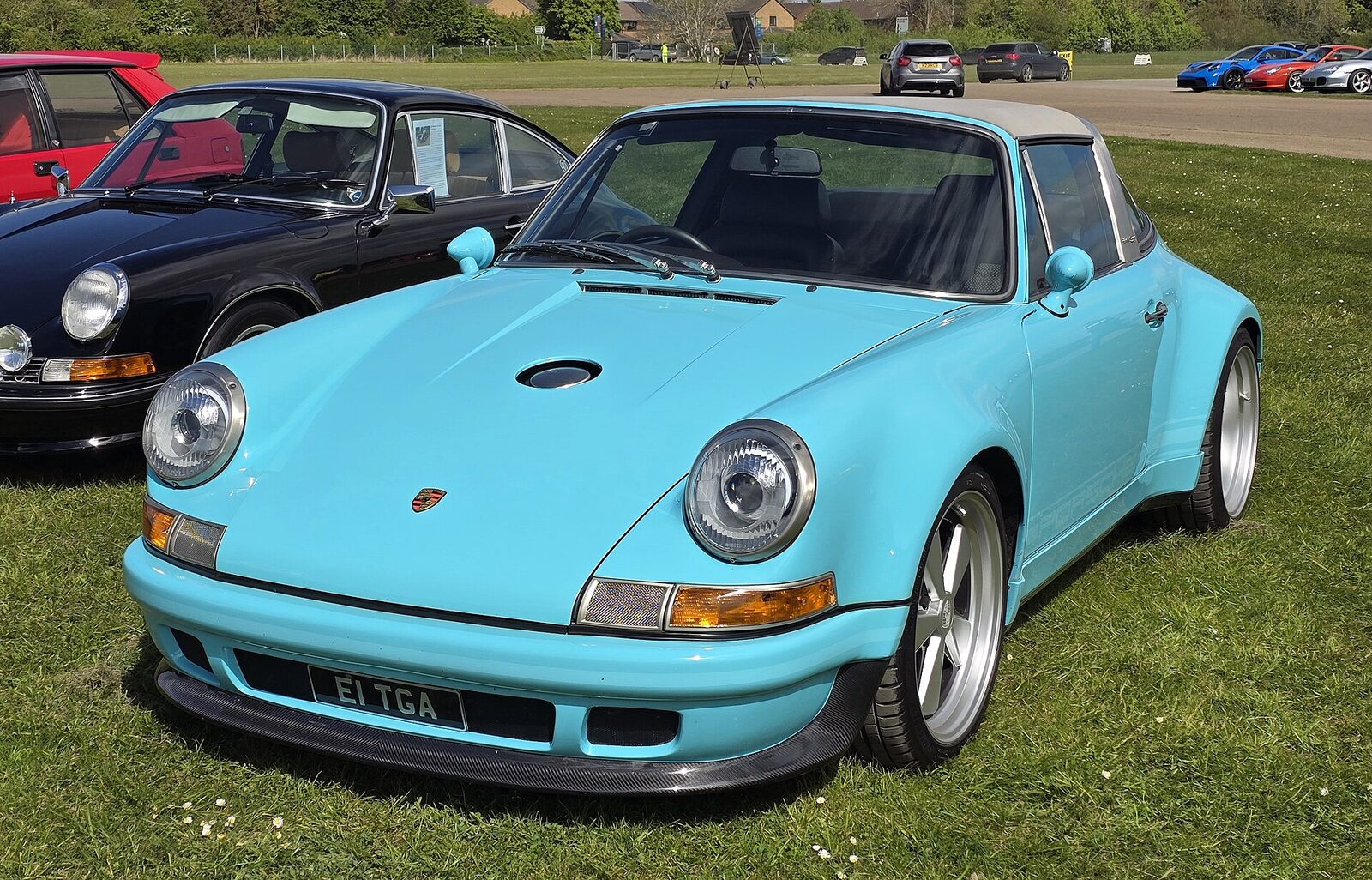
A 1992 Carrera 4 Targa (964) rebuilt as a backdate: conversions like this change the value, so judge them against a standard car.
Which Porsche 964 should you buy?
Each model has its own guide to what sets it apart and what to check on it in particular.
Deciding between the two? Porsche 964 vs 993.
| Model | Built | Power | Made |
|---|---|---|---|
| 964 Carrera 2 (C2) | 1990–1993 | 250 PS | 18,219 |
| 964 Carrera 4 (C4) | 1989–1993 | 250 PS | 13,353 |
| 964 Targa | 1990–1993 | 250 PS | Not yet sourced |
| 964 Carrera RS | From 1991 | 264 PS | 2,282 |
| 964 RS America | 1993–1994 | Not yet sourced | 701 |
| 964 Turbo | 1991–1993 | 320 PS (3.3), 360 PS (3.6) | 5,097 |
| 964 Turbo S | 1992–1993 | 381 PS | 86 |
| 964 Speedster | 1992–1993 | Not yet sourced | 936 |
- Porsche 964 Carrera 2 (C2)
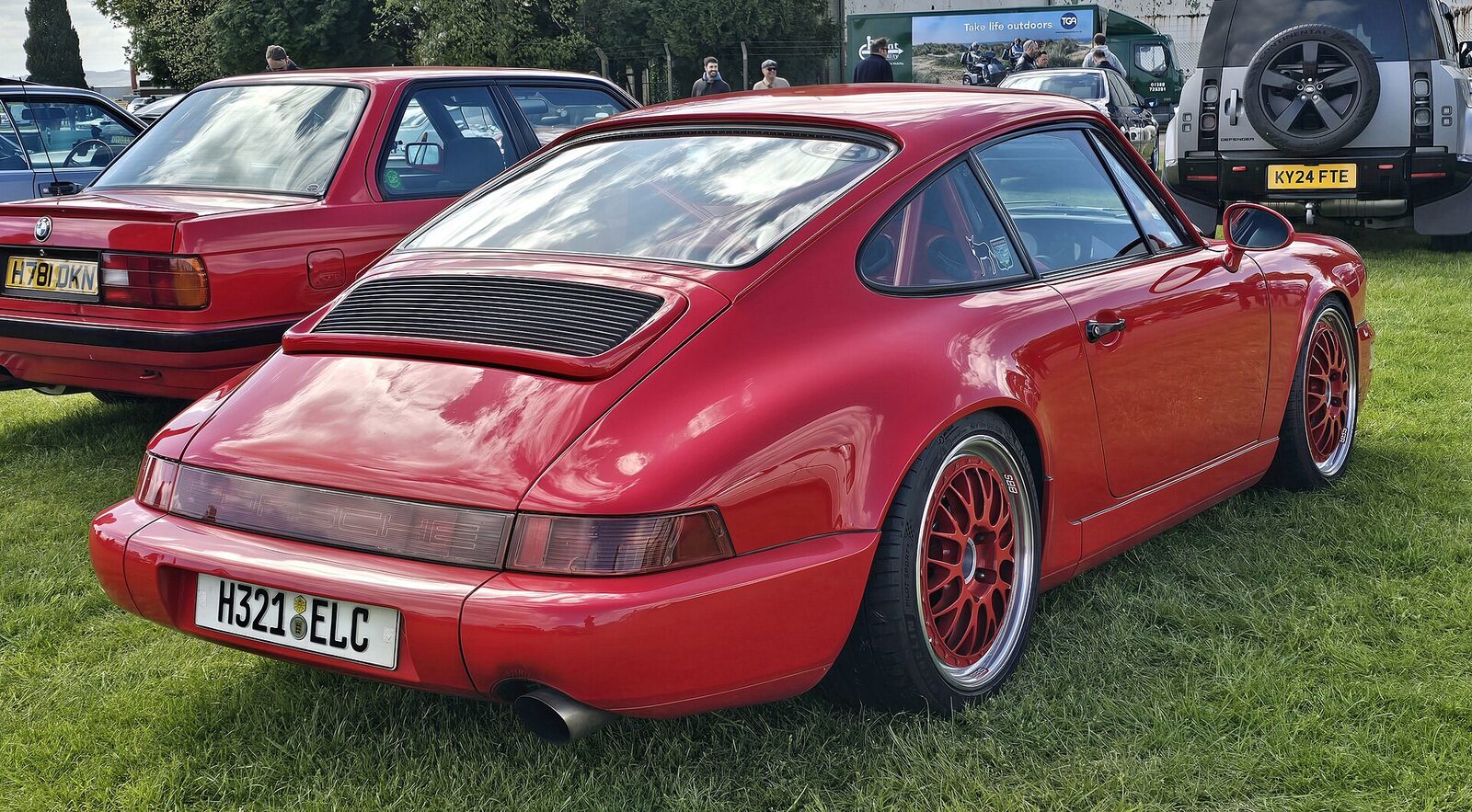
A 1990 Porsche 911 Carrera 2 of the 964 generation, photographed at Bicester Heritage in 2024.
Photo: Calreyn88, CC BY-SA 4.0, via Wikimedia Commons. - Porsche 964 Carrera 4 (C4)
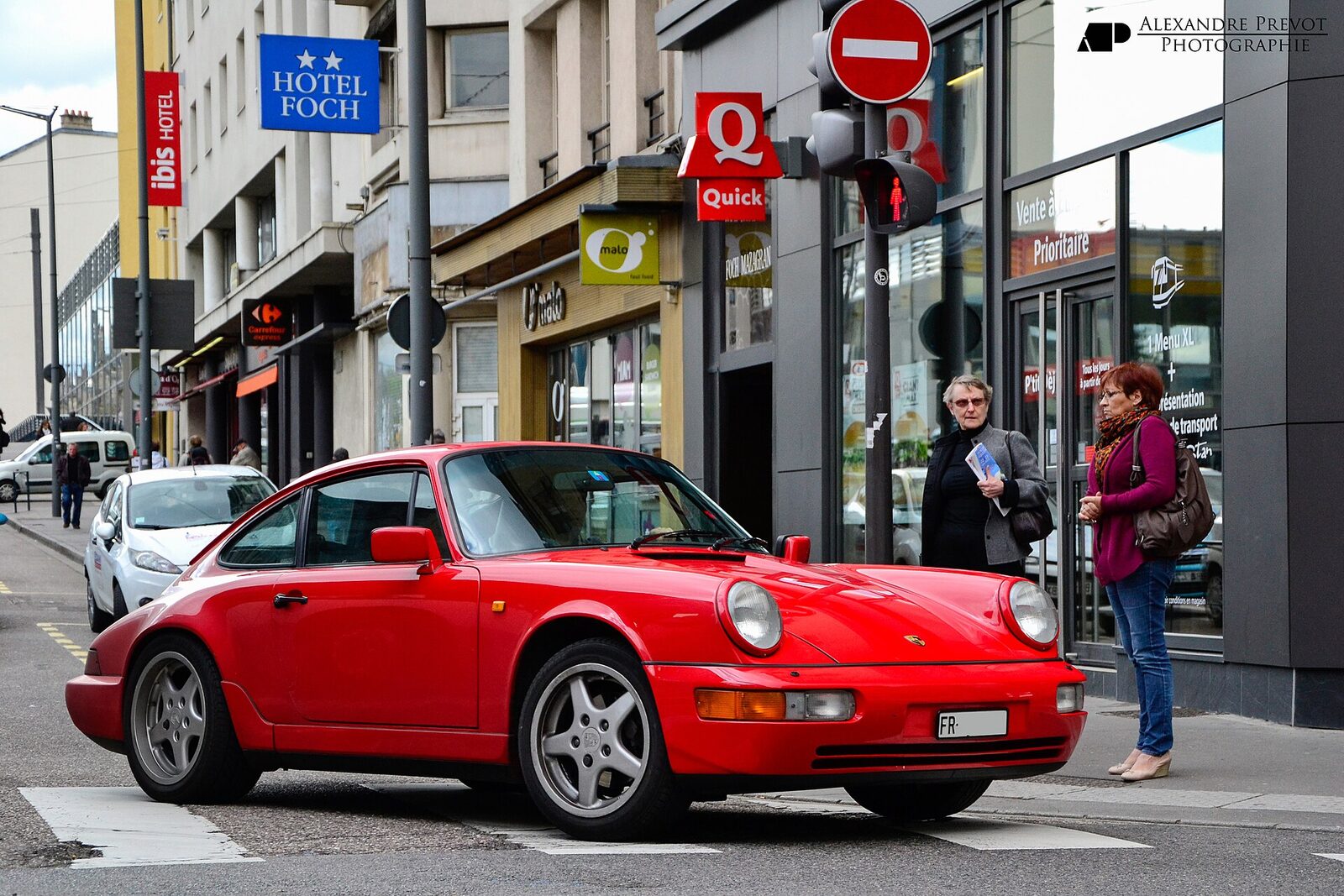
A Porsche 911 Carrera 4 of the 964 generation.
Photo: Alexandre Prévot, CC BY-SA 2.0, via Wikimedia Commons. - Porsche 964 Targa
A 1990 964 Carrera 2 Targa: the roll hoop and lift-out centre panel are the layout the 993 gave up for a glass roof.
Photo: Charles from Port Chester, New York, CC BY 2.0, via Wikimedia Commons. - Porsche 964 Carrera RS
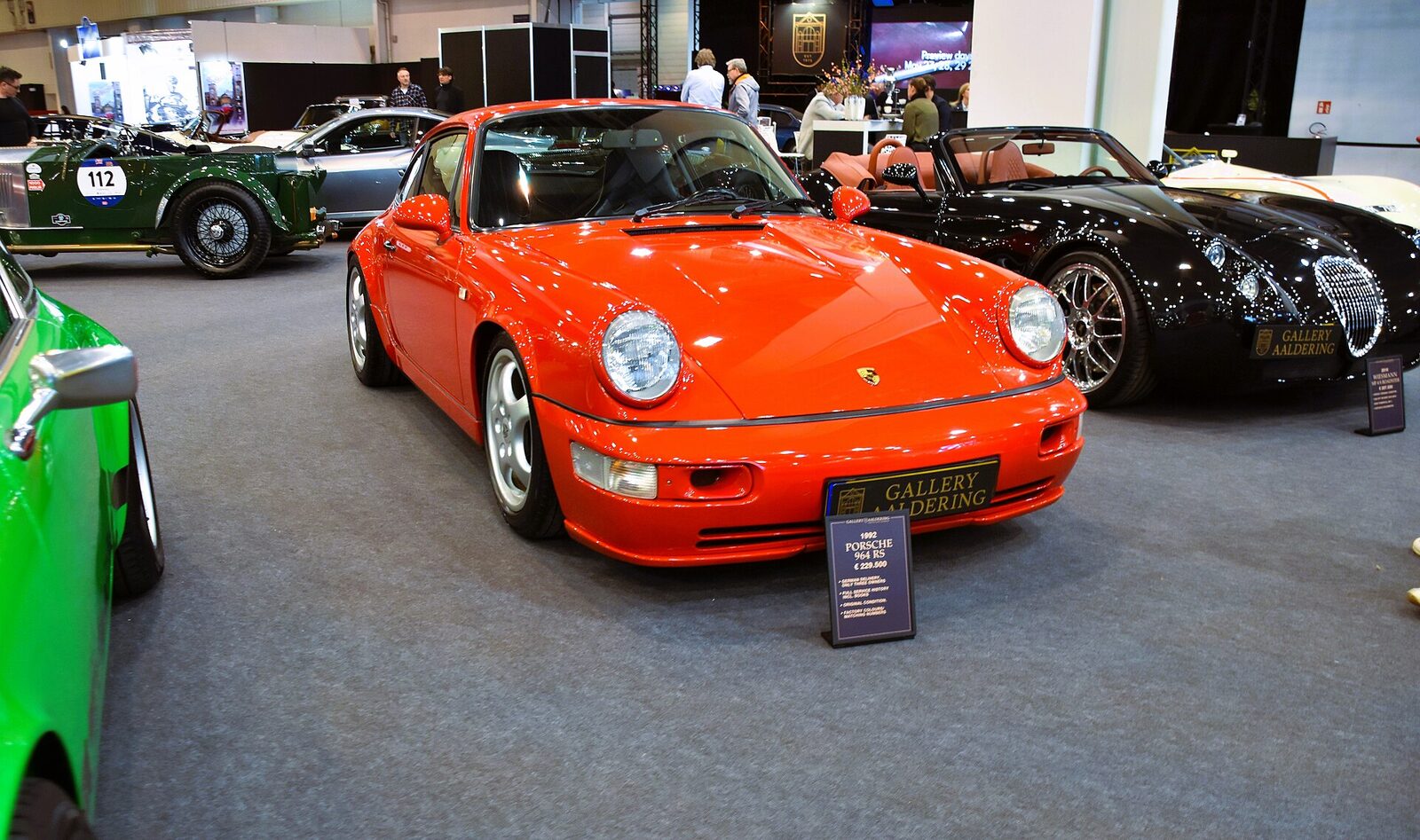
A 1992 Porsche 911 Carrera RS of the 964 generation, with the 260 PS 3.6-litre engine, at Techno-Classica in 2023.
Photo: Charles from Port Chester, New York, CC BY 2.0, via Wikimedia Commons. - Porsche 964 RS America
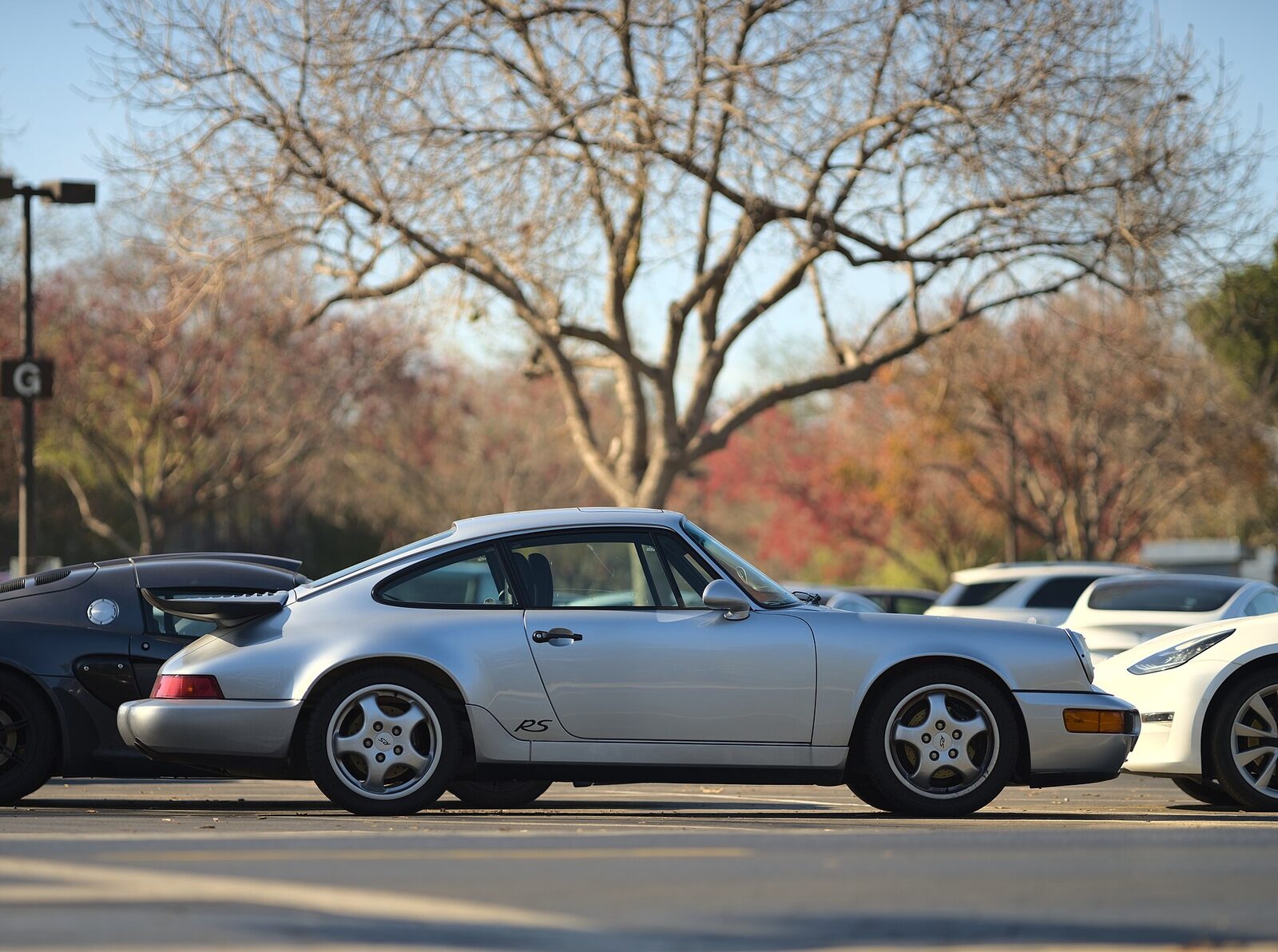
A Porsche 911 RS America of the 964 generation, the stripped-down US-market model with a fixed rear spoiler.
Photo: Dllu, CC BY-SA 4.0, via Wikimedia Commons. - Porsche 964 Turbo
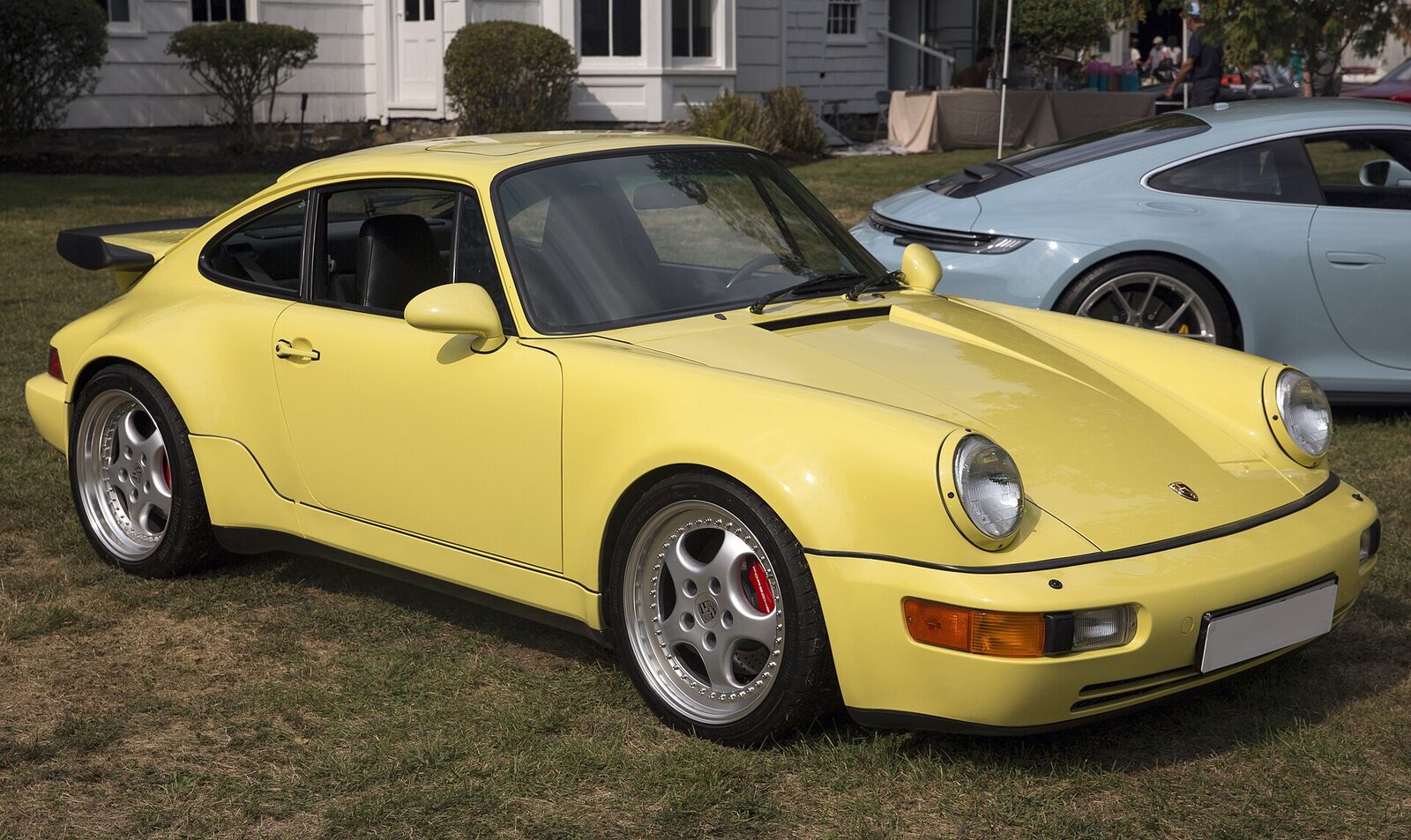
A 1991 Porsche 911 Turbo 3.3 of the 964 generation in paint-to-sample Summer Yellow, on 18-inch Speedline wheels.
Photo: Mr.choppers, CC BY-SA 3.0, via Wikimedia Commons. - Porsche 964 Turbo S
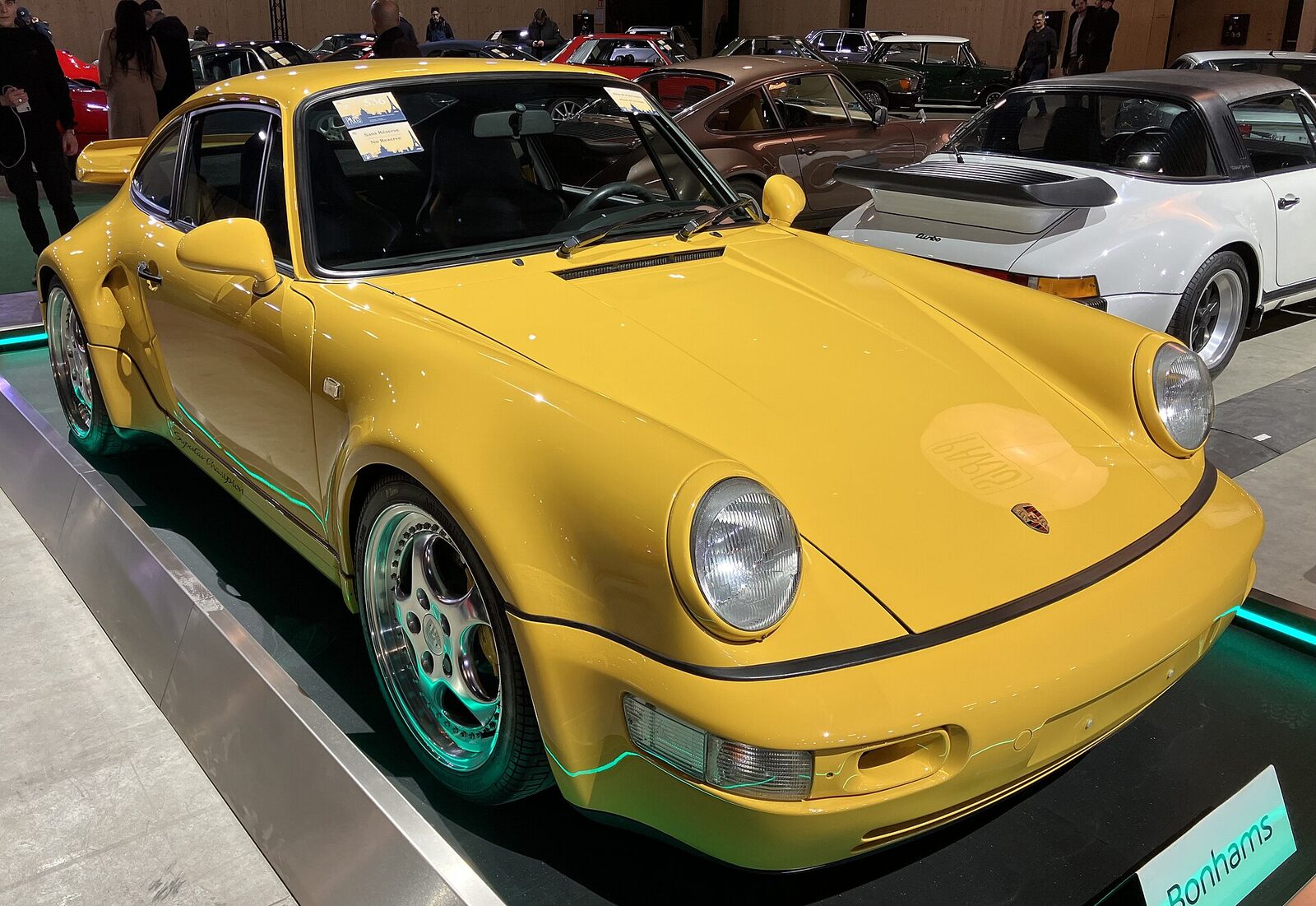
A 1993 Porsche 911 Turbo S Leichtbau of the 964 generation, the lightweight limited-run Turbo S.
Photo: Pelicanactor, CC BY-SA 4.0, via Wikimedia Commons. - Porsche 964 Speedster
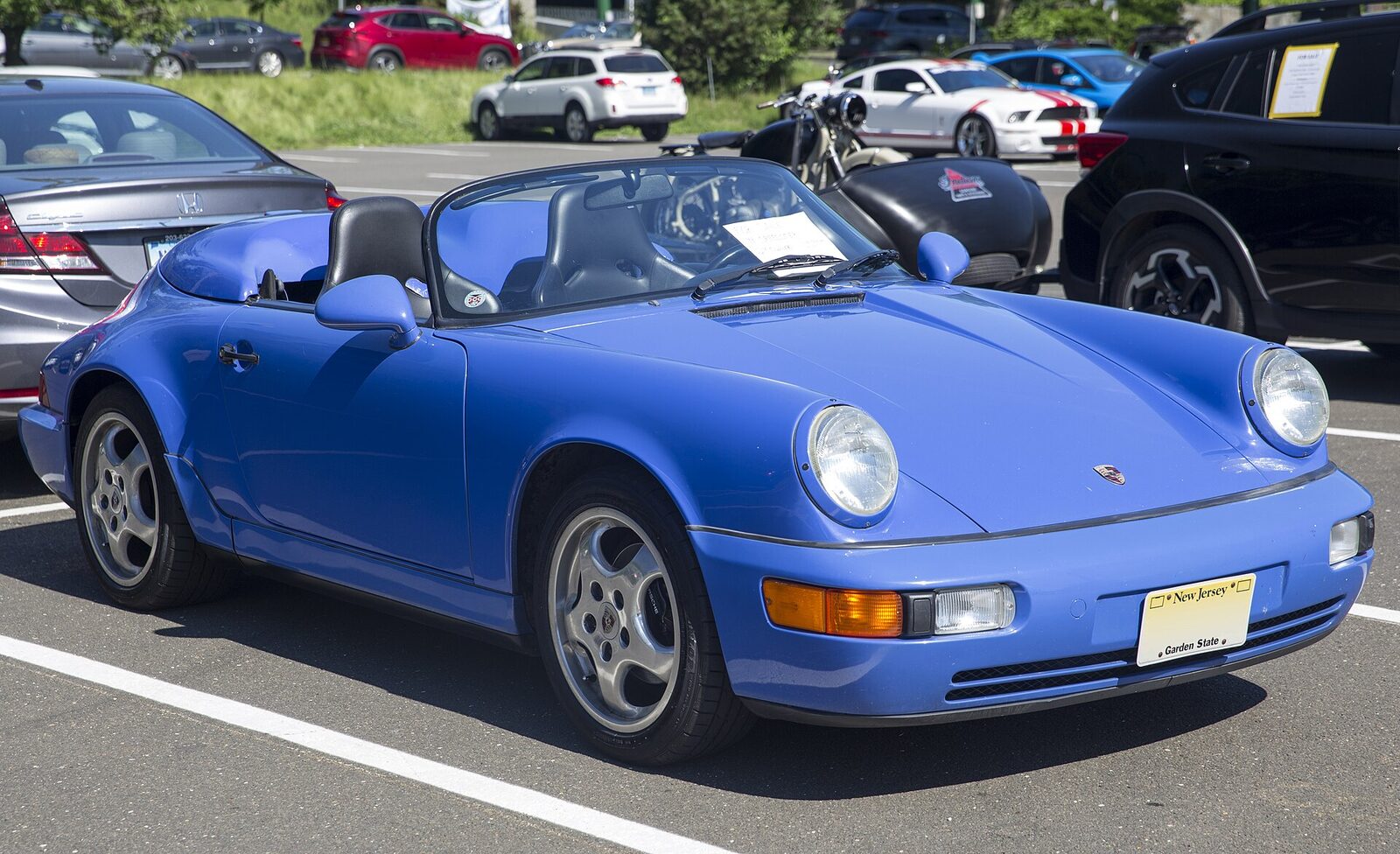
A 1994 Porsche 964 Speedster in Maritime Blue at the Greenwich Concours in 2022.
Photo: Mr.choppers, CC BY-SA 3.0, via Wikimedia Commons.
Inspection checklist: Porsche 964
- 1Cylinder head leaks and broken head studs
- 2Early dual-mass flywheel failure (manual cars)
- 3Twin-distributor drive belt
- 4Bodyshell rust, often after poor repairs
- 5Oil leaks: cam covers, seals and case through-bolts
- 6Carrera 4 all-wheel-drive and ABS hydraulics and control units
- 7Worn suspension bushes, dampers and leaking power steering
- 8Air conditioning
- 9Cabriolet and Targa roofs and water leaks
- 10Motorised rear spoiler and electrical gremlins
- 11Confirm the model year from the VIN
- 12Match the identity labels and the bodyshell VIN
- 13Verify mileage against the service and MoT history
- 14Order the Porsche Production Specification or a Classic Technical Certificate
- 15Judge modifications and look-alike conversions
Questions
The ones to check first: cylinder head leaks and broken head studs; early dual-mass flywheel failure (manual cars); twin-distributor drive belt; bodyshell rust, often after poor repairs. Each is explained on this page with what to look for and the sources it comes from.
Work through these checks: confirm the model year from the VIN; match the identity labels and the bodyshell VIN; verify mileage against the service and MoT history; order the Porsche Production Specification or a Classic Technical Certificate; judge modifications and look-alike conversions. Each is explained on this page with its sources.
63,762: All 964 models and bodies, 1988–1994, according to Porsche Newsroom, 3rd generation Porsche 911 (964).
964 Carrera 2 (C2) (1990–1993), 964 Carrera 4 (C4) (1989–1993), 964 Targa (1990–1993), 964 Carrera RS (From 1991), 964 RS America (1993–1994), 964 Turbo (1991–1993), 964 Turbo S (1992–1993), 964 Speedster (1992–1993). Each has its own guide to what's different about it.
18 specialists in our directory list pre-purchase inspections and work on the 964. The directory shows where they are and how to contact them.
Sources
Every point above is numbered to the pages it comes from. Dates are the page's own, where it shows one.
- Porsche Newsroom, 3rd generation Porsche 911 (964)
- Hagerty UK: Buying Guide: Porsche 964 (1989-1993) (2022-08-03)
- Porsche Club GB: Porsche 911 (964) buyers guide
- Porsche Club of America: Model Guide: The 964 was a new 911 with classic looks
- Classic & Sports Car: Porsche 911 (964) buyer's guide: what to pay and what to look for (2019-07-12)
- Elferspot Magazine: Porsche 964 Turbo buyer's guide (2021-09-30 (updated 2026-09-25))
- Elferspot Magazine: Porsche 964 Carrera buyer's guide (2019-07-12 (updated 2026-09-25))
- Porsche Newsroom: The type 964: a new start with this 911 (2018-11-23)
- PCA RS America Registry: Frequently Asked Questions (2022-08-02)
- Porsche Newsroom USA: New online service charts the origins of your classic Porsche (2022)