Buyer's guide · built 1993–1998
Buying a Porsche 993: common problems and what to check
The Porsche 993 was built from 1993 to 1998, 68,881 in all. On Carrera and Targa models check first for worn valve guides and clogged secondary air injection, then on any 993 for oil leaks and oil consumption, rust around the screens, the front control arms and the engine wiring harness.
By Jon Kennedy, Porsche Enthusiast
Last reviewed 25 October 2026. Every point links the specialist, club, magazine or Porsche page it comes from.
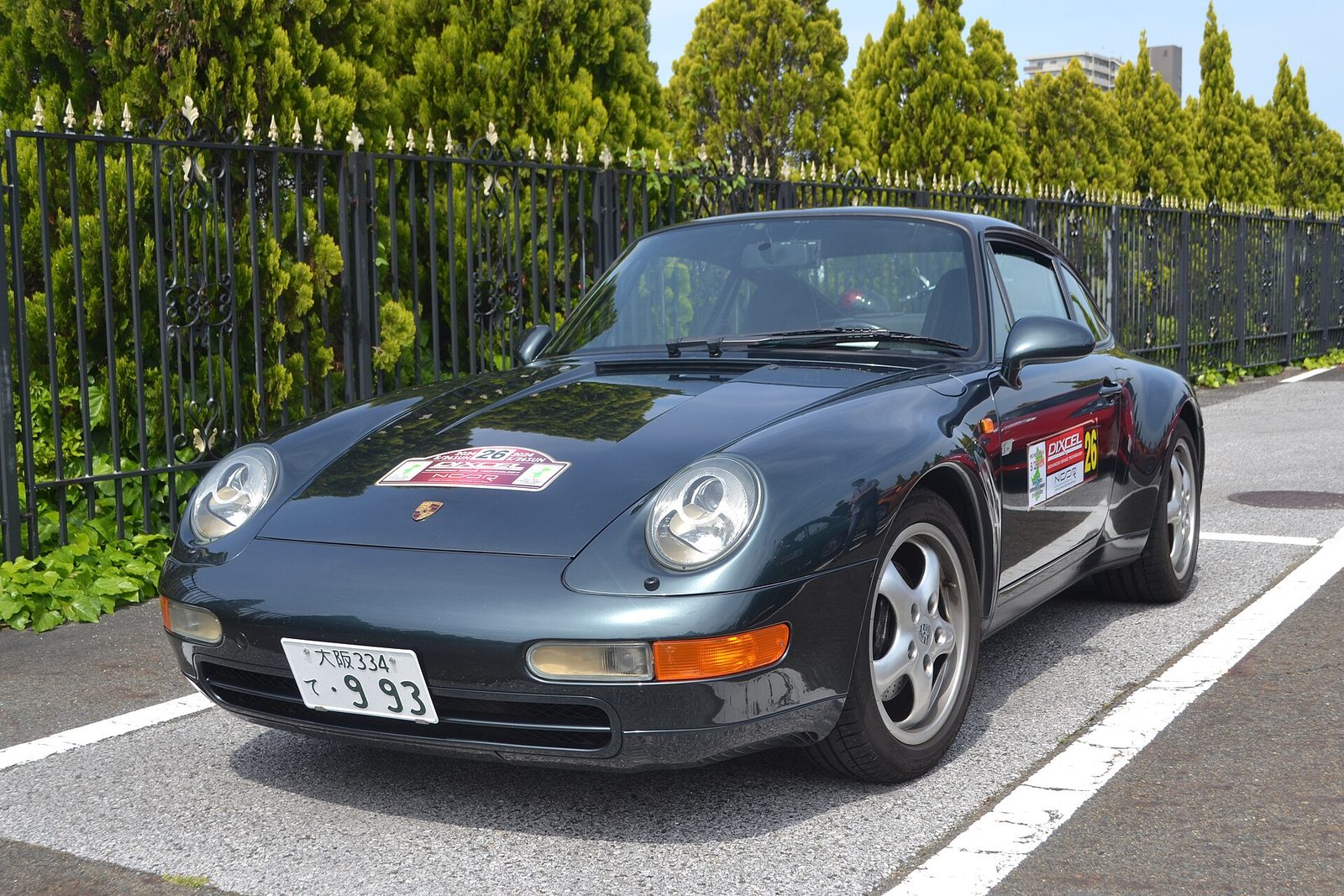
A Porsche 911 Carrera coupé of the 993 generation.
Do this next
In short
- Built
- 1993–1998
- Model years
- 1994–1998
- Made
- 68,881
- Models with a guide
- 11
All 993 models and bodies, up to Porsche's 1998 financial year.[1]
What goes wrong on a Porsche 993?
The 10 problems to check on any 993. Where a source publishes a repair cost, it's shown as published, with its date.
Valve guide wear and clogged secondary air injection
PCA calls this the worst issue on naturally aspirated 993 engines. Worn exhaust valve guides let oil burn in the exhaust ports, carbon clogs the secondary air injection ports, and on 1996-98 OBD-2 cars a check-engine light comes on that stops the car passing emissions tests. 1995 OBD-1 cars wear guides too but do not set the light. PCA says the Turbo does not have this problem because it used a better guide material.[2][3]
What to check: Look for a check-engine light and ask for a code scan, blue smoke on start-up, and records of valve guide replacement or SAI port cleaning.
Applies to: 993 Carrera (C2), 993 Carrera 4 (C4), 993 Carrera S (C2S), 993 Carrera 4S (C4S), 993 Targa, 993 Cabriolet
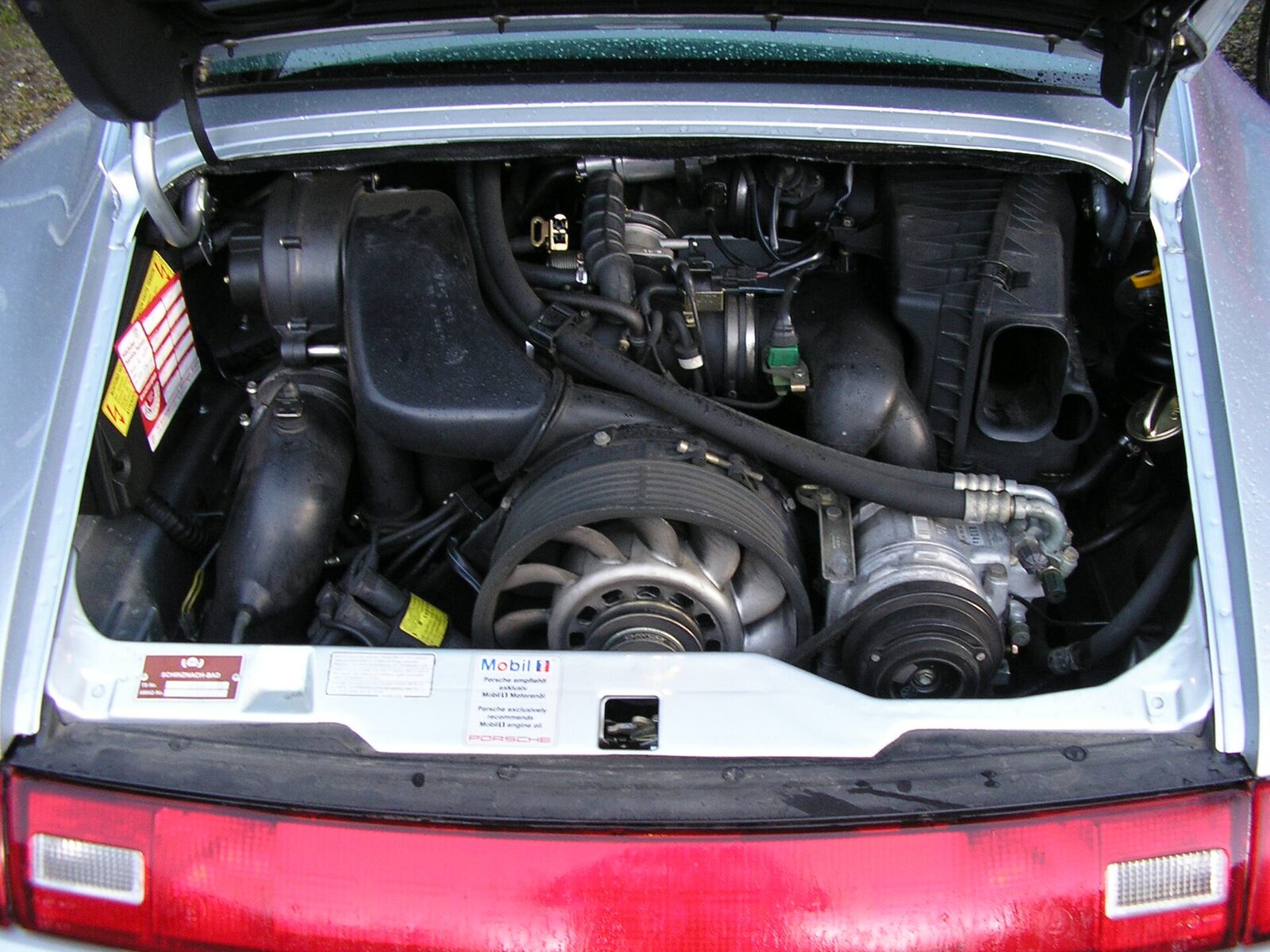
The engine bay of a 993 with the 3.6-litre flat-six. On 1996 to 1998 cars, a check-engine light can mean the secondary air injection ports have clogged.
Oil leaks: lower cam covers, main seals and oil lines
Leaks from the lower cam cover gaskets are common because the gaskets shrink; they are simple to fix. Elferspot adds leaking main seals, valve covers that can warp under heat, and oil line fittings that can fail and cause a big leak. You may smell oil burning on the heat exchangers even if none is visible.[3][4][5]
What to check: Inspect the cam covers, oil lines, oil catch tank and its hoses; smell for burning oil after the drive. Stop at once if oil pressure drops.
Published cost: Porsche Club GB (costs dated 2016): lower cam cover gaskets GBP 20 + VAT each, but perhaps GBP 500 + VAT labour.
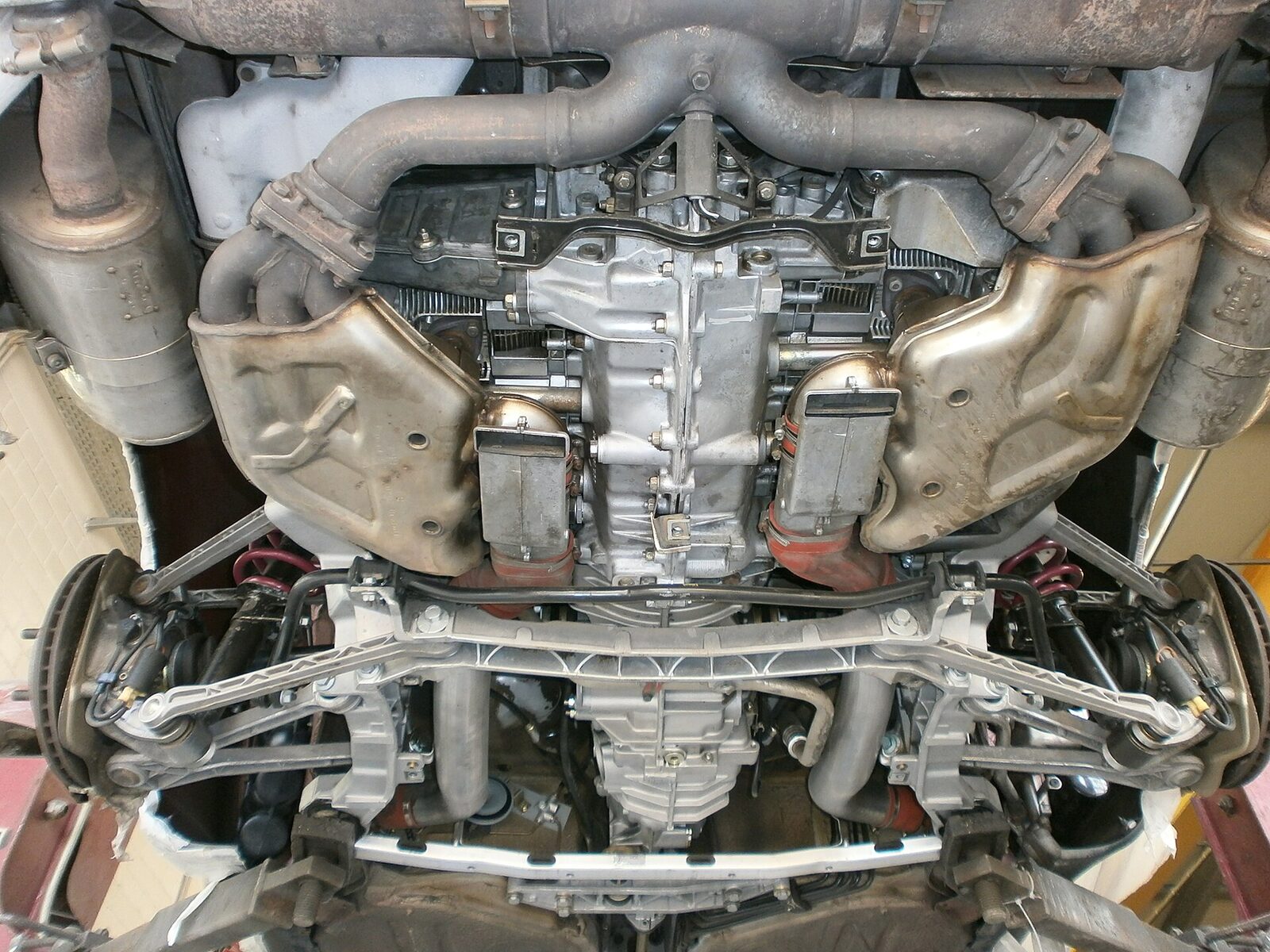
A 993 engine from below in standard condition: this is where leaks from the lower cam covers, main seals and oil lines show.
Oil consumption and blue smoke
Some oil use is normal: Elferspot puts it at up to about 1 litre per 1,000 km, and up to 1.5 litres with lots of short trips. Heavy blue smoke or much higher use can point to worn piston rings or valve guides. Hagerty warns that high oil temperature on a test drive may mean a faulty cooling fan or switch.[3][4]
What to check: Check the oil level only when fully warm, watch for blue smoke on a cold start, and watch the oil temperature gauge on the drive.
Rust around screens and after poor repairs
The 993 is galvanised but can still rust, mostly after poor accident repairs or windscreen replacement. Check around the front and rear screens, headlight apertures, bumper brackets, rear chassis legs and rear bumper supports. PCA notes the screen trim is moulded to the glass, so broken trim means replacing the window.[2][3][4][5]
What to check: Lift the rubber seals in the screen corners, lift the front boot carpet for signs of front-end repair, look at panel gaps (especially bonnet and doors) and look underneath for damaged undershields.
Broken door check strap
A creak or crack when opening the door means a broken check strap, a common 993 fault that is fiddly to fix. Cheap welded repairs usually break again.[3][4][5][6]
What to check: Open and close both doors and listen. Ask how any previous repair was done.
Published cost: Porsche Club GB (costs dated 2016): about GBP 500-600 + VAT for the driver's door.
Front lower control arm bushes and dampers
Front lower control arm bushes wear out at 70,000-100,000 miles and crack, causing steering-wheel shimmy; dampers are past their best after about 15 years.[2][4][5]
What to check: Feel for shimmy and vagueness on the drive and ask when bushes and dampers were last replaced.
Published cost: Porsche Club GB (costs dated 2016): replacement arms GBP 375 + VAT each; a set of dampers around GBP 1,000 + VAT.
Engine and gearbox mounts, exhaust flanges and clutch hydraulics
Worn engine and gearbox mounts send vibration into the cabin and gear lever and can lead to exhaust or header leaks. Exhaust joints can corrode heavily, and clutch master and slave cylinders can leak. The six-speed manual rarely fails; a poor shift usually means the linkage.[3][4]
What to check: Feel for vibration through the lever at idle, look at the exhaust joints, and check the clutch hydraulics for fluid leaks.
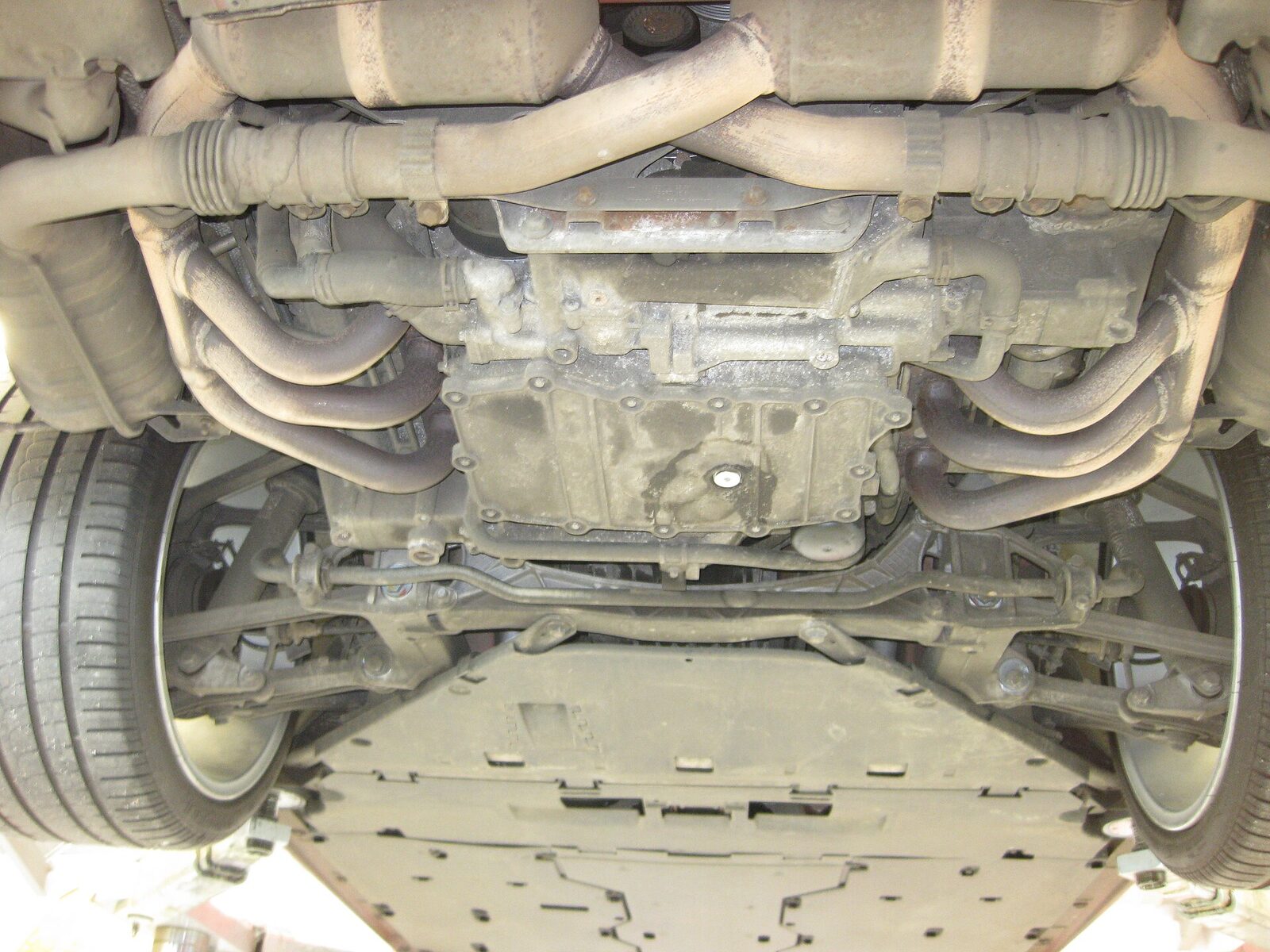
The underside of a 993: the exhaust flanges, engine mounts and gearbox are best checked from below on a lift.
Engine wiring harness
The 993 introduced a modular wiring harness with a soy-based insulation that rodents chew and that can erode, causing short circuits and odd running or instrument faults. PCA notes the engine wiring harness was recalled.[2]
What to check: Ask whether the harness recall was carried out and check for rodent damage and intermittent electrical faults.
Air conditioning
Many 993 A/C systems need work on stored or older cars. PCA notes evaporators are prone to failure on the Turbo.[4][5][6]
What to check: Check it blows chilled air.
Published cost: Hagerty UK (Jul 2024): a new compressor and pipework runs into four figures. Porsche Club GB (costs dated 2016): perhaps GBP 750-1,000 + VAT to get it working.
Targa glass roof, Cabriolet hood and sunroof
Targa roof repairs can be expensive; Cabriolet mechanisms go out of adjustment and the fabric and plastic window degrade. Elferspot says Porsche once recalled all Cabriolets to change the roof locking mechanism. Hagerty calls a faulty sunroof costly to repair.[3][4][5]
What to check: Operate every roof several times. On a Targa check behind the door seals at the roof rail attachments to the windscreen for hidden rust.
Applies to: 993 Carrera (C2), 993 Carrera 4 (C4), 993 Targa, 993 Cabriolet
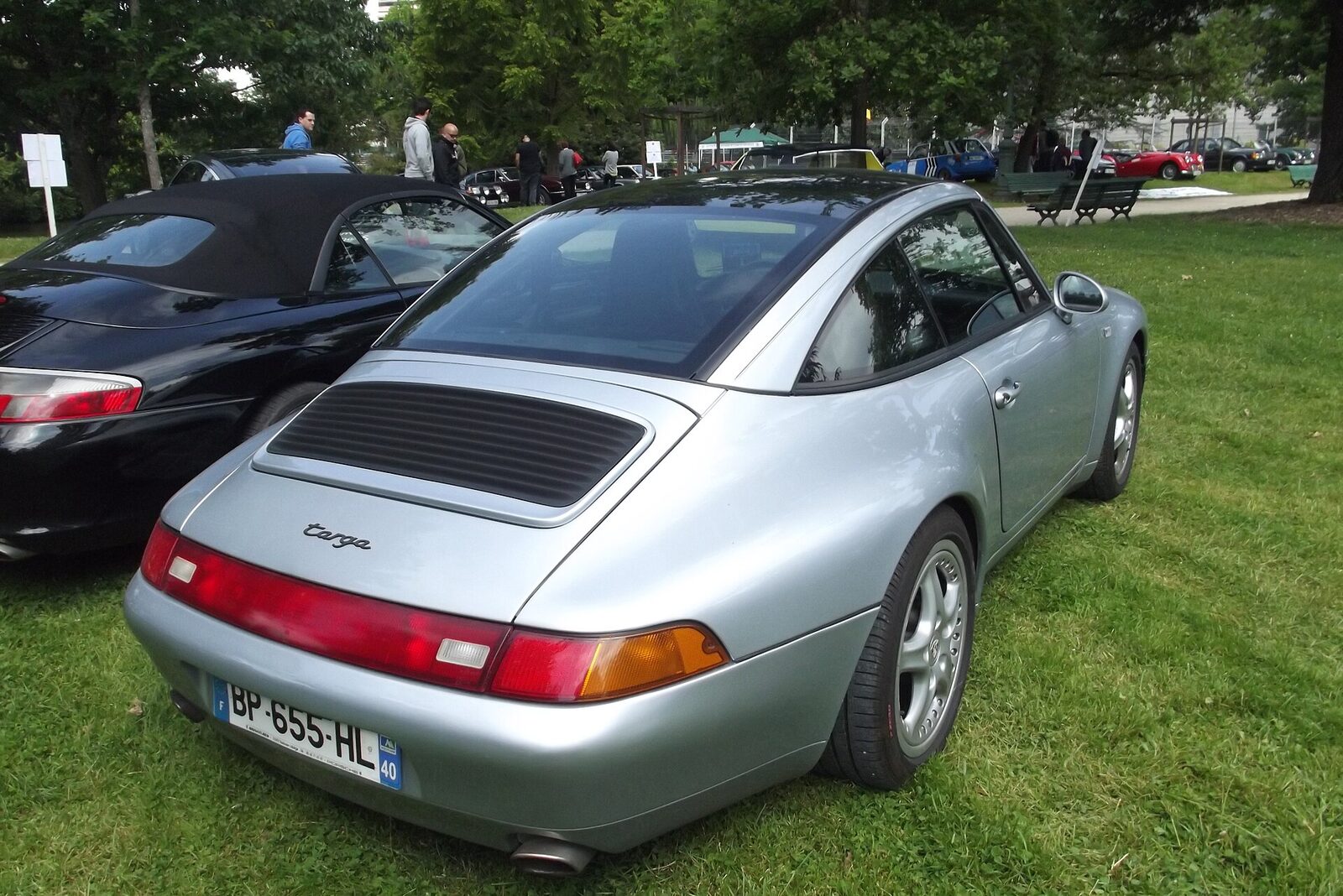
A 993 Targa with its large sliding glass roof: test the roof opens and closes fully and check the seals for leaks.
Our take: On a naturally aspirated 993, make the valve guides your first question: PCA calls them the worst issue on these engines, and on 1996 to 1998 cars they can stop the car passing an emissions test. Ask for a code scan and for records of guide replacement or secondary air port cleaning before you agree a price.
How do you check a Porsche 993 is original?
Production Specification or Technical Certificate
The PPS lists the original options, colours, engine and transmission type and completion date from Porsche's records. The Classic Technical Certificate adds an inspection at a Porsche Classic Partner or qualified dealer, checks the engine and transmission numbers in the car against the original records, and can show whether original parts were replaced. Both cover the 993.[7]
Model year versus build date
The model year runs from 1 August to 31 July, so a 1998 model could have been built from 1 August 1997. The 993 went on sale in Europe in April 1994 as a 1994 model but in the US in September 1994 as a 1995 model, so dates on paperwork differ by market.[2][5]
Ask for proof that recalls were done
PCA says to check whether the engine wiring harness recall was carried out, and Elferspot notes Porsche recalled Cabriolets to change the roof locking mechanism.[2][3]
Wide-body cars should be completely original
Carrera S and 4S should be original, with no aftermarket bodykits. To tell them apart: the 4S has the Turbo's brakes and suspension, the S does not, and the S has a centrally split grille on its retractable spoiler.[3][5]
Check restoration quality and authenticity on fast models
Porsche Club GB warns there are many cheaply restored 993 Turbos and says authenticity and originality are vital for GT2 and RS value, needing in-depth expertise. Signs of a car that has been apart include creaks and rattles, uneven panel gaps and repairs visible under the front boot carpet.[3][5]
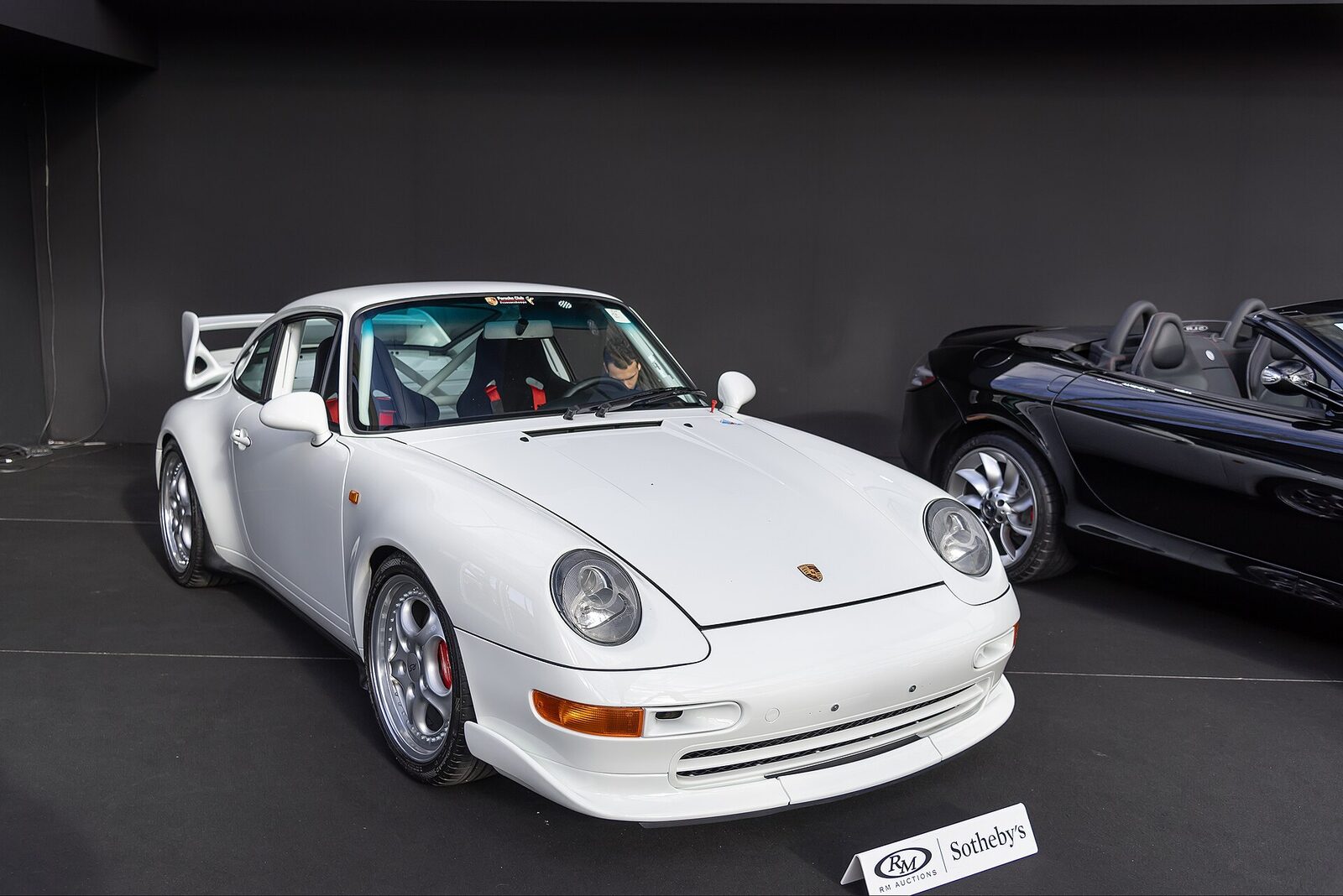
An unrestored 1996 993 Carrera RS Clubsport: on fast models like this, check the chassis number and the quality and authenticity of any restoration.
Which Porsche 993 should you buy?
Each model has its own guide to what sets it apart and what to check on it in particular.
Deciding between the two? Porsche 964 vs 993.
| Model | Built | Power | Made |
|---|---|---|---|
| 993 Carrera (C2) | 1994–1997 | 272 PS; 285 PS from 1996 | 23,127 |
| 993 Carrera 4 (C4) | From 1995 | 272 PS; 285 PS from 1995 | 4,744 |
| 993 Carrera S (C2S) | 1997–1998 | 285 PS | 3,714 |
| 993 Carrera 4S (C4S) | 1996–1998 | Not yet sourced | 6,948 |
| 993 Cabriolet | 1994–1997 | 272 PS; 285 PS from 1996 | 17,921 |
| 993 Targa | 1996–1998 | 285 PS | 4,583 |
| 993 Turbo | 1995–1998 | 408 PS | 5,978 |
| 993 Turbo S | 1997–1998 | 450 PS | 336 |
| 993 Carrera RS | From 1995 | 300 PS | 1,014 |
| 993 GT2 | 1995–1997 | 430 PS; 450 PS from 1998 | 193 |
| 993 RSR 3.8 | 1997–1998 | Not yet sourced | 45 |
- Porsche 993 Carrera (C2)
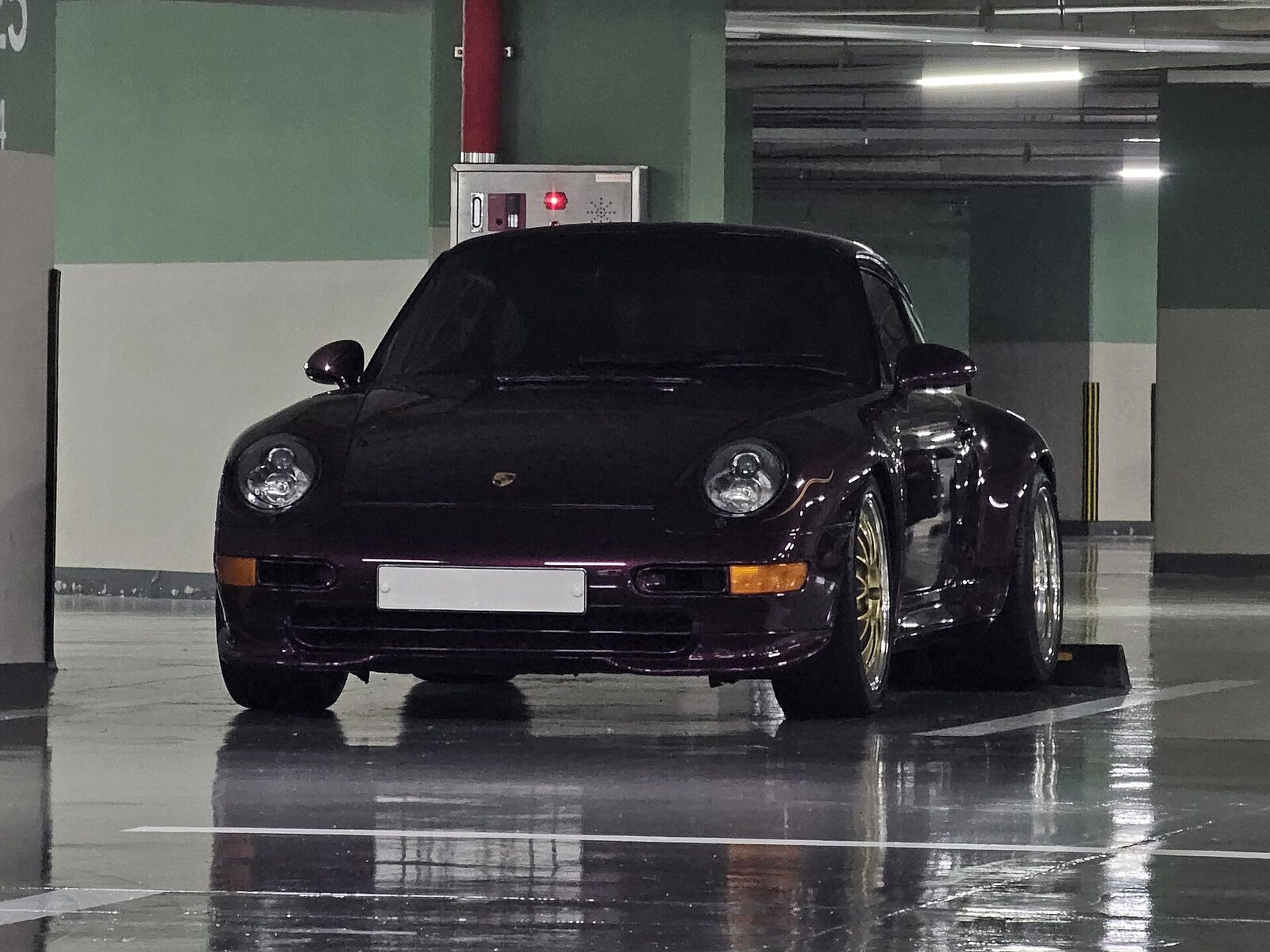
A Porsche 911 Carrera coupé of the 993 generation in Amethyst Metallic.
Photo: Damian B Oh, CC BY-SA 4.0, via Wikimedia Commons. - Porsche 993 Carrera 4 (C4)
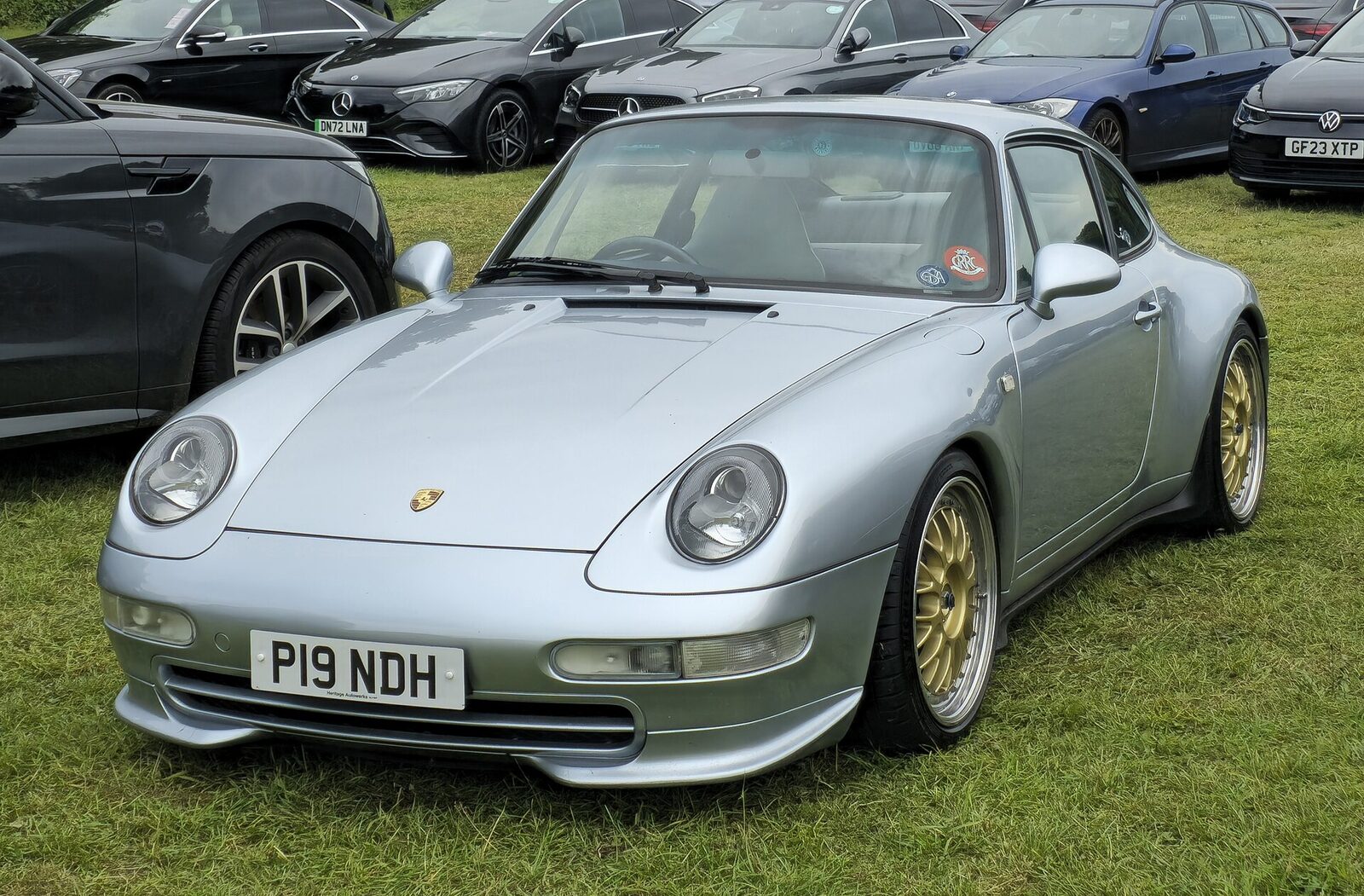
A 1996 Porsche 911 Carrera 4 of the 993 generation, the narrow-body all-wheel-drive coupe, at Goodwood in 2024.
Photo: Calreyn88, CC BY-SA 4.0, via Wikimedia Commons. - Porsche 993 Carrera S (C2S)
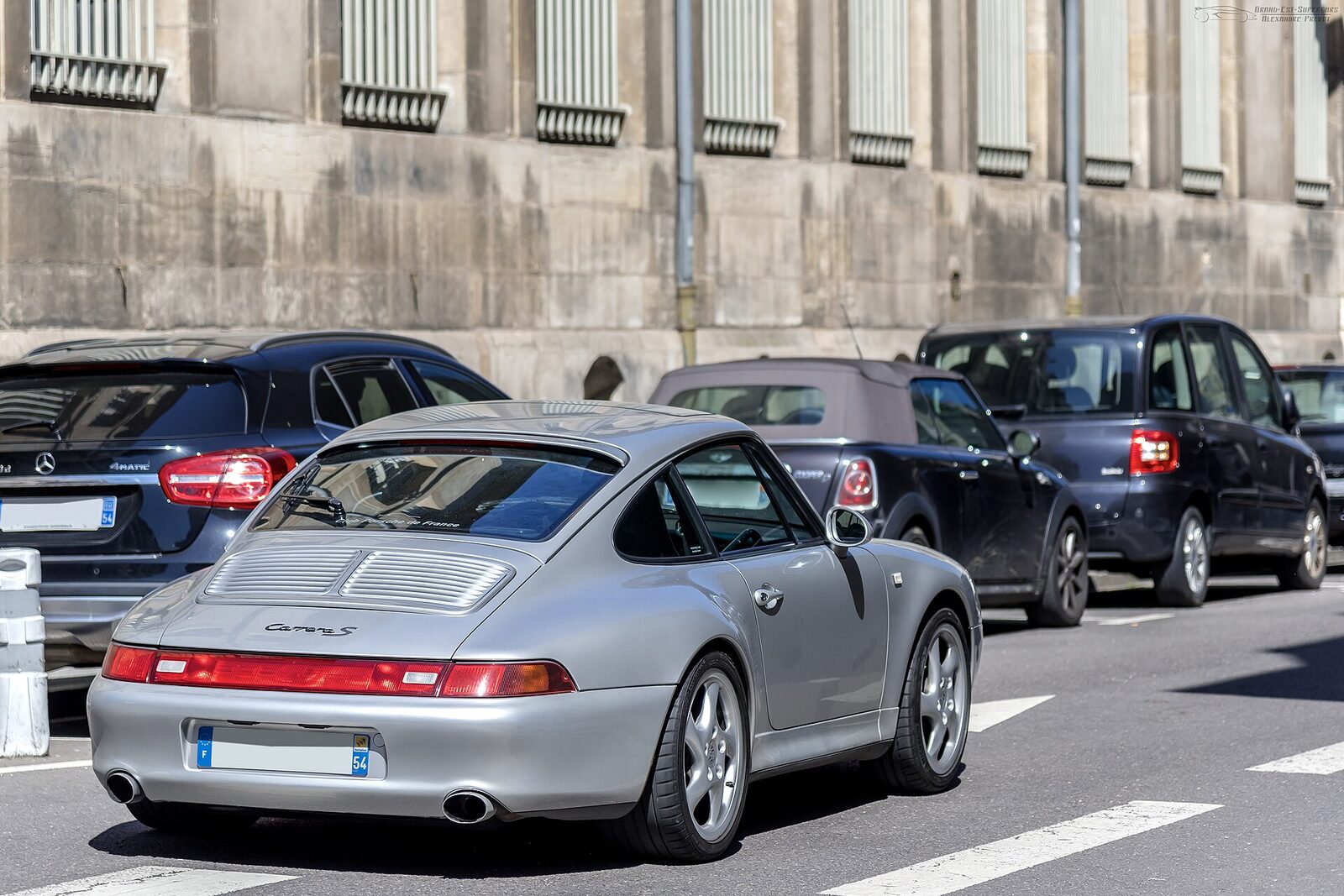
A silver Porsche 911 Carrera S of the 993 generation, the rear-drive car with the wide Turbo-style body.
Photo: Alexandre Prévot, CC BY-SA 2.0, via Wikimedia Commons. - Porsche 993 Carrera 4S (C4S)
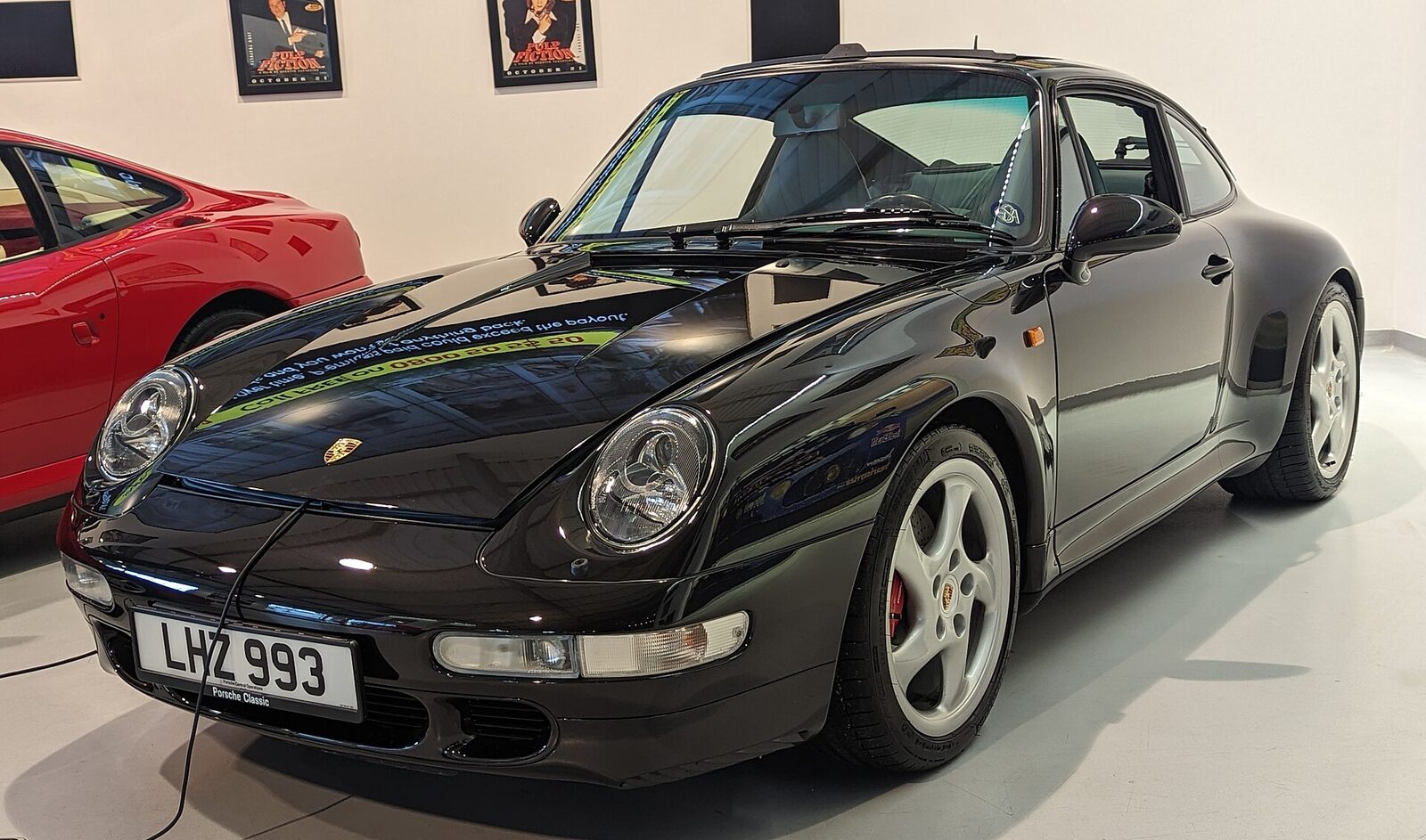
A 1998 Porsche 911 Carrera 4S of the 993 generation, the all-wheel-drive wide-body Carrera.
Photo: Calreyn88, CC BY-SA 4.0, via Wikimedia Commons. - Porsche 993 Targa
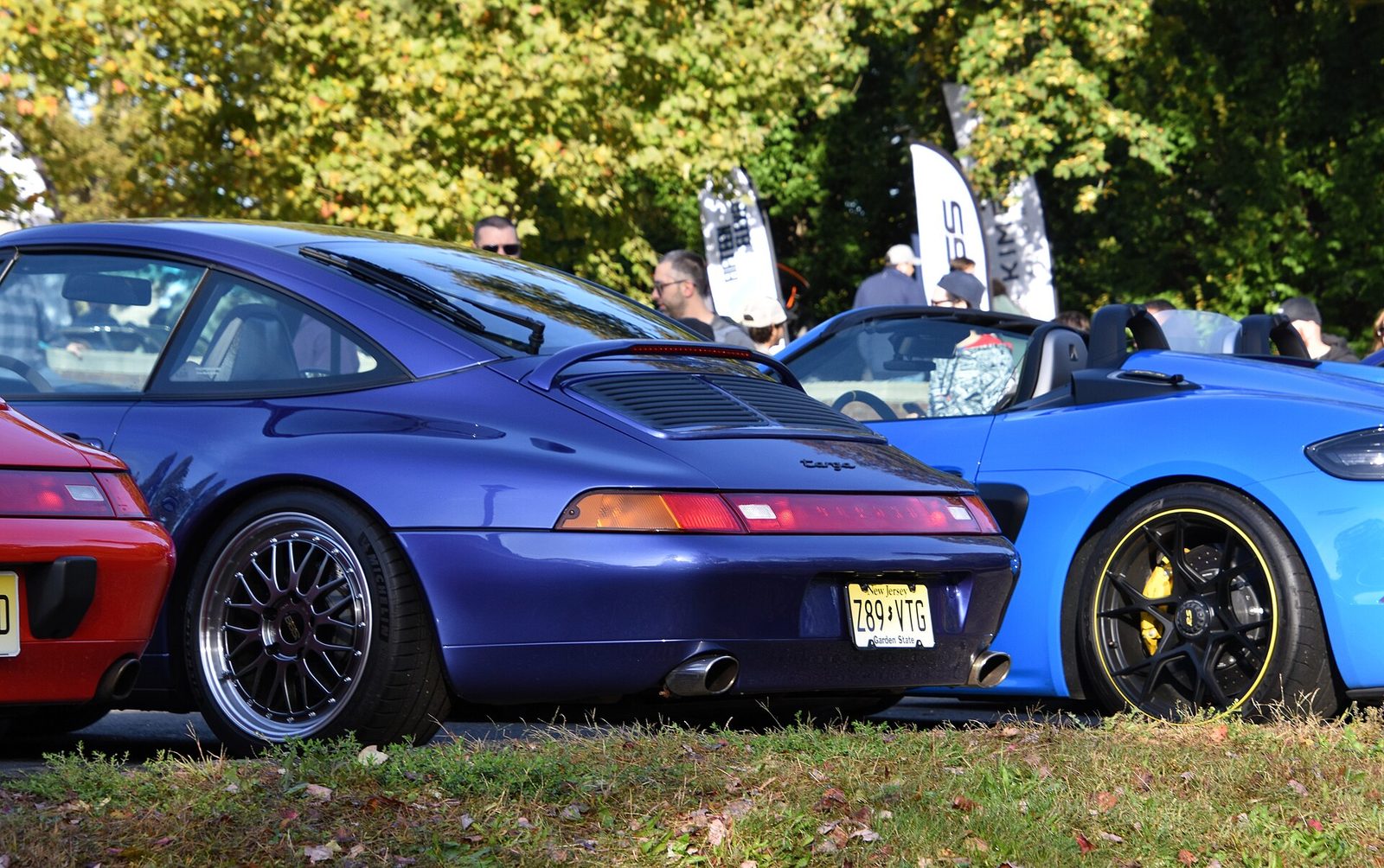
A 1997 Porsche 993 Targa, with the sliding glass roof that replaced the earlier Targa bar.
Photo: Charles from Port Chester, New York, CC0, via Wikimedia Commons. - Porsche 993 Turbo
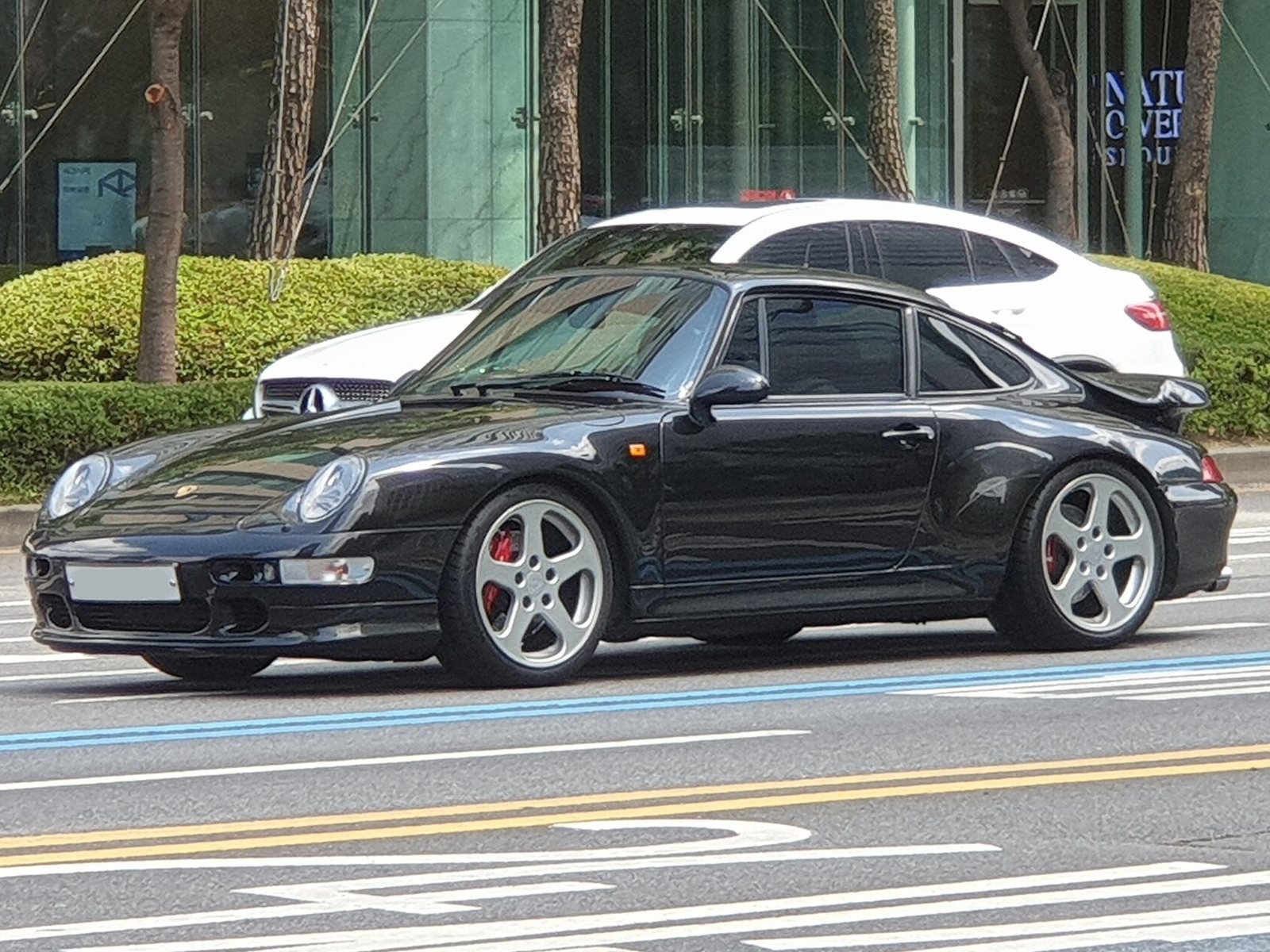
A Porsche 993 Turbo, with its wider body and fixed rear wing.
Photo: Damian B Oh, CC BY-SA 4.0, via Wikimedia Commons. - Porsche 993 Turbo S
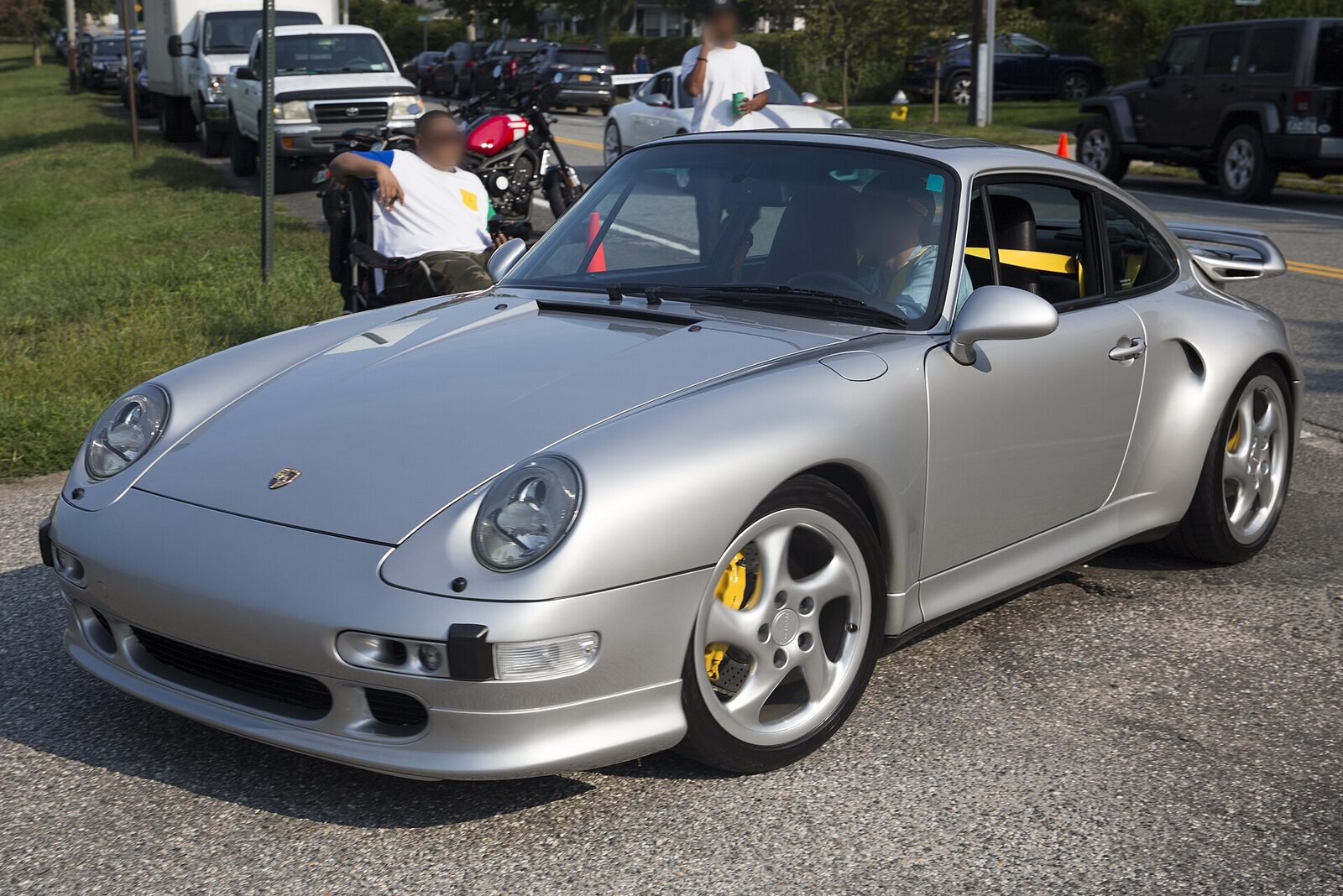
A 1997 Porsche 911 Turbo S of the 993 generation in Arctic Silver Metallic with black leather.
Photo: Mr.choppers, CC BY-SA 3.0, via Wikimedia Commons. - Porsche 993 Carrera RS
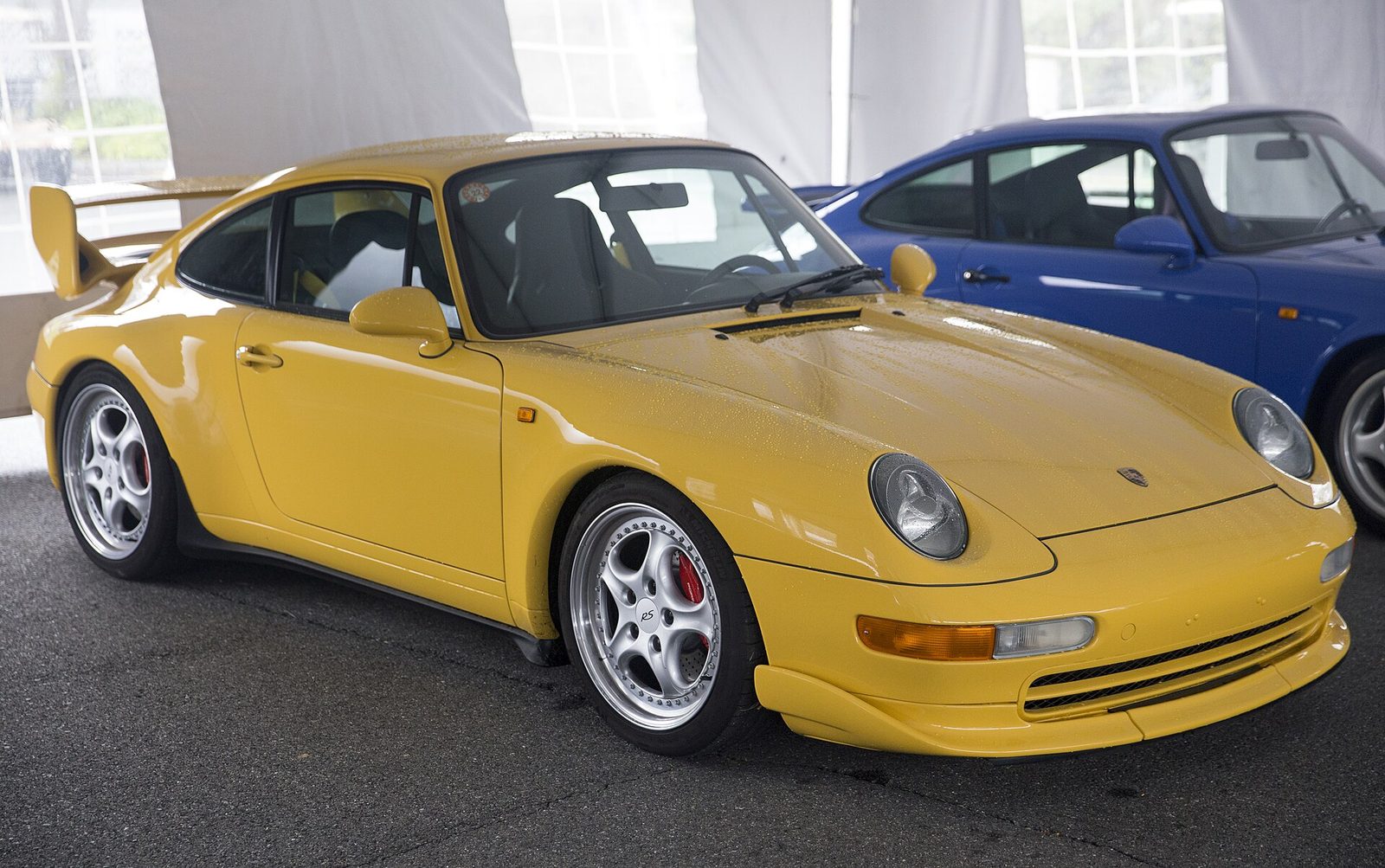
A 1995 Porsche 993 Carrera RS in Speed Yellow.
Photo: Mr.choppers, CC BY-SA 3.0, via Wikimedia Commons. - Porsche 993 GT2
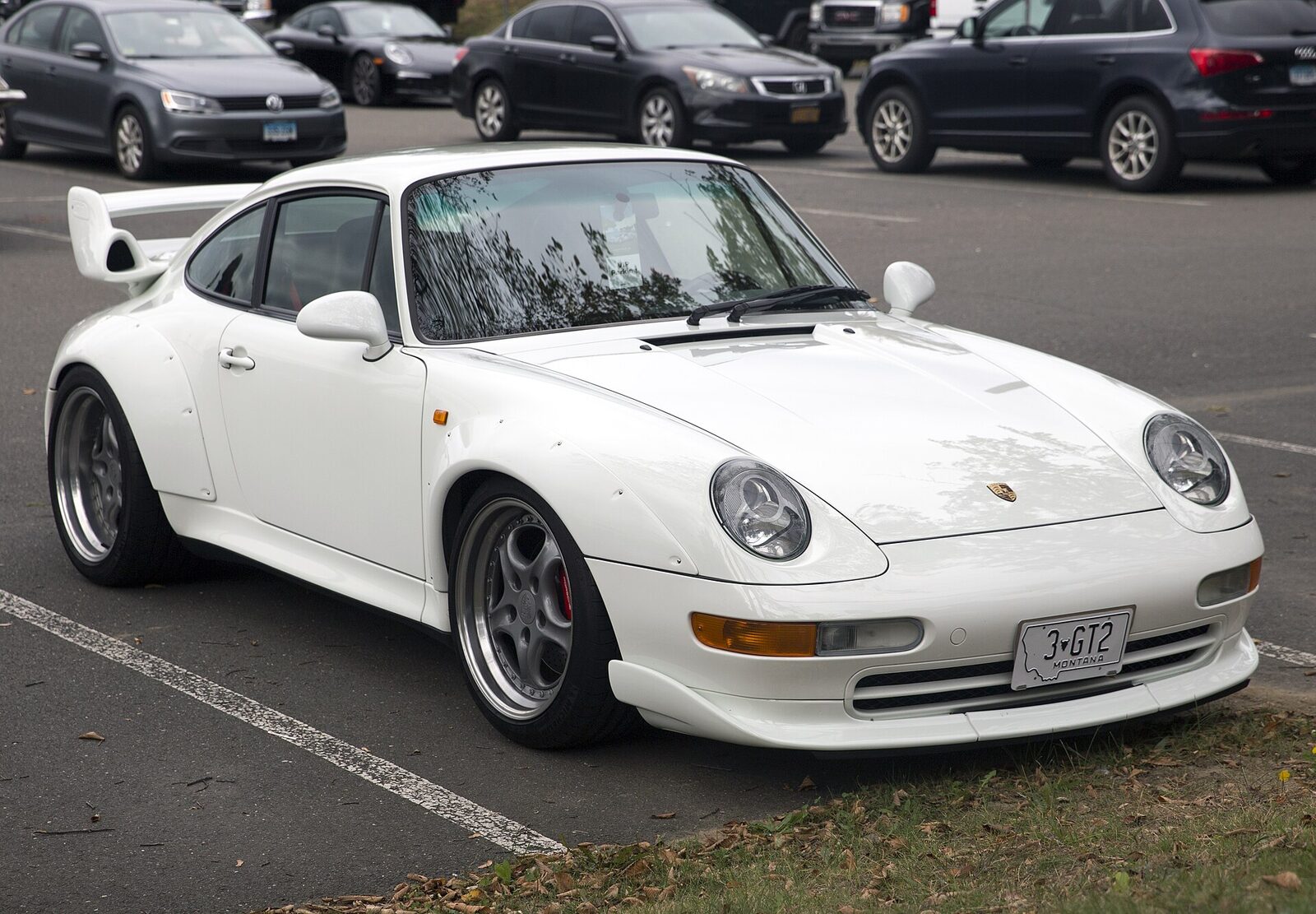
A 1995 Porsche 911 GT2 of the 993 generation in Grand Prix White, at the Greenwich Concours in 2021.
Photo: Mr.choppers, CC BY-SA 3.0, via Wikimedia Commons. - Porsche 993 RSR 3.8
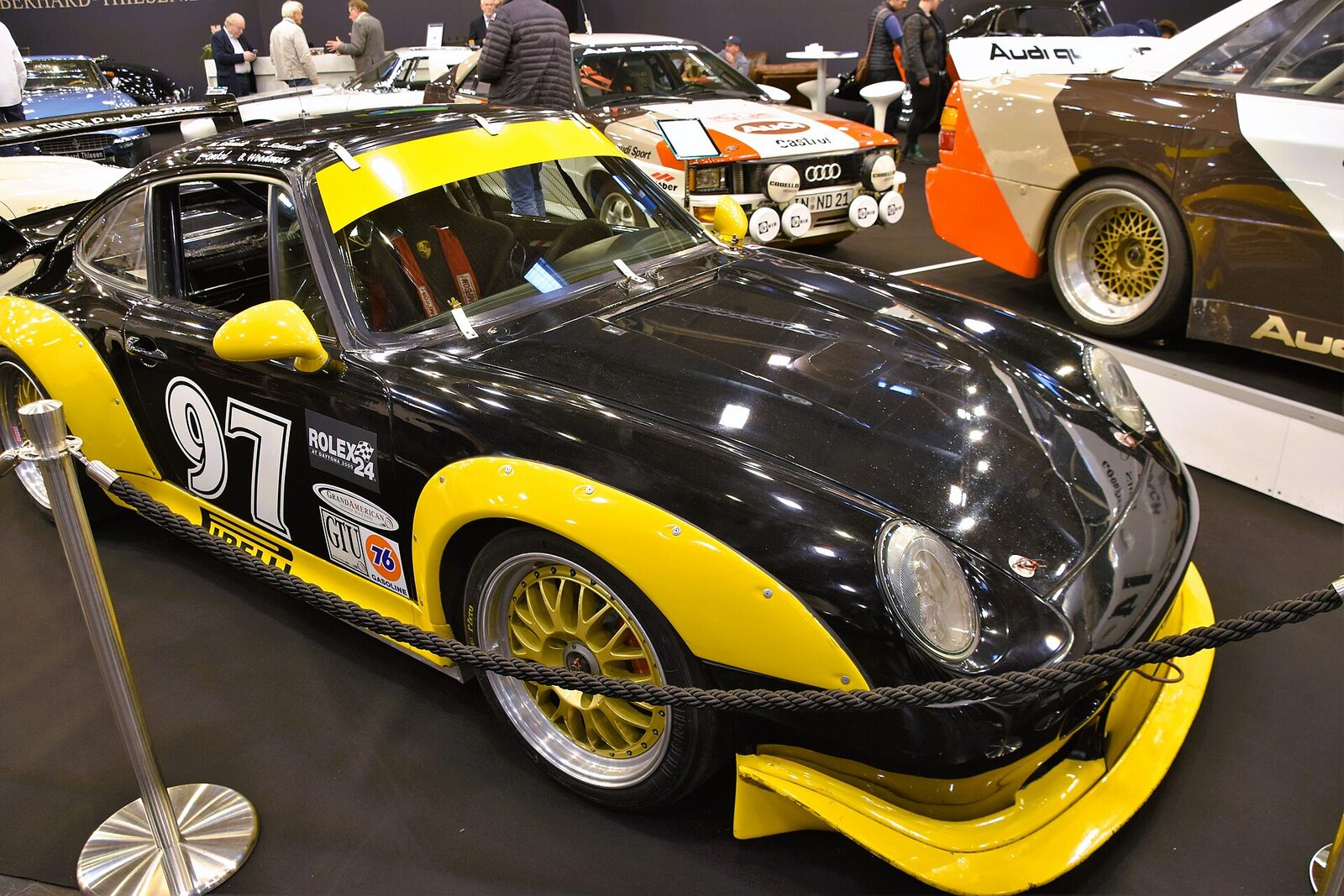
A 1995 Porsche 911 Carrera RSR 3.8 of the 993 generation, the racing version, at Techno-Classica in 2023.
Photo: Charles from Port Chester, New York, CC BY 2.0, via Wikimedia Commons.
Inspection checklist: Porsche 993
- 1Valve guide wear and clogged secondary air injection
- 2Oil leaks: lower cam covers, main seals and oil lines
- 3Oil consumption and blue smoke
- 4Rust around screens and after poor repairs
- 5Broken door check strap
- 6Front lower control arm bushes and dampers
- 7Engine and gearbox mounts, exhaust flanges and clutch hydraulics
- 8Engine wiring harness
- 9Air conditioning
- 10Targa glass roof, Cabriolet hood and sunroof
- 11Production Specification or Technical Certificate
- 12Model year versus build date
- 13Ask for proof that recalls were done
- 14Wide-body cars should be completely original
- 15Check restoration quality and authenticity on fast models
Questions
The ones to check first: valve guide wear and clogged secondary air injection; oil leaks: lower cam covers, main seals and oil lines; oil consumption and blue smoke; rust around screens and after poor repairs. Each is explained on this page with what to look for and the sources it comes from.
Work through these checks: production Specification or Technical Certificate; model year versus build date; ask for proof that recalls were done; wide-body cars should be completely original; check restoration quality and authenticity on fast models. Each is explained on this page with its sources.
68,881: All 993 models and bodies, up to Porsche's 1998 financial year, according to Porsche Newsroom, 4th generation Porsche 911 (993).
993 Carrera (C2) (1994–1997), 993 Carrera 4 (C4) (From 1995), 993 Carrera S (C2S) (1997–1998), 993 Carrera 4S (C4S) (1996–1998), 993 Cabriolet (1994–1997), 993 Targa (1996–1998), 993 Turbo (1995–1998), 993 Turbo S (1997–1998), 993 Carrera RS (From 1995), 993 GT2 (1995–1997), 993 RSR 3.8 (1997–1998). Each has its own guide to what's different about it.
19 specialists in our directory list pre-purchase inspections and work on the 993. The directory shows where they are and how to contact them.
Sources
Every point above is numbered to the pages it comes from. Dates are the page's own, where it shows one.
- Porsche Newsroom, 4th generation Porsche 911 (993)
- Porsche Club of America: Model Guide: Type 993, the last air-cooled Porsche
- Elferspot Magazine: Porsche 993 Carrera buyer's guide (2019-09-14 (updated 2026-09-25))
- Hagerty UK: Buying Guide: 1995-98 Porsche 911 (993) (2024-07-30)
- Porsche Club GB: Porsche 911 (993) buyers guide (costs dated 2016)
- Porsche Club of America: Model Guide: Porsche 911 Turbo, 1976-2013
- Porsche Newsroom USA: New online service charts the origins of your classic Porsche (2022)