Moving cars between countries
Importing an air-cooled Porsche into the United States
Every air-cooled Porsche, from the 356 to the last 993, is now at least 25 years old, so it can enter the United States without meeting federal safety standards. It still needs an EPA declaration that the car is original, 2.5% duty on the price paid and the right CBP paperwork.
By Jon Kennedy, Porsche Enthusiast
Last reviewed 25 October 2026, against the official sources linked in each section. Rules change: confirm with the agency before you ship.
Do this next
- 1Decode the chassis number to confirm the model year. The age tests count the year of manufacture, which can be a year before the model year, so check the build date on the car's papers too.
- 2Check the engine is the type the car left the factory with before you buy: the EPA exemption depends on it.
- 3Find a specialist who handles transport, import or registration.
In short
- Safety standards (FMVSS)
- Exempt at 25 years or older
- Emissions (EPA)
- Exempt at 21 years or older, in original configuration
- Duty
- 2.5% of the price paid
- Section 232 auto tariff
- Not charged on cars 25 years or older
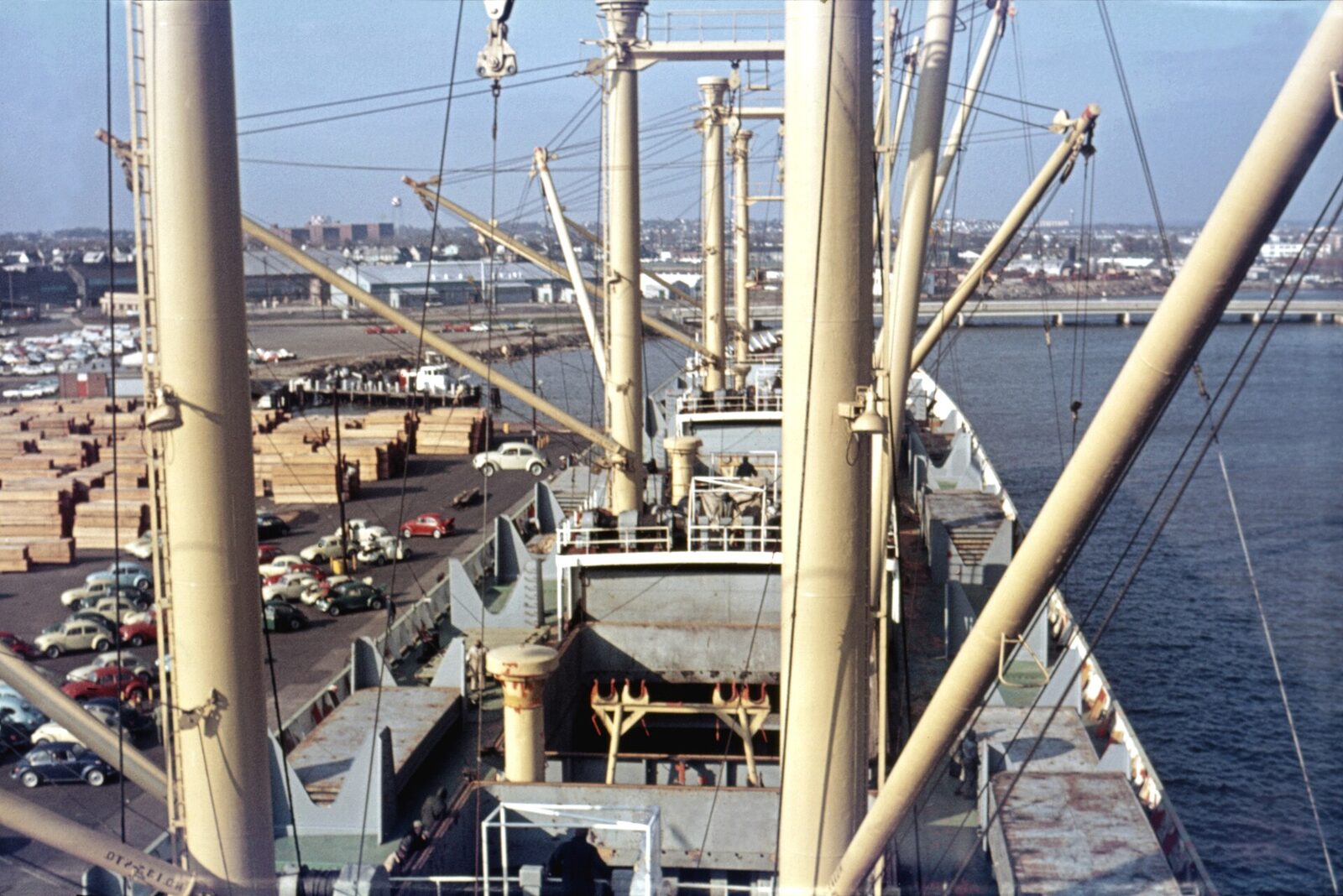
The car carrier Johann Schulte unloads Volkswagens imported from Germany in Baltimore harbour in December 1970.
What is the US 25-year import rule?
A car that is 25 years old or more can be imported without meeting the Federal Motor Vehicle Safety Standards (FMVSS). The exemption is in federal regulation 49 CFR 591.5(i), and you claim it in Box 1 of the DOT HS-7 declaration, the box for a vehicle 25 years or older.
Younger cars must, as a general rule, meet every applicable FMVSS to be imported. That never touches an air-cooled Porsche: the last 993s were built in 1998.[1][2][3]
| Agency | What it checks | Age that exempts the car | Form |
|---|---|---|---|
| NHTSA (DOT) | Federal safety standards | 25 years or older | HS-7, Box 1 |
| EPA | Emissions | 21 years or older, original configuration | 3520-1, code E |
| CBP | Duty and entry | Section 232 duty not charged at 25 years or older | CBP Form 7501 |
Does a classic Porsche need to meet US emissions rules?
No, if it is at least 21 years old and in its original, unmodified configuration. You declare this on EPA Form 3520-1 with code E. Age is the calendar year of import minus the calendar year of manufacture, and customs may ask for proof of it.
EPA reads the rule strictly on engines: the engine must be identical in model and configuration to the one originally fitted. A different type of engine disqualifies the car. EPA strongly encourages contacting its Imports Hotline before you ship (imports@epa.gov, 734-214-4100).[4][5]
Our take: If you're buying abroad to bring a car to the US, treat a different type of engine as a deal-breaker unless EPA has agreed in writing. The exemption turns on it, and it's the one problem you can't fix once the car has landed.
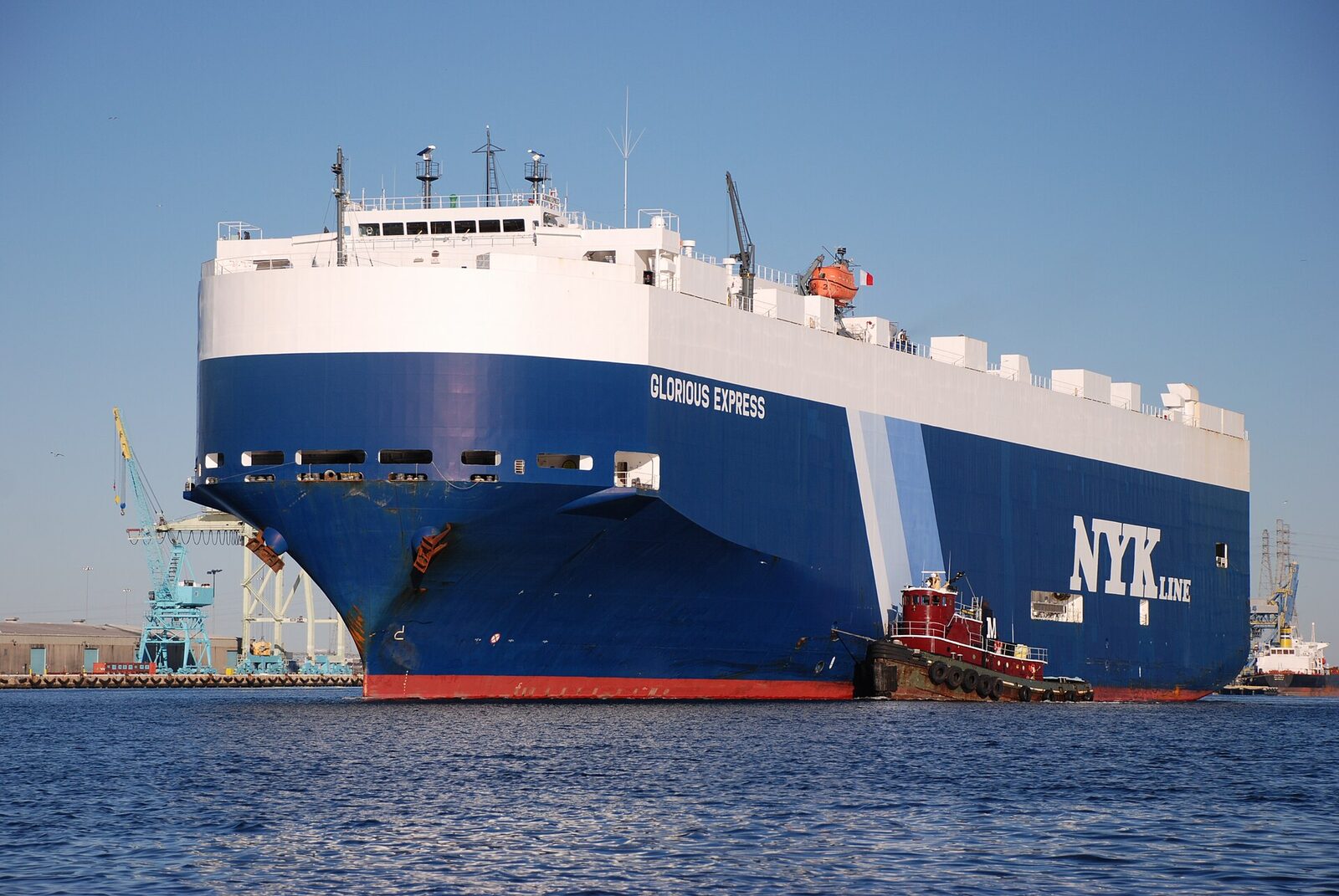
The roll-on, roll-off car carrier Glorious Express docked at JAXPORT's Blount Island Marine Terminal in Jacksonville, Florida.
How much duty do you pay on an imported classic car?
Cars, new or used, are generally dutiable at 2.5% of the price paid or payable. The 25% rate is for trucks and doesn't apply to a Porsche.[3]
Does the Section 232 auto tariff apply to a classic Porsche?
No, if it was made at least 25 years before the year it enters. CBP's guidance excludes those used passenger vehicles from the Section 232 automobile duties, so a 1998 or older Porsche entered in 2026 isn't charged them.[6]
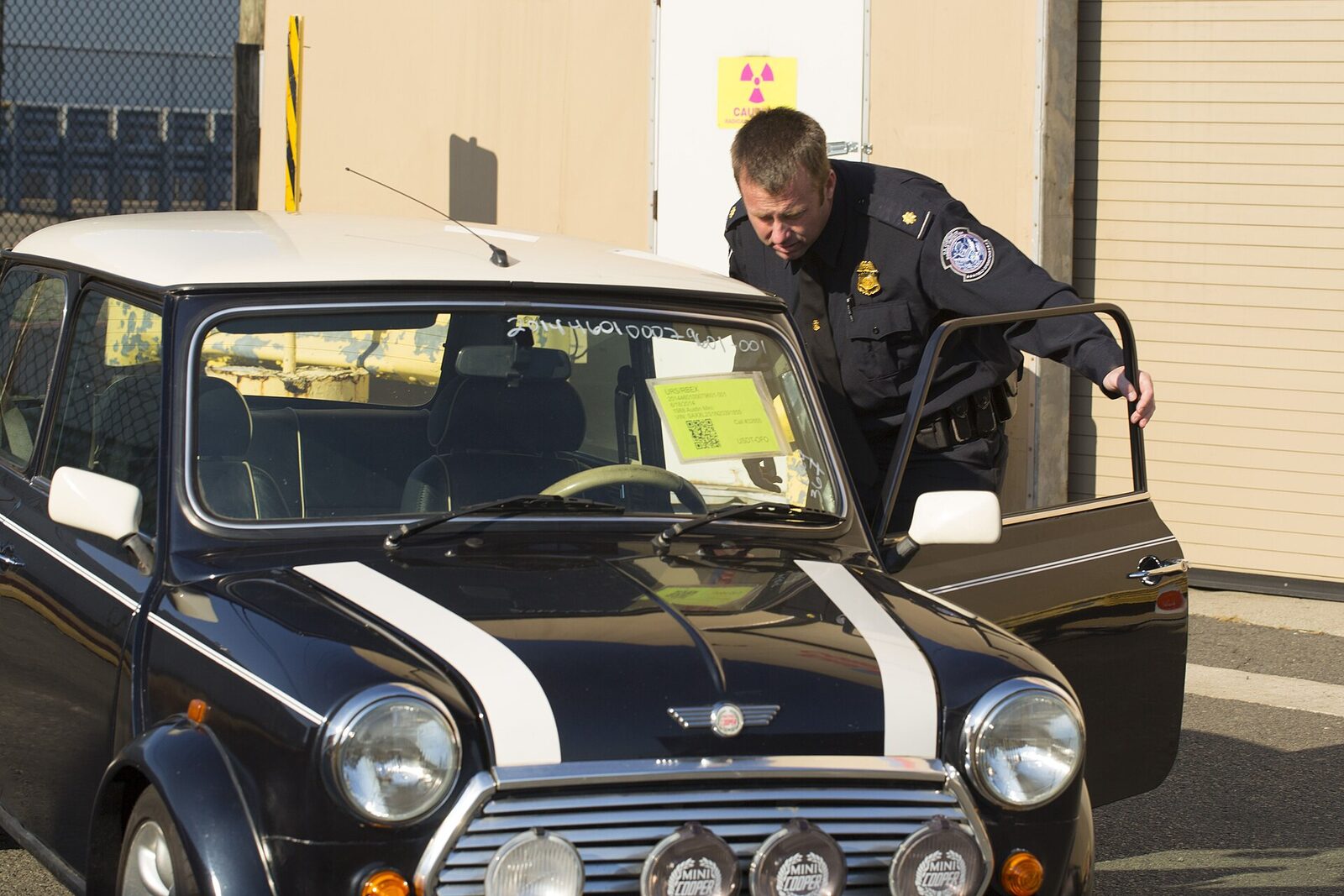
A US Customs and Border Protection officer inspects a classic Mini that arrived at Port Elizabeth, New Jersey, with importation violations; the car was to be destroyed.
What paperwork does CBP need?
Customs wants the shipper's or carrier's original bill of lading, the bill of sale, the foreign registration and any other papers covering the car, plus EPA Form 3520-1 and DOT Form HS-7. CBP Form 7501 is the official entry document; the EPA and DOT forms go with it.
An informal entry without a bond (Type 11) is possible only when CBP's personal-use criteria are met. Registration is then a state matter: CBP tells US residents to ask their state DMV about temporary plates.[3][7]
Can you import a classic Porsche from Japan to the US?
Yes, and on the same terms as from any other country: the 25-year safety exemption and the EPA's exemption turn on the car's age (and, for EPA, its original configuration), not on where it ships from.
Japan's part is the paperwork. A car leaving Japan is deregistered for export and the owner receives an export certificate on a Japanese and English form, valid for six months for the export declaration. That certificate is the foreign registration CBP asks to see with the bill of sale and bill of lading.[1][3][5][8]
Our take: Get a scan of the Japanese export certificate and the chassis number before you pay. The certificate is the car's last registration record, and US customs will want it.
Help in the United States
1 specialist in the United States lists transport, import or registration help: SST Auto / Speedsport Tuning.
All specialists in the United StatesImport and registration specialists
Questions
Yes. Age decides it, not the country of shipment, so any air-cooled Porsche clears the 25-year rule. Ask the seller for the Japanese export certificate: it serves as the car's foreign registration for customs.
Yes. The 993 was built until 1998, so every 993 is now over 25 years old and exempt from the federal safety standards under 49 CFR 591.5(i). For emissions it must also be in original configuration, with the original type of engine.
Not under the 21-year emissions exemption unless the engine is identical in model and configuration to the one originally fitted, according to EPA. Contact EPA's Imports Hotline before shipping. Our authenticity guide explains how to check the engine type before you buy.
Generally 2.5% of the price paid or payable, according to CBP. Cars made at least 25 years before the year of entry are excluded from the additional Section 232 auto duties.
DOT Form HS-7, Box 1, the box for a vehicle 25 years or older. It goes to CBP with EPA Form 3520-1 and the entry documents.
Sources
Each section is numbered to the official pages it was written from, with the date each page shows.
- 49 CFR 591.5 (eCFR) (Text as of 1 October 2026)
- CBP and NHTSA: HS-7 declaration codes (PDF)
- CBP: Importing a motor vehicle (Last modified 21 May 2026)
- EPA Form 3520-1 (PDF) (August 2024 edition)
- EPA: Learn about importing vehicles and engines (Last updated 1 September 2026)
- CBP: Section 232 FAQs for autos (Last modified 19 December 2025)
- CBP: Importing a personal vehicle (Last modified 7 August 2026)
- JETRO (Japan External Trade Organization): documents and procedure for exporting a used car from Japan (updated August 2025)
Written from the official pages linked under each section, for importing a car for personal use. It isn't legal or tax advice. Where an agency's site couldn't be read we cite the law itself and say so. Spot something out of date? Tell us and we'll check it.