Buyer's guide · built 1975–1989
Buying a Porsche 930 Turbo: common problems and what to check
The Porsche 930 Turbo was built from 1975 to 1989. Check the cylinder head studs, the turbocharger and wastegate, the heat exchangers, the gearbox synchros and the clutch, and confirm from factory records that it is a real 930, not a converted 911.
By Jon Kennedy, Porsche Enthusiast
Last reviewed 25 October 2026. Every point links the specialist, club, magazine or Porsche page it comes from.
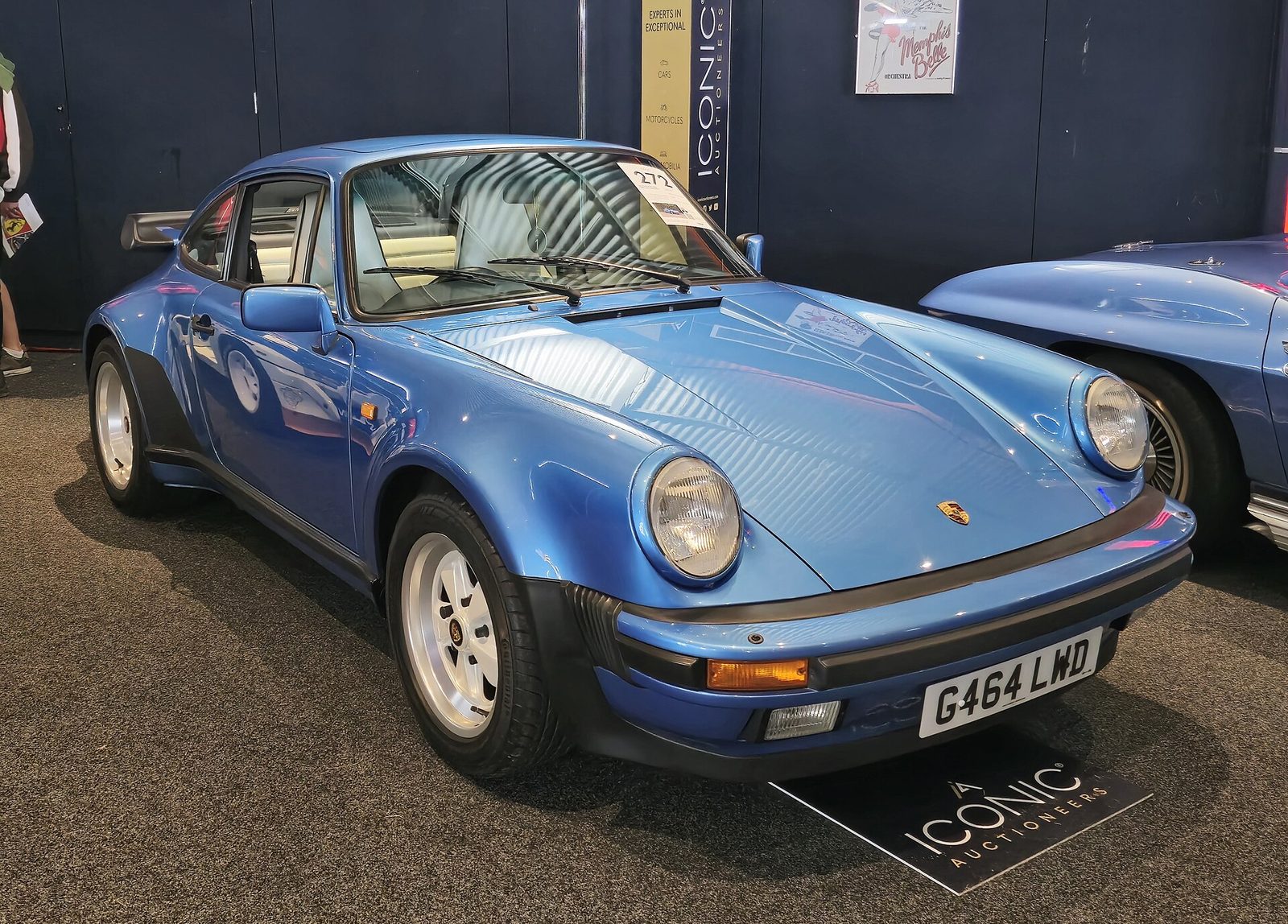
A 1989 Porsche 911 Turbo (930): the wide rear wings and the tea-tray spoiler mark out the Turbo.
Do this next
In short
- Built
- 1975–1989
- Made
- Not yet sourced
- Models with a guide
- 3
What goes wrong on a Porsche 930 Turbo?
The 10 problems to check on any 930 Turbo. Where a source publishes a repair cost, it's shown as published, with its date.
Broken cylinder head studs
Broken head studs are a known issue on the 930 and are not obvious unless the cam covers come off; oil leaks around the heads often point to them.[1][2][3][4]
What to check: Paragon's Mark Sumpter (quoted by 9WERKS): give it full boost in second gear and if it sounds like the exhaust is blowing, it could be the head studs. Ask for compression and leak-down tests.
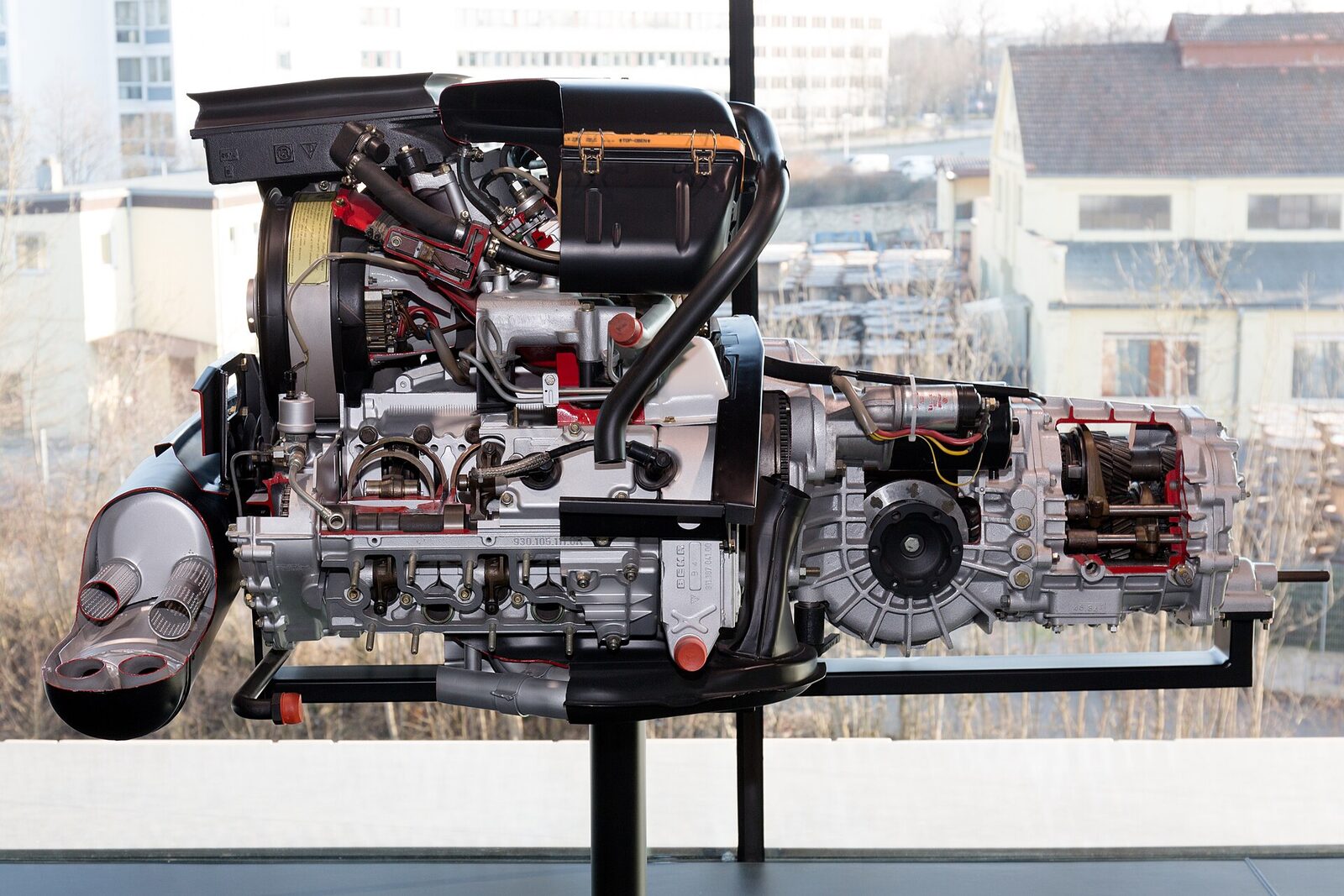
The 3.0-litre 930/60 engine of the early 911 Turbo, sectioned to show the cylinders and heads that the head studs clamp down.
Turbocharger wear and oil coking
Blue smoke under acceleration or persistent smoke under boost signals turbo or valve guide/seal wear. Shutting the engine off hot without idling can coke oil in the turbo shaft and destroy the bearing. The standard 3LDZ turbo for the 3.3 is no longer available new.[2][3][4][5]
What to check: Watch for smoke, lag or noise; boost should build cleanly without surging or overboost.
Published cost: Porsche Club GB (ex VAT, undated): exchange turbo up to £2K, often plus pipework.
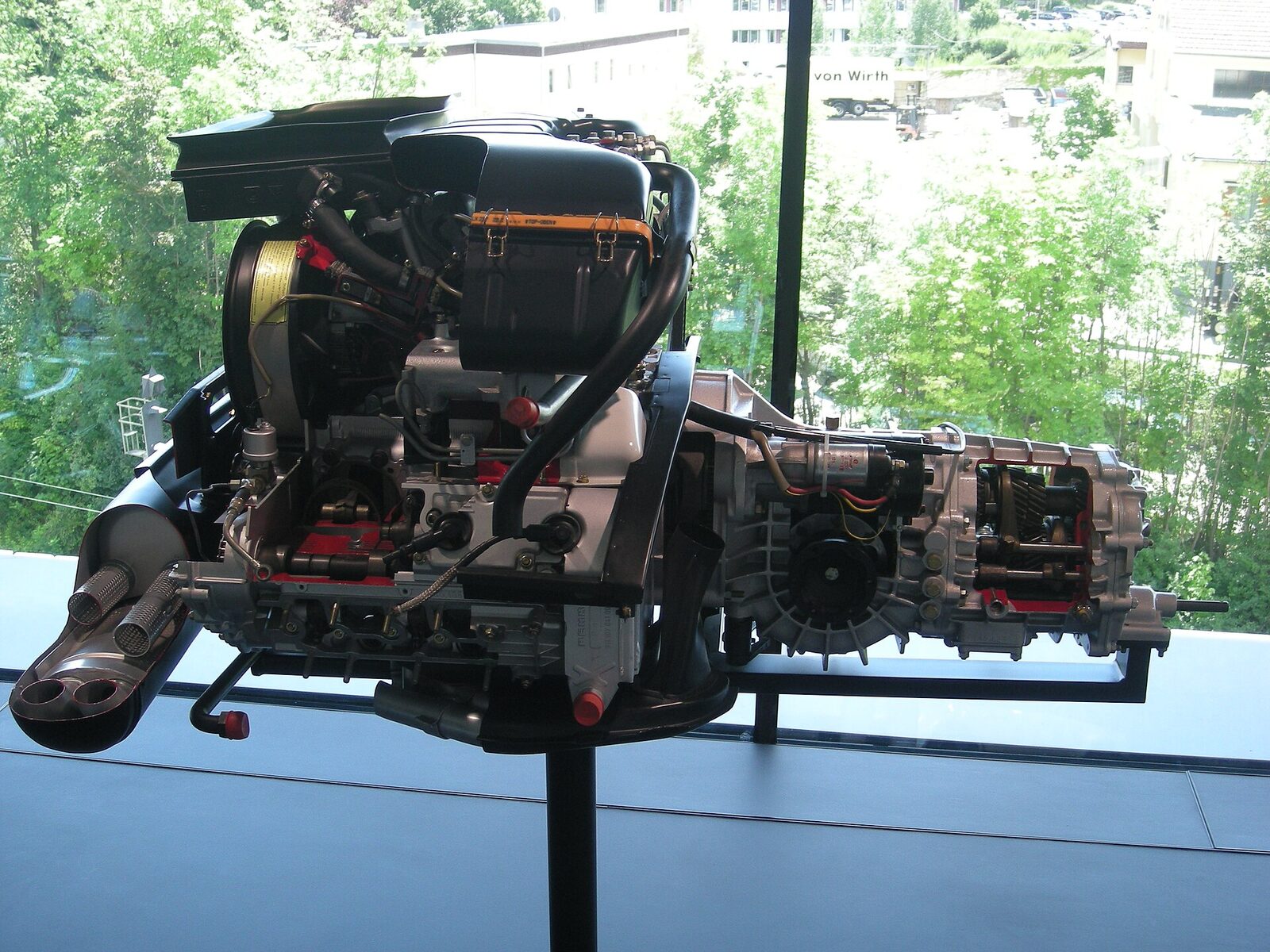
The Type 930/60 engine of the 1977 911 Turbo, cut away to show the turbocharger, whose bearings and seals suffer when oil cokes after hot shutdowns.
Wastegate diaphragm, sticking valve and cracked casting
The 930's wastegate is fully mechanical; the diaphragm wears and the valve can stick, giving boost off target. Hagerty's long-term car had a broken mounting stud, a cracked casting, exhaust blowing from the wastegate and low boost.[3][5][6]
What to check: Check the boost gauge reads the correct figure and listen for exhaust blowing round the wastegate.
Published cost: Porsche Club GB (ex VAT): wastegate rebuild kits from £150.
Heat exchangers, manifold cracks and heating
Heat exchangers rust through and are expensive; the pipe between turbo and heat exchanger can crack from heat; heater flaps seize, and the heat exchanger temperature sensors often fail.[3][4][5]
What to check: Make sure the heating works properly during inspection.
Published cost: Porsche Club GB (ex VAT): heat exchangers £300-500 each; rear silencer similar.
Four-speed gearbox synchros
The four-speed is sturdy but its synchromesh is undersized; worn synchros make second and third difficult to select.[1][2][4][5]
What to check: Do not accept baulking as normal. A stiff shift may only need new bushes and guides.
Published cost: Porsche Club GB (ex VAT): a 930 gearbox needing a rebuild at least £3K.
Applies to: 930 Turbo 3.0, 930 Turbo 3.3, 930 Turbo S (Flachbau)
K-Jetronic/CIS fuel system and lines
The fuel system is sensitive to contamination and long storage. Two Bosch pumps run over 6 bar; original fuel lines were not designed for ethanol and should be replaced, which is expensive.[2][3][4]
What to check: The engine should start cleanly hot and cold and idle smoothly; ask about fuel line replacement on stored cars.
Oil thermostat (3.0)
The oil thermostat must be closed cold and open warm. A failure often leads to costly repairs, because steel union nuts seize in the aluminium housing and new pipes may be needed.[4]
What to check: Check oil temperature behaviour on the drive and look at the thermostat fittings.
Published cost: Elferspot (Apr 2021): as a new part 'almost four-figure sums' (currency not stated).
Applies to: 930 Turbo 3.0
Clutch life
The clutch lasts around 50K miles, less if driven hard.[5]
What to check: Check the clutch bite point and ask when it was last replaced.
Published cost: Porsche Club GB (ex VAT): replacement at least £2K.
Body rust and accident damage
Rust spots include the B-pillar round the latch plates, windscreen frame, front wings, luggage compartment and sills, kidney bowls, front pan and battery area; early cars need closer checks. The wide rear quarters can hide poor accident repairs.[1][2][3][4]
What to check: On a lift, lift the carpets and look for creases or welding; check for fresh underseal and disturbed seam sealer.
Published cost: Porsche Club GB (ex VAT): sills and suspension-corner/inner-wing rebuilds can exceed £15K; full paint £6-10K.
Seized brake calipers and suspension wear
The 917-derived four-piston calipers can seize on cars that stand for long periods; wear is usually in anti-roll bar bushes, dampers or rear torsion bar bushes.[1][2][5]
What to check: Brake hard from speed in a straight line and check the car does not pull.
Our take: Budget for the drivetrain as well as the car. Porsche Club GB puts an exchange turbo at up to £2,000, a clutch at £2,000 or more and a gearbox rebuild at £3,000 at least, so a car with these done and invoiced is worth a real premium over one without.
How do you check a Porsche 930 Turbo is original?
Is it a real 930?
A wide body does not make a car a 930: some Turbo-look 911s were built on standard bodies and some received 930 engines. Verify the chassis number against factory records, and confirm any Targa or Cabriolet is factory-built.[2][7]
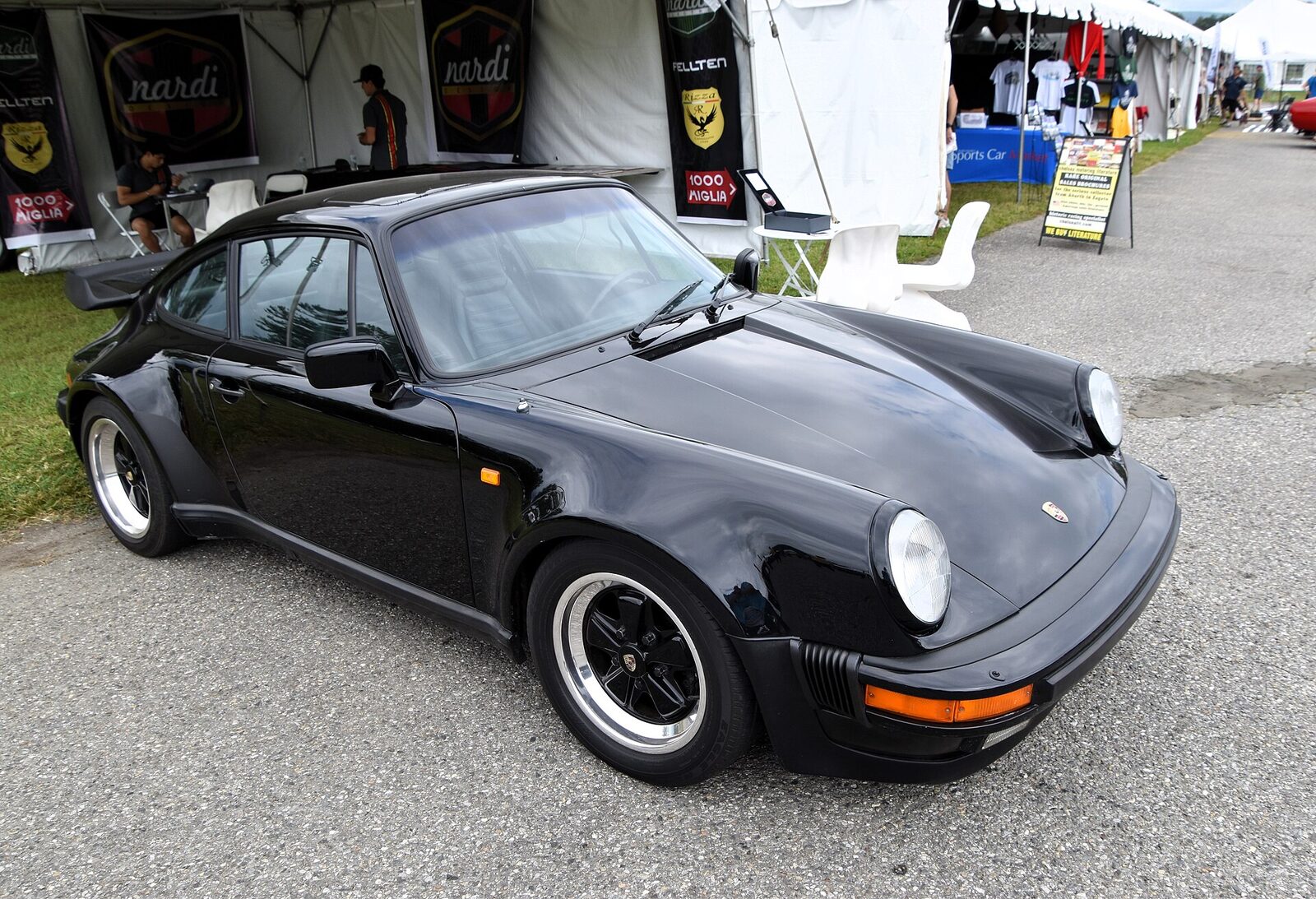
A 1986 911 Turbo (930): the wide body and tail can be copied, so the chassis number and engine type confirm a real Turbo.
Chassis, engine and gearbox numbers
Check chassis stampings and that engine and gearbox numbers match; stolen-and-recovered cars, replacement shells and later conversions exist. Non-original service books are a red flag.[1][2][8]
Factory records
Porsche's Production Specification lists the original options, colours, engine and gearbox type; the Classic Technical Certificate inspection can confirm engine and gearbox numbers match the original records. Elferspot recommends the Porsche certificate, original colour charts and vehicle history.[3][9]
Model year from the VIN
Porsche Club GB says the 9th character of the chassis number gives the model year (for example G for 1986, K for 1989).[5]
Grey-market US cars
The 930 was not officially sold in the US for 1980-85, so cars there are grey-market imports; check the quality of the federalisation work (catalysts, lighting, speedometer, bumpers, door reinforcement).[7]
Which Porsche 930 Turbo should you buy?
Each model has its own guide to what sets it apart and what to check on it in particular.
| Model | Built | Power | Made |
|---|---|---|---|
| 930 Turbo 3.0 | 1975–1977 | 260 PS | 2,850 |
| 930 Turbo 3.3 | 1978–1989 | 300 PS | Not yet sourced |
| 930 Turbo S (Flachbau) | 1982–1989 | Not yet sourced | 948 |
- Porsche 930 Turbo 3.0
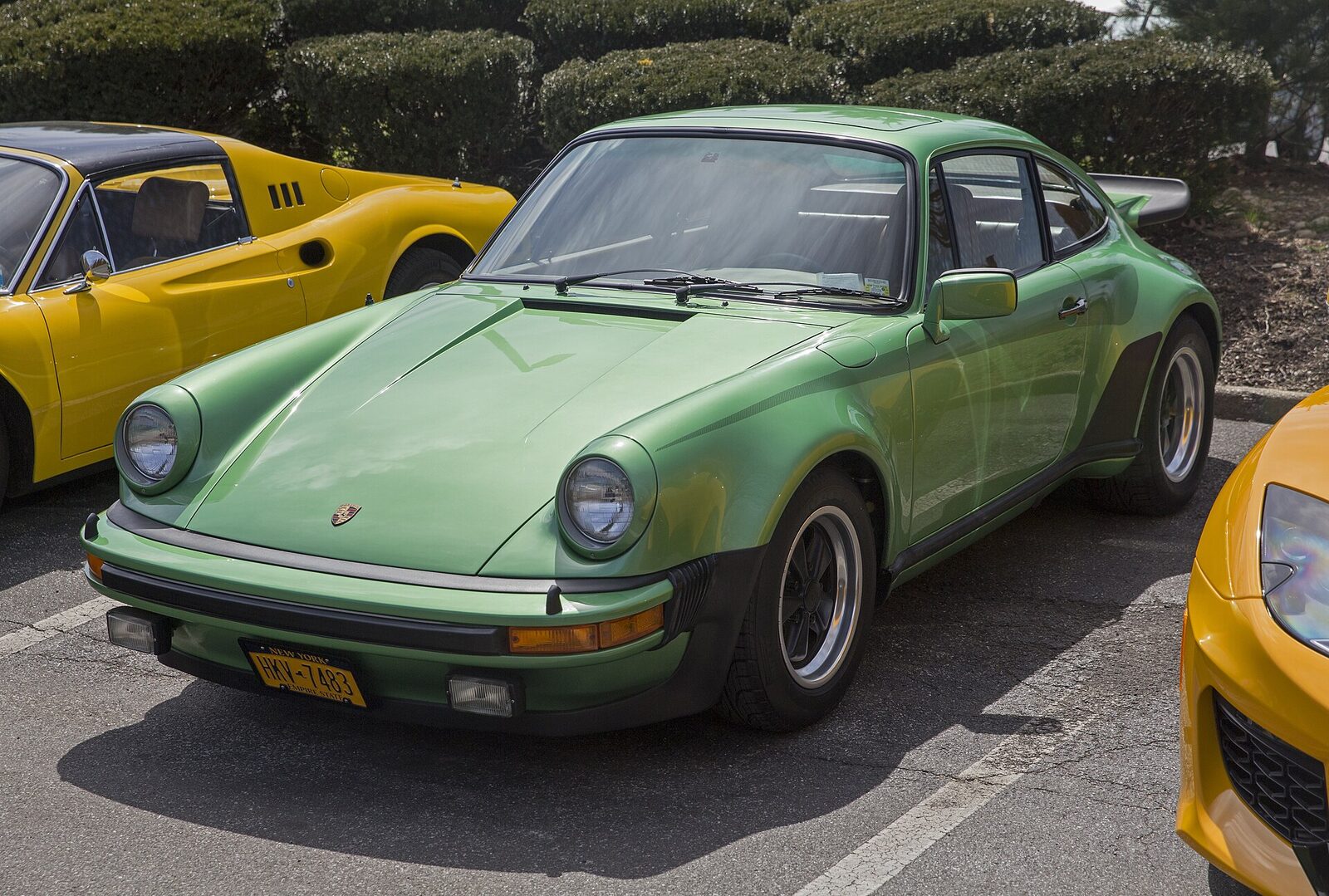
A US-specification 1976 Porsche 930 Turbo 3.0 in Emerald Green Metallic.
Photo: Mr.choppers, CC BY-SA 3.0, via Wikimedia Commons. - Porsche 930 Turbo 3.3
A 1989 Porsche 911 Turbo 3.3.
Photo: Calreyn88, CC BY-SA 4.0, via Wikimedia Commons. - Porsche 930 Turbo S (Flachbau)
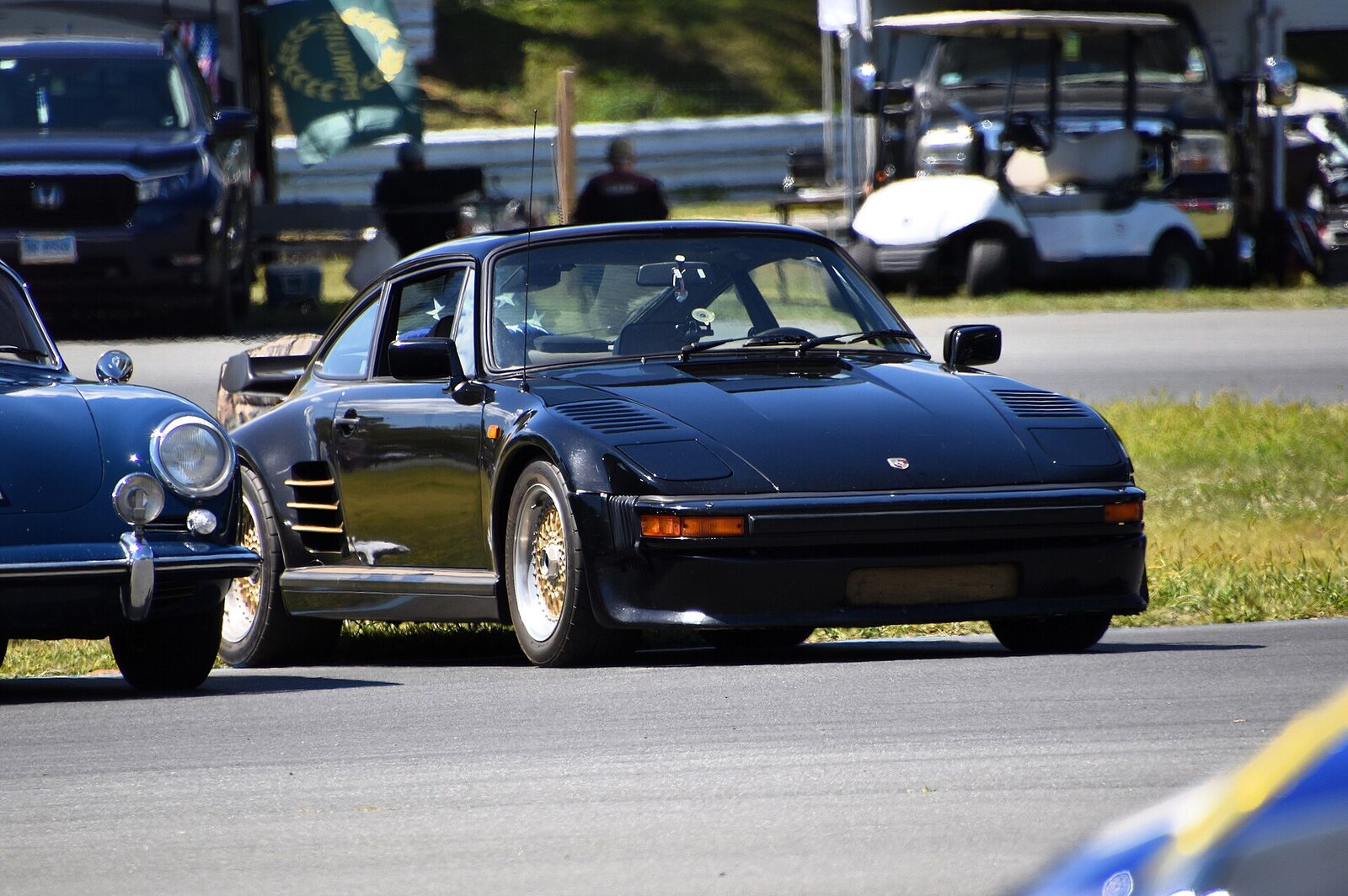
A 1988 Porsche 911 Turbo with the slant nose (Flachbau). Factory cars and later conversions look alike, so confirm the car from its factory records.
Photo: Charles from Port Chester, New York, CC0, via Wikimedia Commons.
Inspection checklist: Porsche 930 Turbo
- 1Broken cylinder head studs
- 2Turbocharger wear and oil coking
- 3Wastegate diaphragm, sticking valve and cracked casting
- 4Heat exchangers, manifold cracks and heating
- 5Four-speed gearbox synchros
- 6K-Jetronic/CIS fuel system and lines
- 7Oil thermostat (3.0)
- 8Clutch life
- 9Body rust and accident damage
- 10Seized brake calipers and suspension wear
- 11Is it a real 930?
- 12Chassis, engine and gearbox numbers
- 13Factory records
- 14Model year from the VIN
- 15Grey-market US cars
- 16Modifications and non-original body parts
Questions
The ones to check first: broken cylinder head studs; turbocharger wear and oil coking; wastegate diaphragm, sticking valve and cracked casting; heat exchangers, manifold cracks and heating. Each is explained on this page with what to look for and the sources it comes from.
Work through these checks: is it a real 930?; chassis, engine and gearbox numbers; factory records; model year from the VIN; grey-market US cars; modifications and non-original body parts. Each is explained on this page with its sources.
930 Turbo 3.0 (1975–1977), 930 Turbo 3.3 (1978–1989), 930 Turbo S (Flachbau) (1982–1989). Each has its own guide to what's different about it.
15 specialists in our directory list pre-purchase inspections and work on the 930 Turbo. The directory shows where they are and how to contact them.
Sources
Every point above is numbered to the pages it comes from. Dates are the page's own, where it shows one.
- 9WERKS: Porsche 911 Turbo 930 3.3 buying guide (Tim Pitt, quoting Paragon Porsche)
- Classic Car Reviews: Porsche 911 Turbo 3.3 (930) (1978-1989) review and buying guide (Keith Adams) (updated 2026-10-20)
- Elferspot Magazine: Porsche 911 (930) Turbo 3.3 Buying Guide (Richard Lindhorst) (2022-04-29)
- Elferspot Magazine: Porsche 911 (930) Turbo 3.0 Buyer's guide (Richard Lindhorst) (2021-04-21)
- Porsche Club GB: Porsche 911 (930) Buyers' Guide (Peter Morgan)
- Hagerty UK: How to keep turbos spinning smoothly (Jesse Crosse) (2023-02-23)
- Sports Car Market: Buyer's Guide to the Porsche 930
- Classic Car Reviews: Porsche 911 Turbo 3.0 (930) (1975-1977) review and buying guide (Keith Adams) (updated 2026-10-19)
- Porsche Newsroom: New online service charts the origins of your classic Porsche (2022-10-17)