Buyer's guide · built 1965–1969
Buying a Porsche 912: common problems and what to check
The Porsche 912 was built from 1965 to 1969 with a four-cylinder engine in the 911 body. Check the sills, floors, battery tray and kidney bowls for rust, the engine's rebuild history, the 901 gearbox, and the fuel lines and Webasto heater, which are fire risks.
By Jon Kennedy, Porsche Enthusiast
Last reviewed 25 October 2026. Every point links the specialist, club, magazine or Porsche page it comes from.
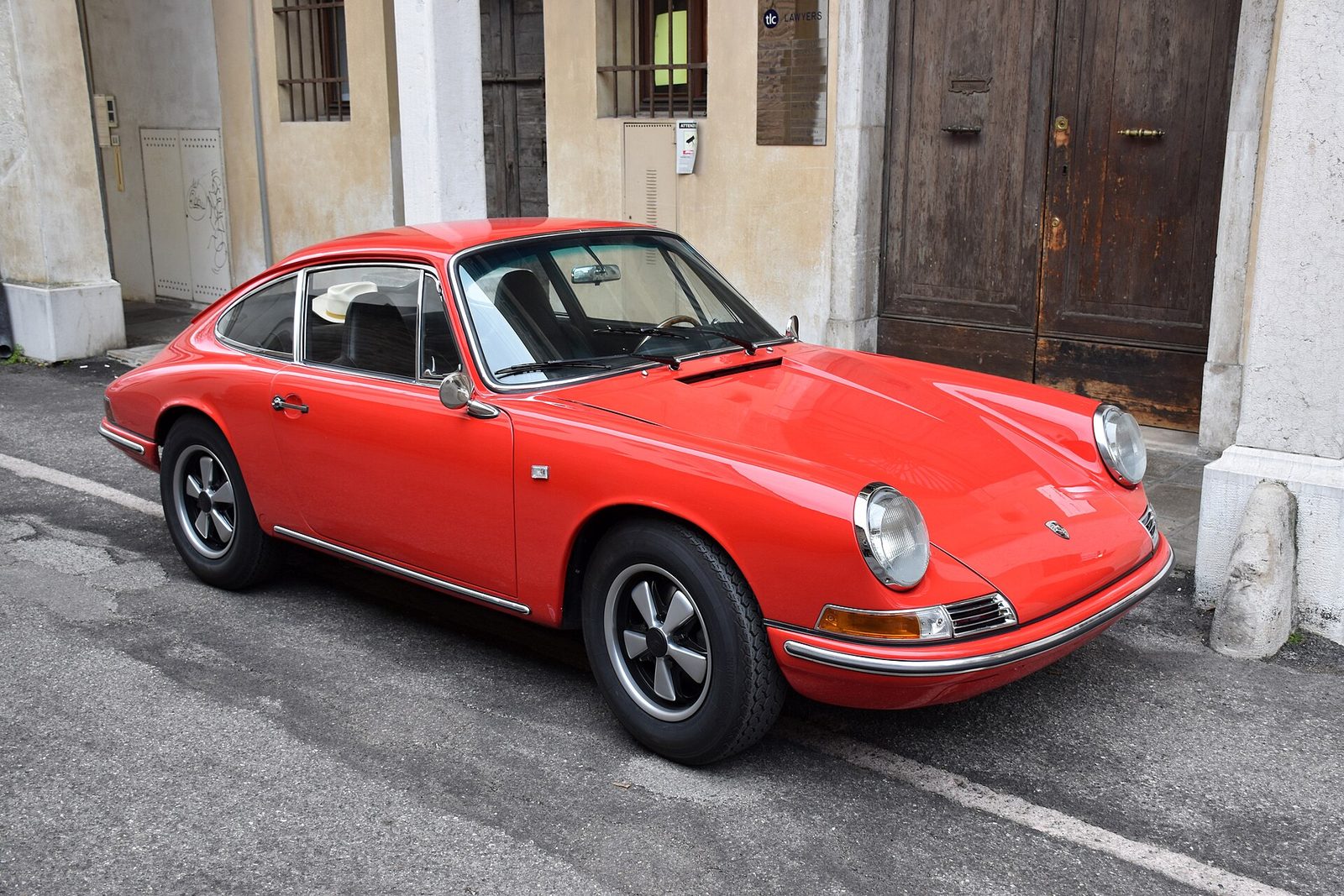
A Porsche 912: the 911 body with a four-cylinder engine.
Do this next
In short
- Built
- 1965–1969
- Made
- Not yet sourced
- Models with a guide
- 1
What goes wrong on a Porsche 912?
The 10 problems to check on any 912. Where a source publishes a repair cost, it's shown as published, with its date.
Sills, floors and jack points
Corrosion is the biggest financial risk on a 912. The bodies were not galvanised (unlike the later 912E), and the sills, floor pans and footwells rust. Floor pans are a common weak point, though replacing them is considered straightforward.[1][2][3]
What to check: Get the car on a hoist before buying. Check the sills, B-pillar, floors and footwells, and remember a recent repaint can hide rust.
Battery tray, kidney bowls and torsion tube area
Acid and water collect under the battery tray. The 'kidney bowls' (the rear of the B-pillar, seen from inside the rear wheel arch) and the torsion tube areas also rust.[2][3]
What to check: Look under the battery tray and into the rear inner arches at the back of the B-pillars, and inspect the torsion tube area from underneath.
Headlight surrounds, window frames and seals
Rust also appears around the headlight surrounds and window frames, and in the metal below brittle or perished window seals.[1][3]
What to check: Pull back trim where possible and look around the headlights and below each window seal.
Engine rebuild quality and bottom end
Most 1.6-litre engines have been rebuilt at some point, so the quality of that work matters more than the mileage. Knocking or rattling can point to camshaft or bearing problems.[1][3]
What to check: Ask for rebuild invoices and who did the work, and listen for knocks and rattles on start-up and under load.
Published cost: Heritage Parts Centre gives a base budget of £5,000 for a full engine rebuild, possibly two or three times that if problems are found (article undated).
Oil leaks and checking oil level
Oil leaks are a common problem. Cylinder-head bolt seals can be fixed with the engine in the car, but serious leaks are best fixed with the engine out. Oil level and oil pressure gauges were not standard, so the dash may not warn you.[1][2][3]
What to check: Look under the engine for active drips and check the oil level with the dipstick.
Perished fuel lines and the Webasto heater
The fuel pipes and rubber connections between the front tank and the engine are likely to leak with age, and perished fuel lines are a serious fire risk. The optional Webasto petrol-fired heater in the luggage compartment draws fuel from the tank, and its ageing fuel lines are also a fire risk.[2][3]
What to check: Smell for fuel and inspect the fuel hoses front to rear. If a Webasto heater is fitted, check its lines. Ask when the rubber hoses were last replaced.
Carburettors and ignition
Cars that have stood can have starting and idle problems. The original Solex carburettors are often replaced with Webers, and incorrect VW distributors were common after cheap repairs. Worn carburettor internals or wrong jetting stop the engine revving cleanly to the redline.[1][2][3]
What to check: Check that the engine starts, idles and revs cleanly to the redline. Note which carburettors and distributor are fitted, and ask about the timing, ignition and fuelling setup.
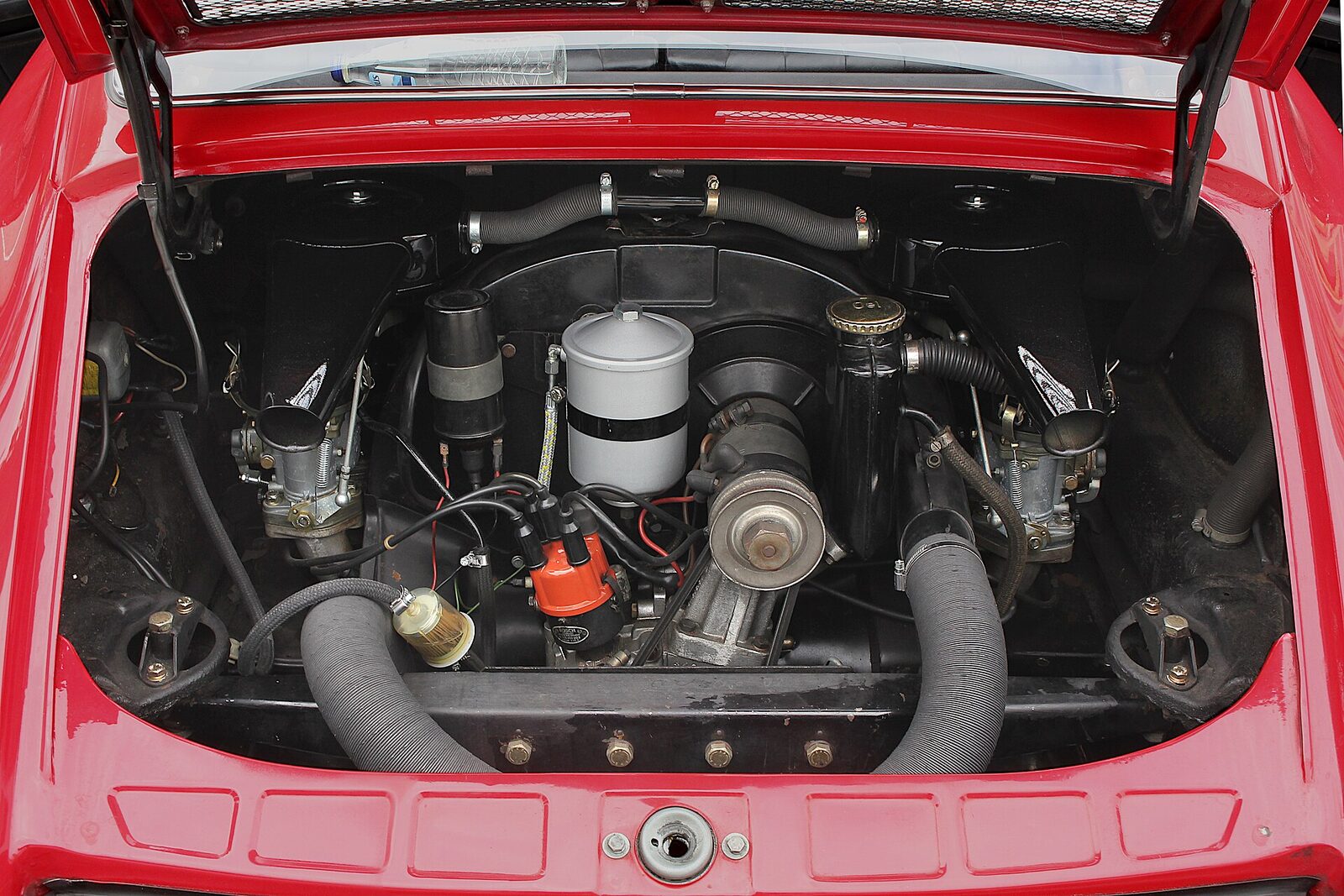
The engine bay of a Porsche 912 with its 90 PS four-cylinder boxer, twin carburettors and distributor, the parts to check for a clean tune.
901 gearbox synchromesh and shift bushes
The 901 gearbox is more delicate than the later 915 and G50 units. Worn synchromesh and vague shifts are the usual complaints at high mileage, and worn gear-change bushes make the shift feel sloppy (replacement bushes are available). A four-speed was standard and a five-speed optional.[1][3][4]
What to check: Change through every gear, up and down, warm and cold, and check that the shift is not sloppy.
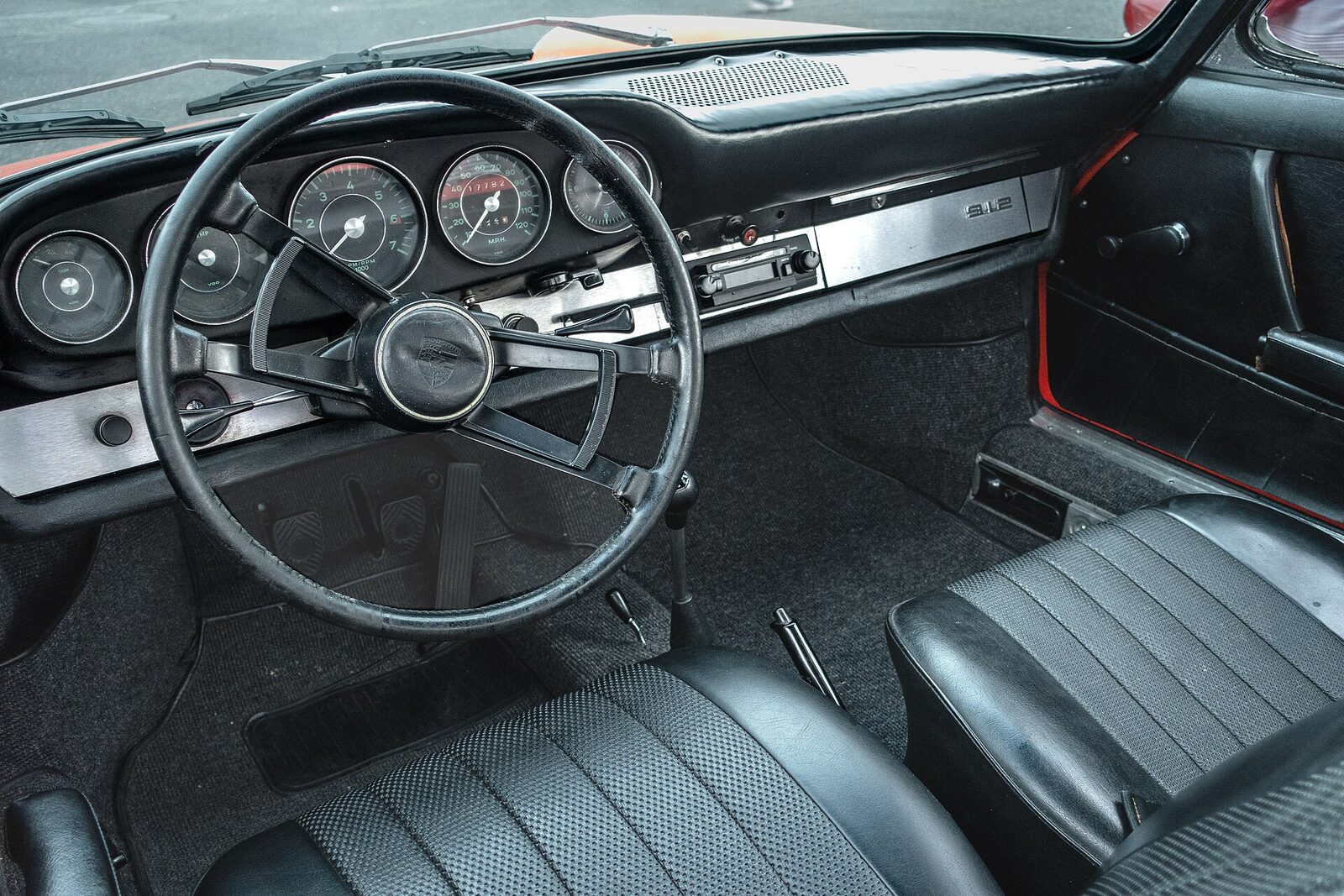
The cockpit of a Porsche 912: a sloppy gear lever often points to worn shift bushes, and crunching gears to tired synchromesh.
Suspension bushes, dampers and brakes
Tired dampers, springs or perished bushes make the car float over bumps or give a harsh, crashing ride. Pads, lines, discs and calipers often need servicing or reconditioning, and some cars have had brake upgrades.[1][3]
What to check: Drive over rough roads and brake hard. If the brakes have been upgraded, check the work was properly engineered.
Hard-to-find interior trim
Some interior trim is hard to source, so original fittings add value.[1]
What to check: Check which interior parts are original and what is missing or damaged before you agree a price.
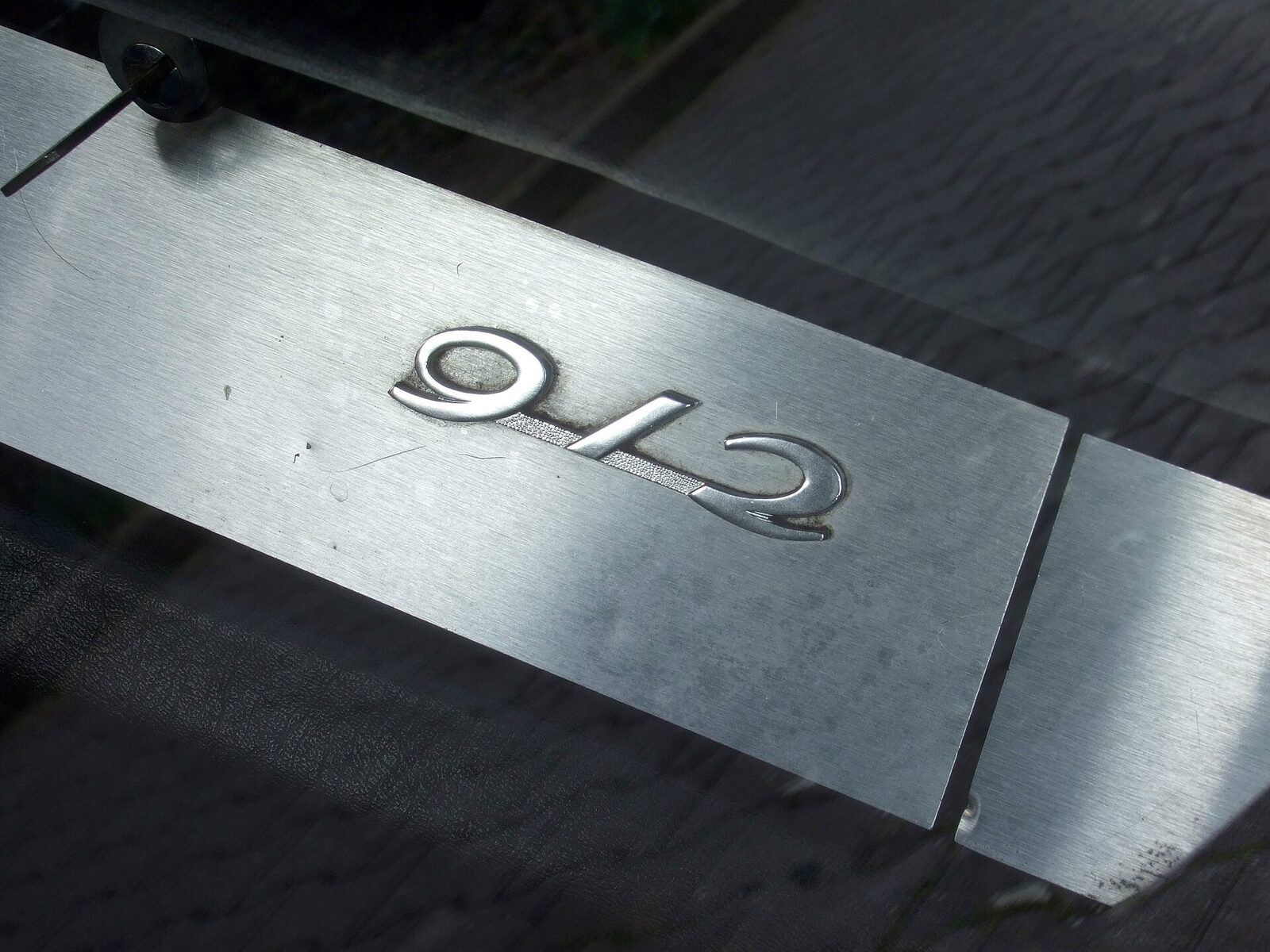
The '912' script on the dashboard of a Porsche 912, one of the small trim pieces that can be hard to find.
Our take: Treat the engine's history as the big unknown. The only published figure we found, Heritage Parts Centre's base budget of £5,000 for a rebuild, can double or triple once a specialist opens the engine up, so a documented rebuild by a known workshop is worth paying more for.
How do you check a Porsche 912 is original?
Engine and gearbox numbers against the Kardex or COA
Engine and gearbox swaps are common. Check the stamped numbers on the engine and transmission against the factory record. Porsche's Classic Technical Certificate records the numbers now in the car and checks them against the original records; its Production Specification, the former Certificate of Authenticity, leaves serial numbers out. An older COA transcribes only part of the Kardex and can be incomplete or contain errors.[3][5][6]
Bulkhead ID stamps
Check the identification stamps in the bulkhead for signs of tampering.[3]
Features that should match the model year
Porsche changed details almost every year, so check the car's details match its claimed year. The earliest short-wheelbase cars had non-adjustable front strut towers, a water bladder for washer fluid, sometimes a painted dash, and the fluted 356-style gear knob. 1966 brought adjustable strut towers, a plastic washer reservoir and canted 912 script; 1967 the block Porsche script, ball gear knob and last year of 4.5-inch wheels; 1968 US cars a smog pump, dual-circuit brakes, padded dash and new gauges, and 5.5-inch wheels; 1969 the longer wheelbase.[4]
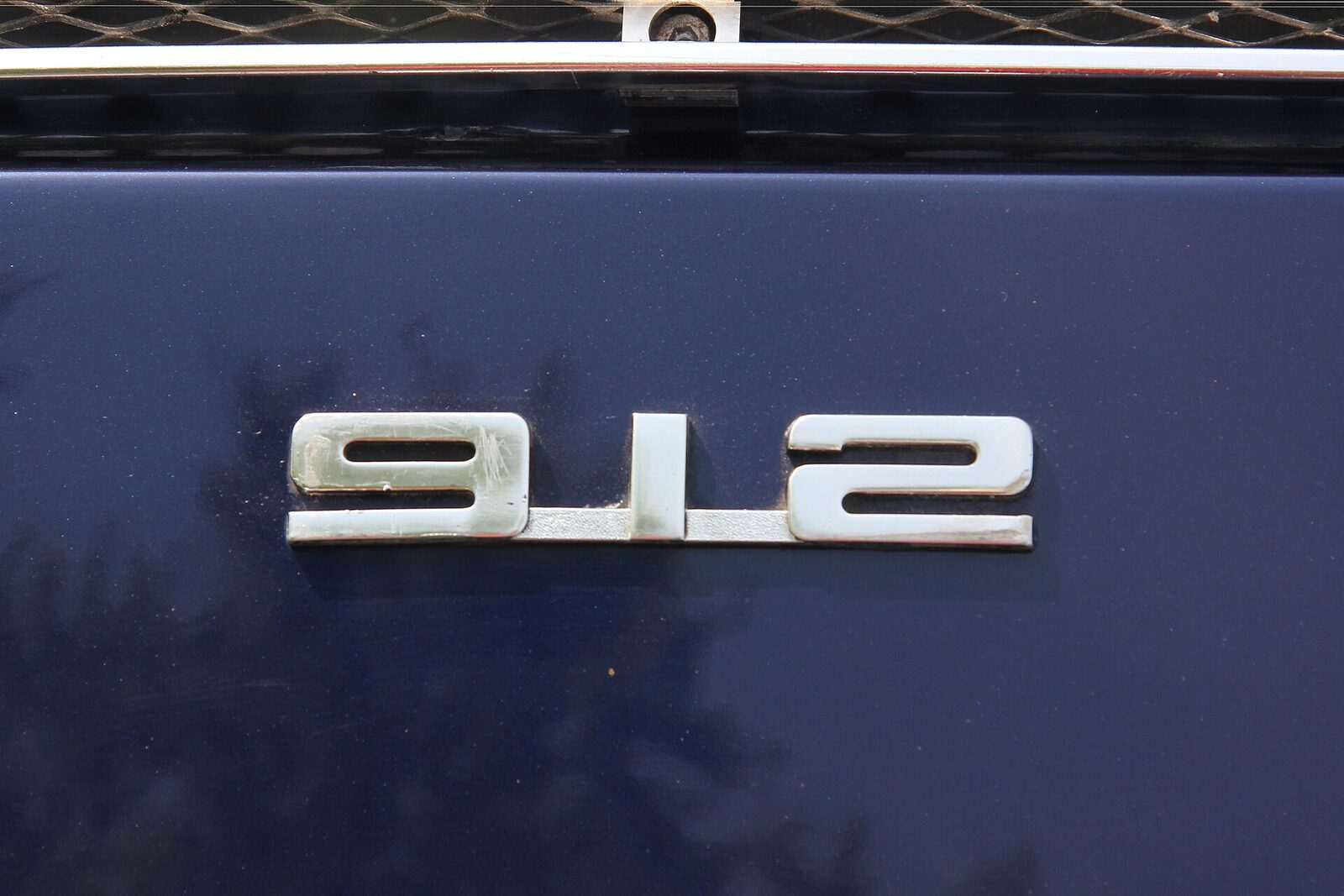
The '912' script on the engine lid of a 1968 car. Badges and trim should match the car's model year.
Which Porsche 912 should you buy?
Each model has its own guide to what sets it apart and what to check on it in particular.
Four cylinders or six? Porsche 912 vs 911.
| Model | Built | Power | Made |
|---|---|---|---|
| 912 Coupe | 1965–1969 | 90 PS | Not yet sourced |
- Porsche 912 Coupe
A Porsche 912 coupé.
Photo: David Perez, CC BY-SA 4.0, via Wikimedia Commons.
Inspection checklist: Porsche 912
- 1Sills, floors and jack points
- 2Battery tray, kidney bowls and torsion tube area
- 3Headlight surrounds, window frames and seals
- 4Engine rebuild quality and bottom end
- 5Oil leaks and checking oil level
- 6Perished fuel lines and the Webasto heater
- 7Carburettors and ignition
- 8901 gearbox synchromesh and shift bushes
- 9Suspension bushes, dampers and brakes
- 10Hard-to-find interior trim
- 11Engine and gearbox numbers against the Kardex or COA
- 12Bulkhead ID stamps
- 13Features that should match the model year
- 14Modified and imported cars
Questions
The ones to check first: sills, floors and jack points; battery tray, kidney bowls and torsion tube area; headlight surrounds, window frames and seals; engine rebuild quality and bottom end. Each is explained on this page with what to look for and the sources it comes from.
Work through these checks: engine and gearbox numbers against the Kardex or COA; bulkhead ID stamps; features that should match the model year; modified and imported cars. Each is explained on this page with its sources.
912 Coupe (1965–1969). Each has its own guide to what's different about it.
16 specialists in our directory list pre-purchase inspections and work on the 912. The directory shows where they are and how to contact them.
Sources
Every point above is numbered to the pages it comes from. Dates are the page's own, where it shows one.
- Octane: Porsche 912 buying guide: history, problems and what to pay (Matthew Hayward) (2026-09-25)
- Retro Rides: Top Tips for Buying a Used Porsche 912 (1965-76) (Cliff Chambers) (2025-12-15)
- Heritage Parts Centre: Porsche 912 buying guide (Andy Gregory)
- Porsche Club of America: Model Guide: Porsche 912 and 912E (John Benton, Benton Performance) (2017-01-19)
- DerWhite's 356, 911 & 912 Porsche Literature: Kardex v. Certificate of Authenticity (Charlie White) (2007-08-23, updated 2014-03-02)
- Porsche Cars North America: Vehicle documentation FAQs (updated 20 February 2026)